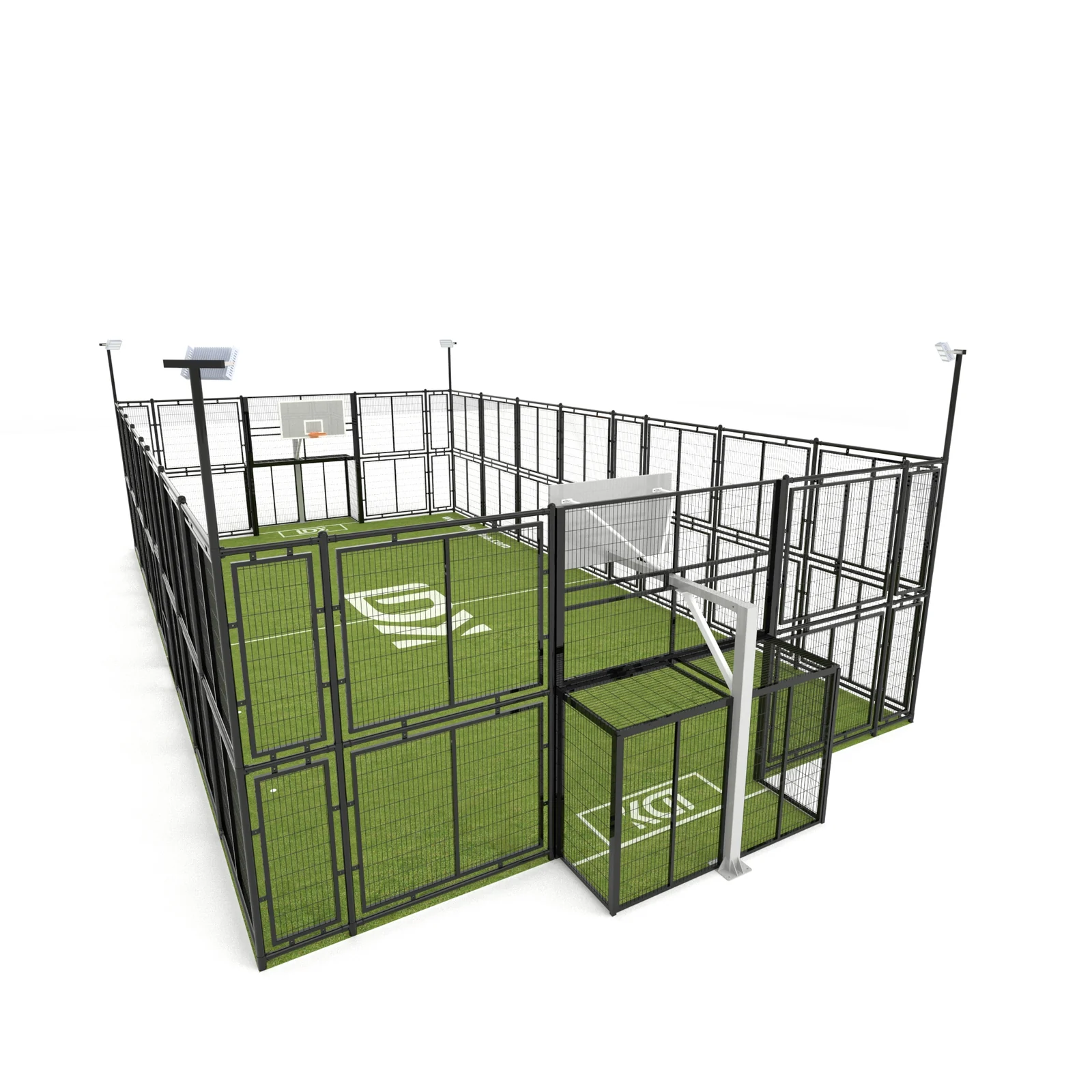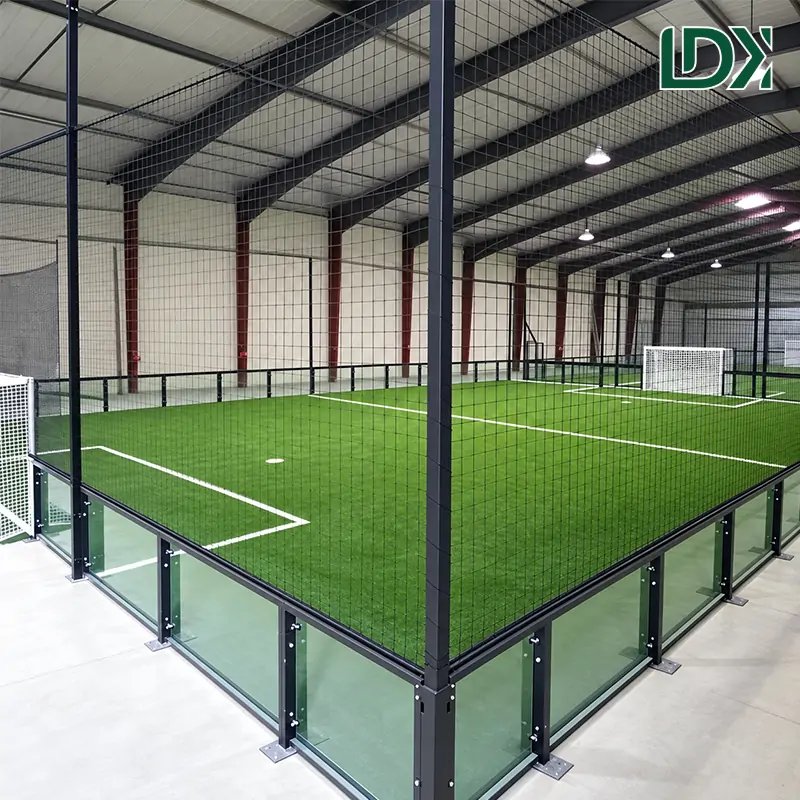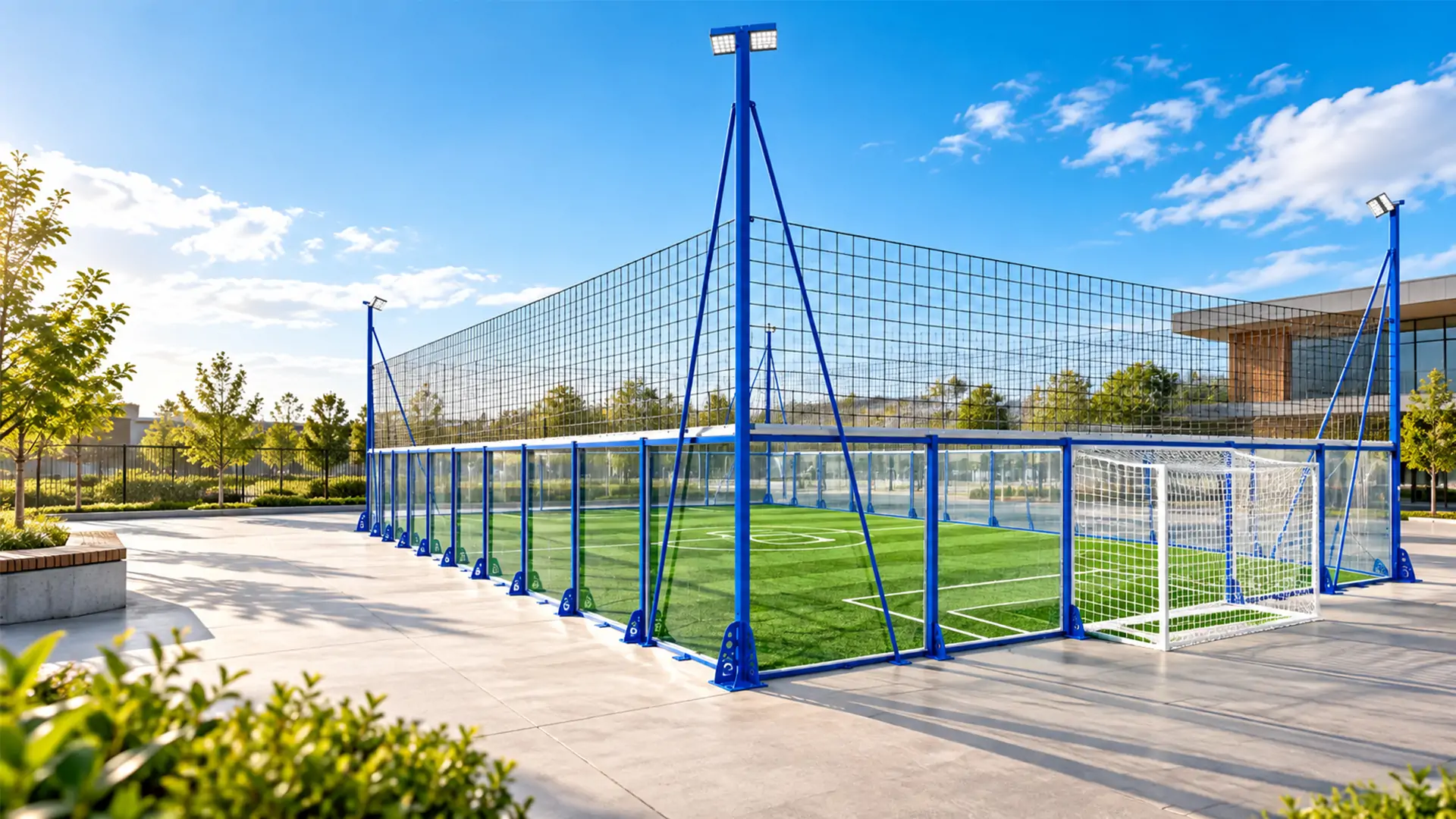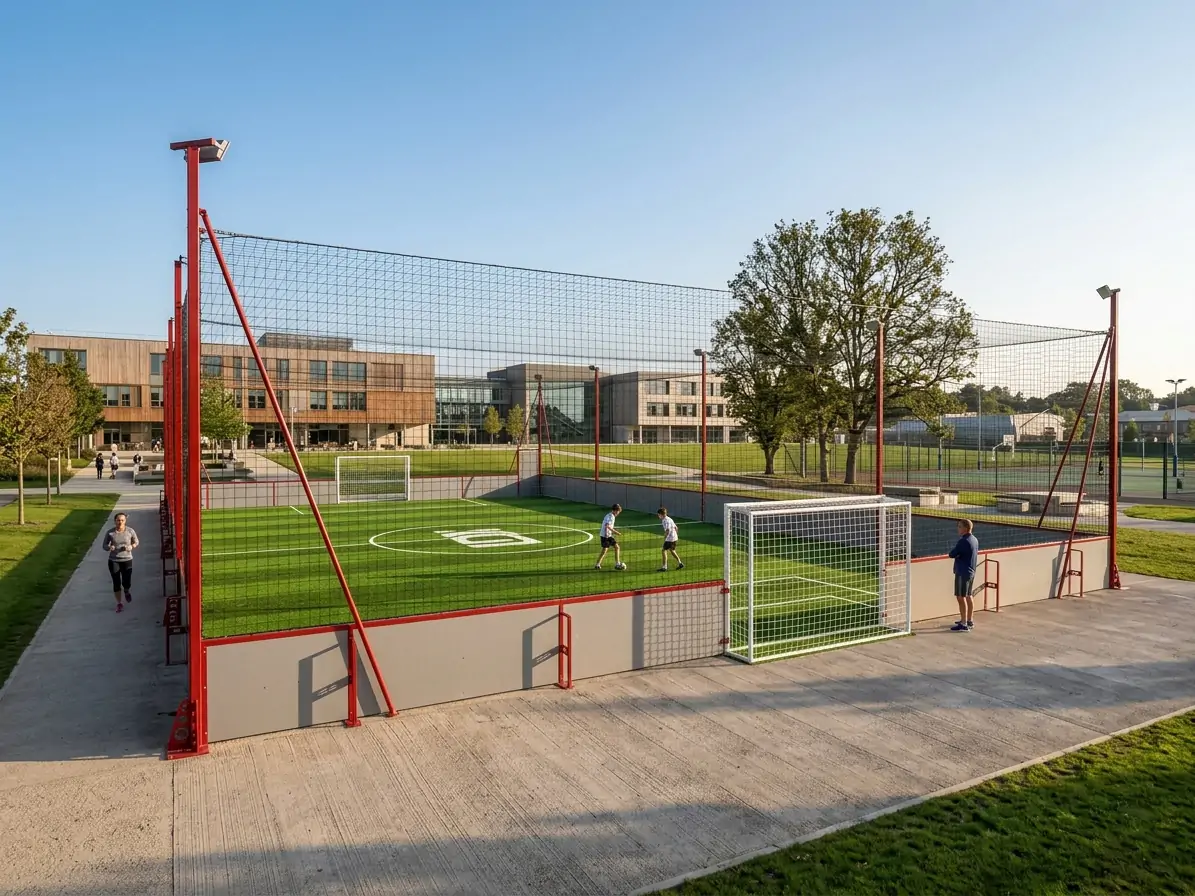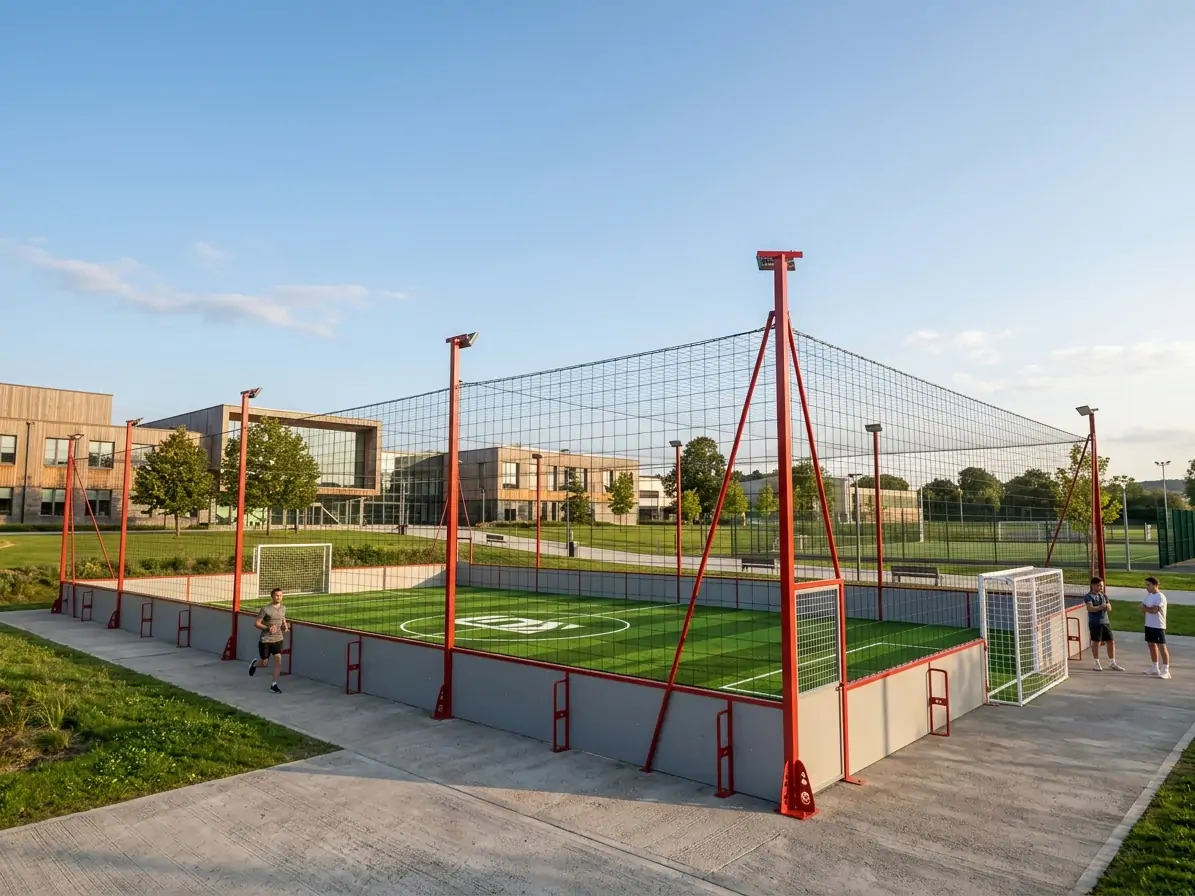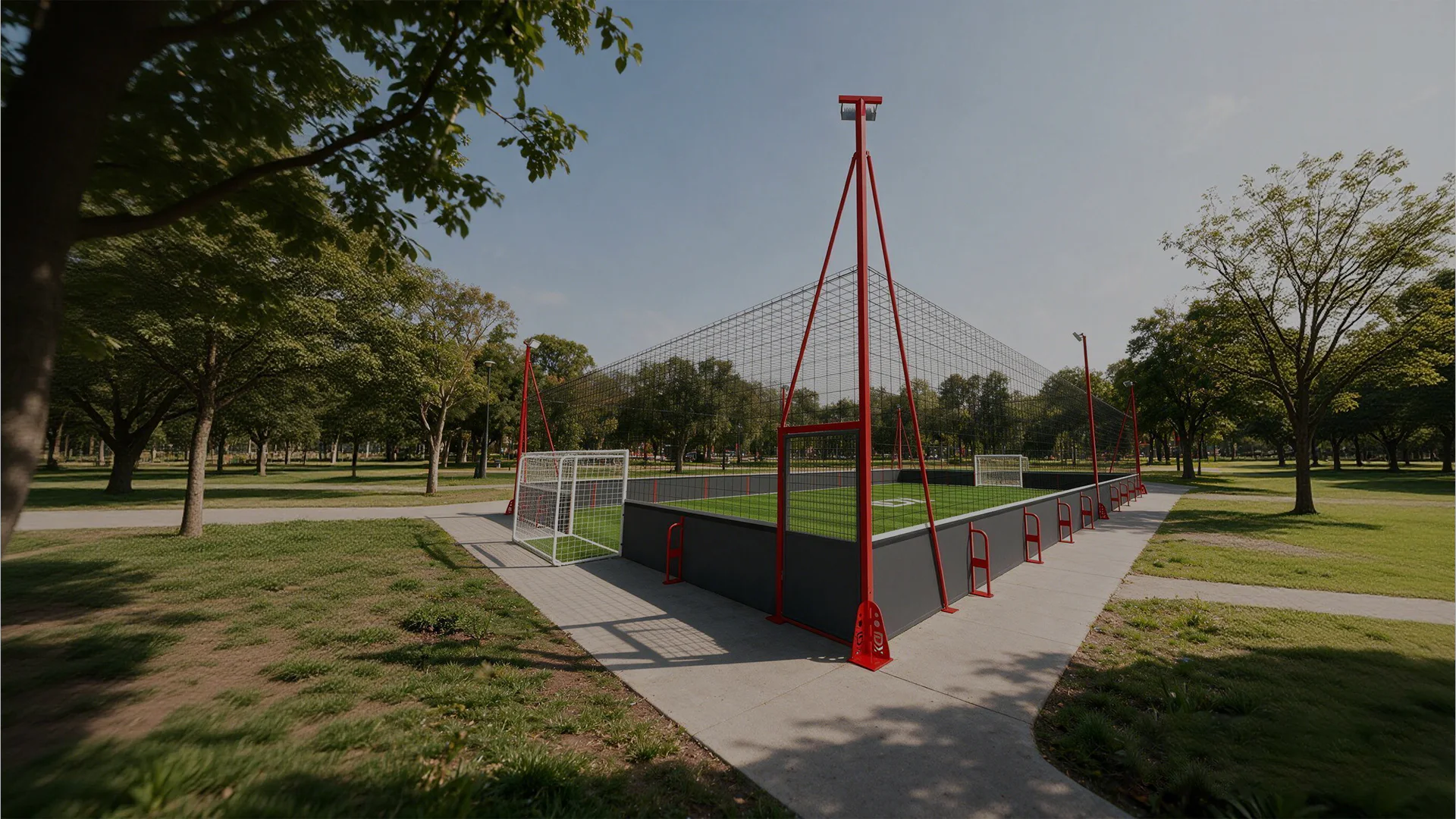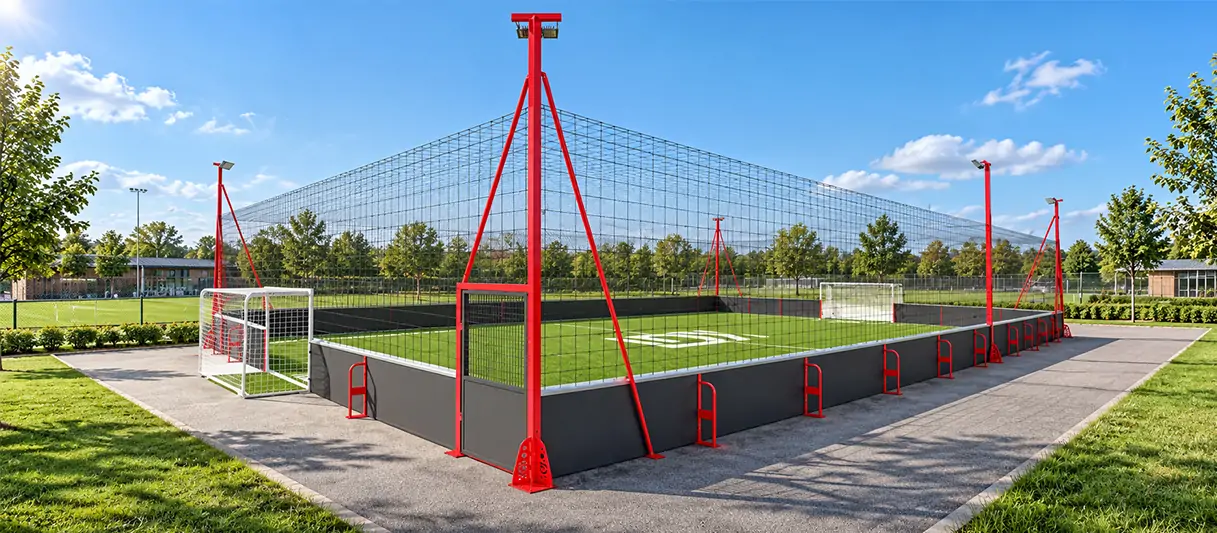
As small-sided facilities continue to feature in community and school projects, planners face a practical question: how should each pitch contain the ball, support its intended style of play and fit the site? Composite-board enclosures are one design option attracting attention.
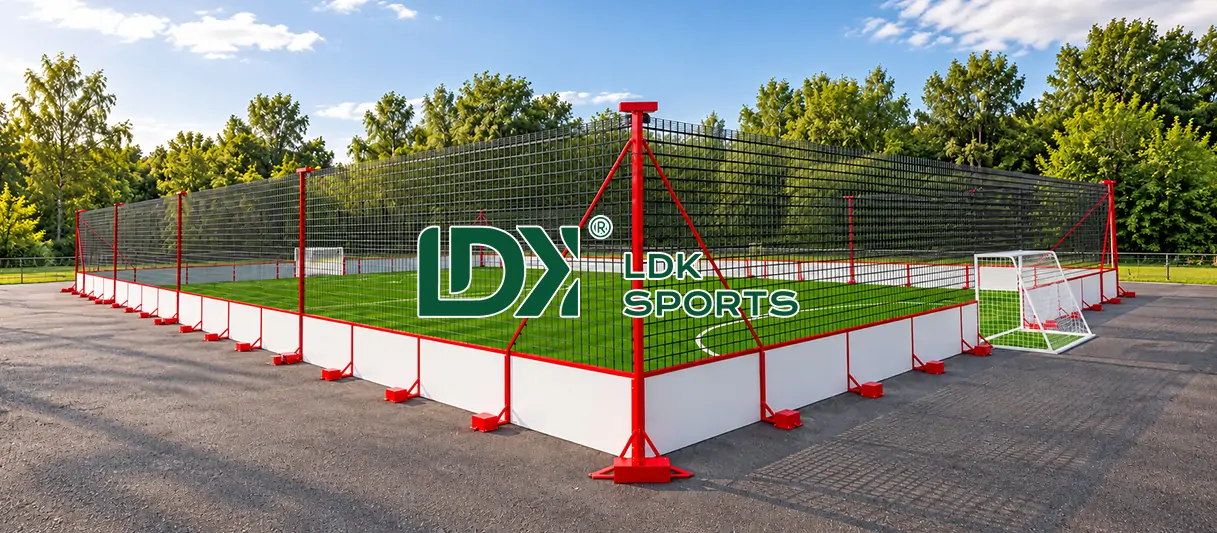
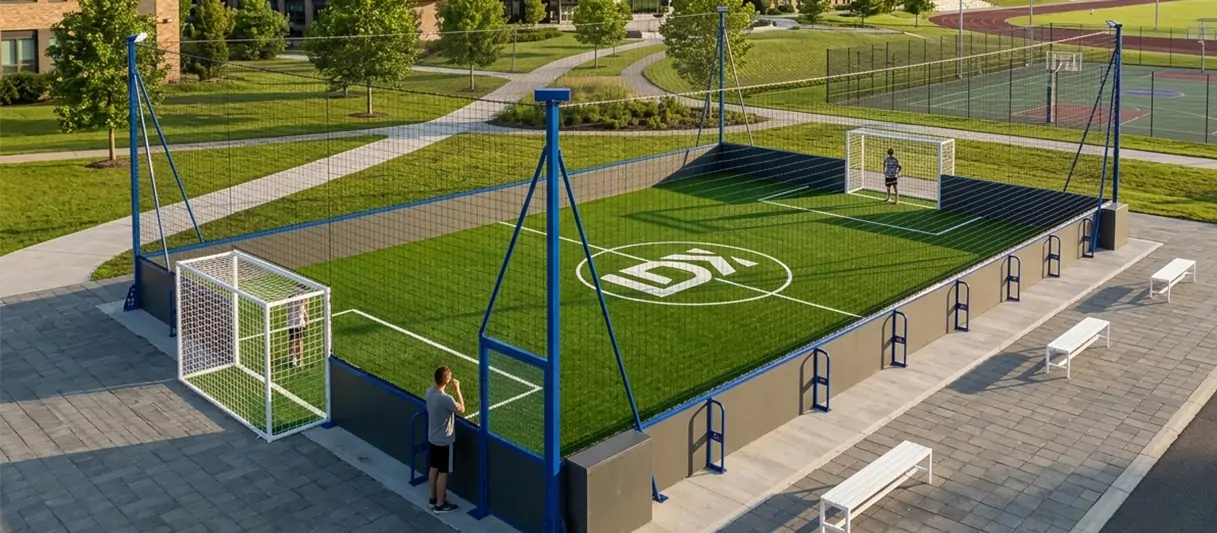
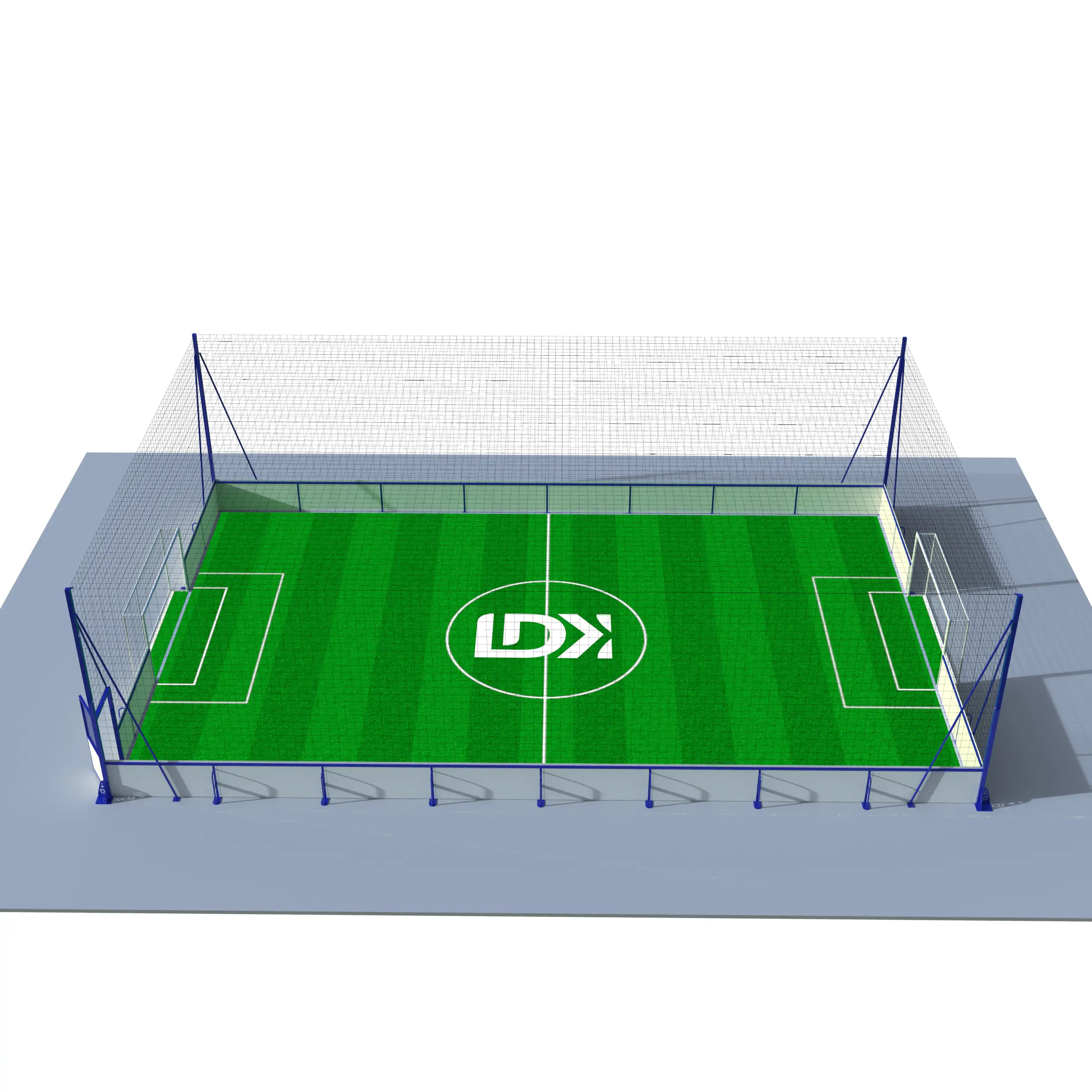
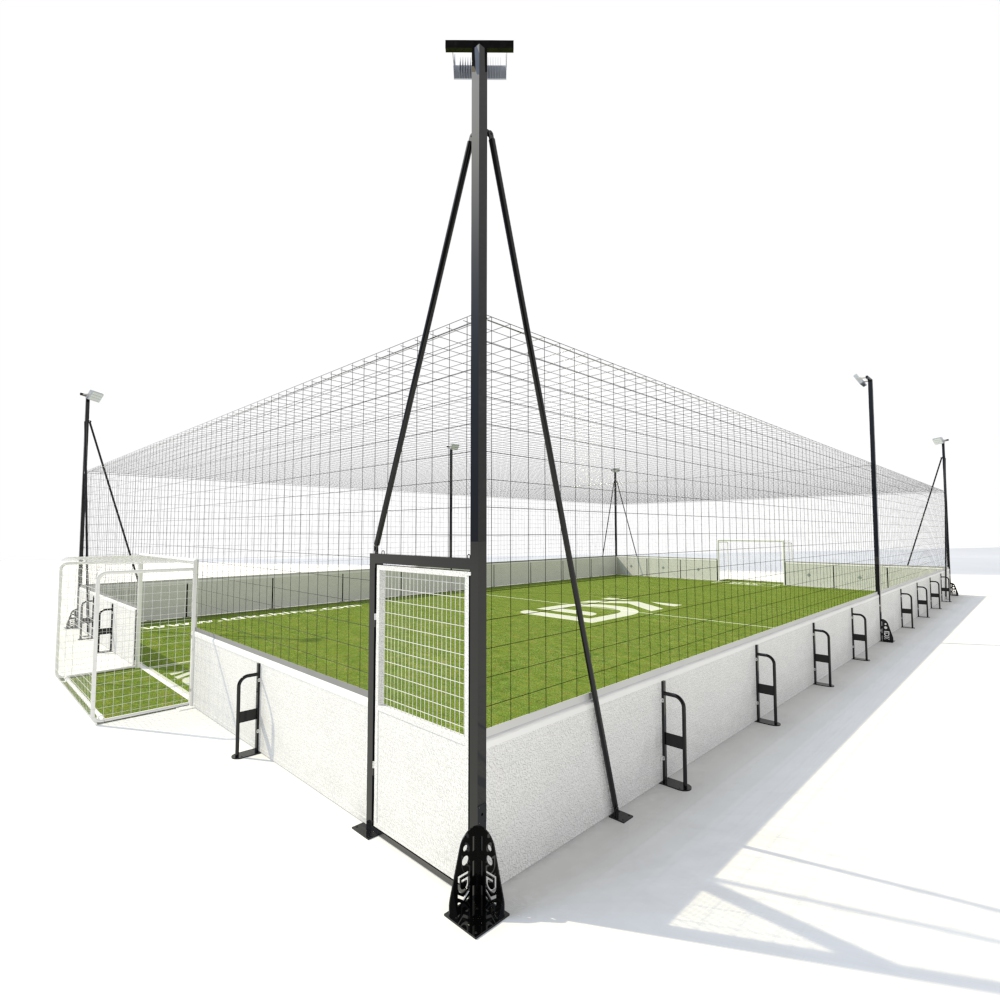
The question is especially relevant for compact pitches, where the perimeter affects both gameplay and the use of surrounding space. A composite-board soccer cage combines solid lower panels with netting above. The arrangement creates a defined playing boundary and helps keep high balls within the enclosure, while leaving the upper area visually open.
The design should be assessed as part of the full facility plan. The choice of panels, frame, netting and access points depends on the pitch dimensions, intended users and operating conditions.
Contents
- Why Enclosure Design Matters for Small-Sided Pitches
- What a Composite-Board System Changes
- Applications and Outdoor Planning
- FAQ
- Discuss a Project
Why Enclosure Design Matters for Small-Sided Pitches
FIFA programme aims to create at least 1,000 mini-pitches worldwide by 2031, with a focus on accessible facilities near schools and communities.
What a Composite-Board System Changes
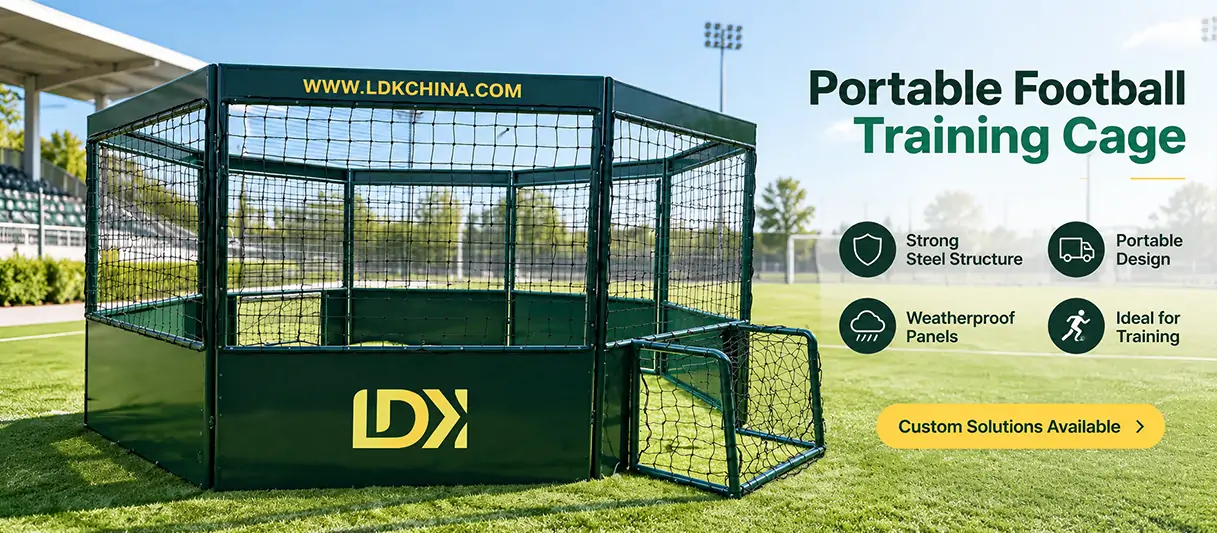
In a composite-board soccer cage, panels form the lower part of the perimeter and netting extends above them. The lower section provides a continuous surface for ball contact; the upper net helps contain high shots and clearances.
This arrangement can suit small-sided games where the perimeter is close to the playing area and ball retention is part of the intended experience. It also gives planners a defined lower boundary while preserving visibility through the upper section.
Applications and Outdoor Planning
The format may be considered for indoor football centres, schools, clubs, community mini-pitches and other small-sided venues. Its suitability depends on the specific site: pitch size, player format, access requirements and expected hours of use all influence the layout.
Outdoor installations require additional review. Local wind exposure, sunlight, rain, temperature variation, drainage and ground anchoring should inform the material and structural specifications. Buyers should ask suppliers for relevant performance data and installation guidance, including information on UV exposure, weather resistance and maintenance.
Community facilities may also host activities beyond football. The Football Foundation’s hub programme, for example, includes small-sided pitches alongside other sports, recreation and community services. That makes flexibility of use a relevant consideration for operators planning a multi-activity site.
FAQ
What is a composite-board soccer cage?
It is a football enclosure with solid panels around the lower perimeter and netting above. System details vary by manufacturer and project.
Is this design suitable for outdoor pitches?
It can be considered for outdoor use when the materials, structure and installation are specified for the site’s weather and ground conditions. Project requirements vary by location.
What should buyers check before selecting a system?
Review the panel and frame specifications, netting, fixings, installation requirements, access layout and maintenance guidance. Confirm which local standards apply to the project.
Discuss a Project
For a preliminary layout discussion, share the pitch dimensions, location, indoor or outdoor conditions and intended game format. These details help determine whether a composite-board enclosure fits the facility plan.