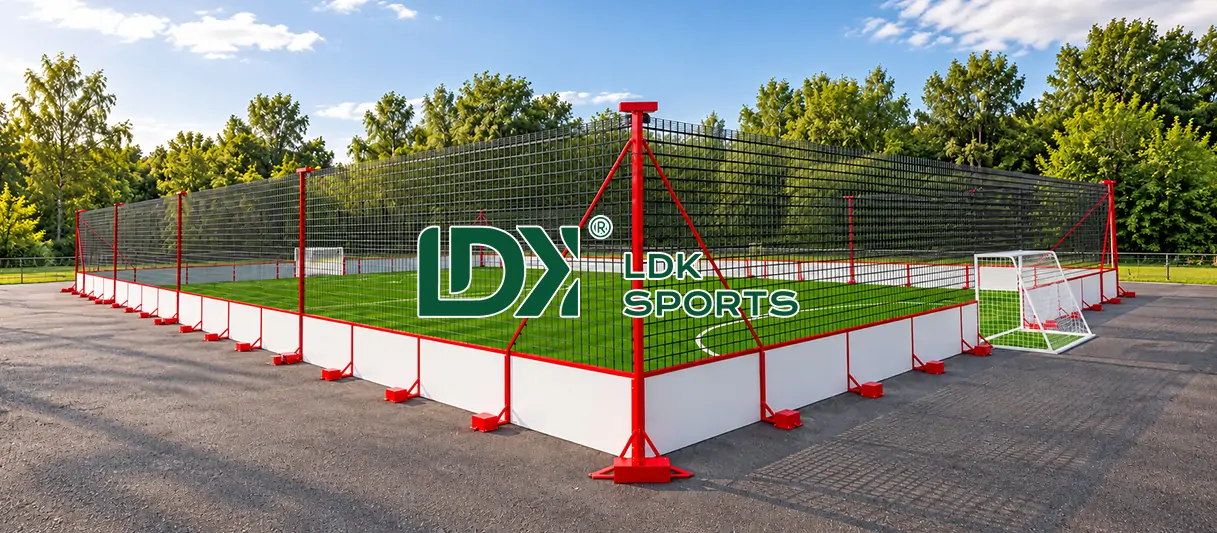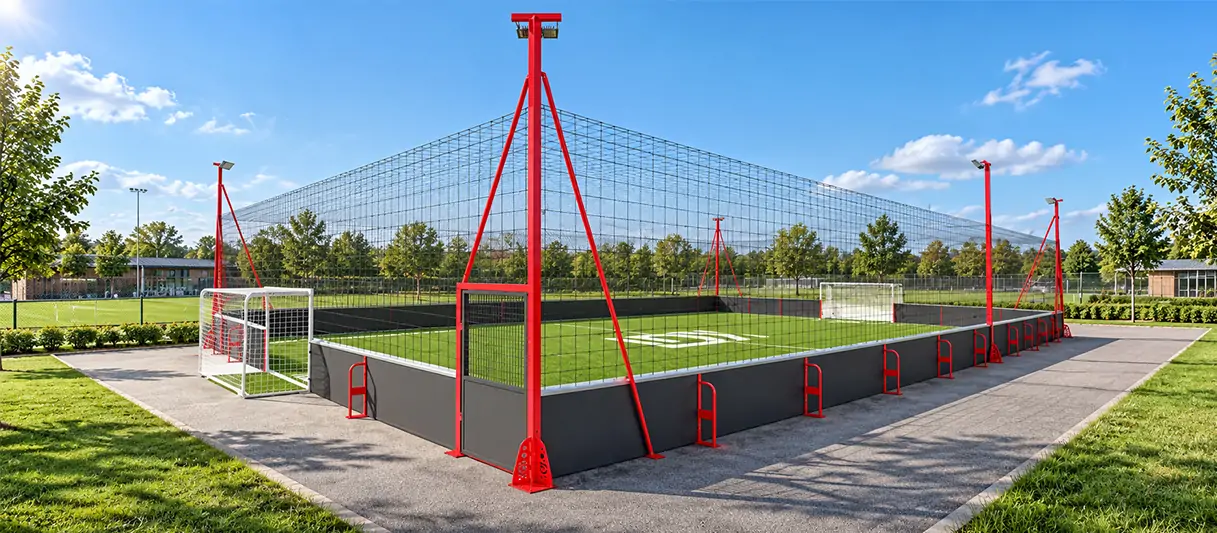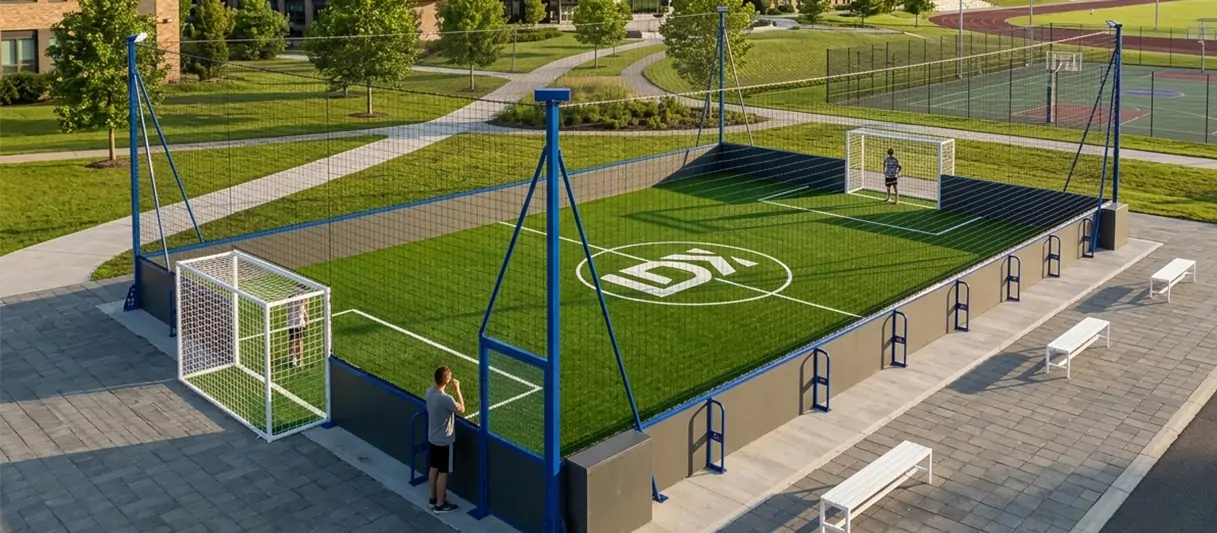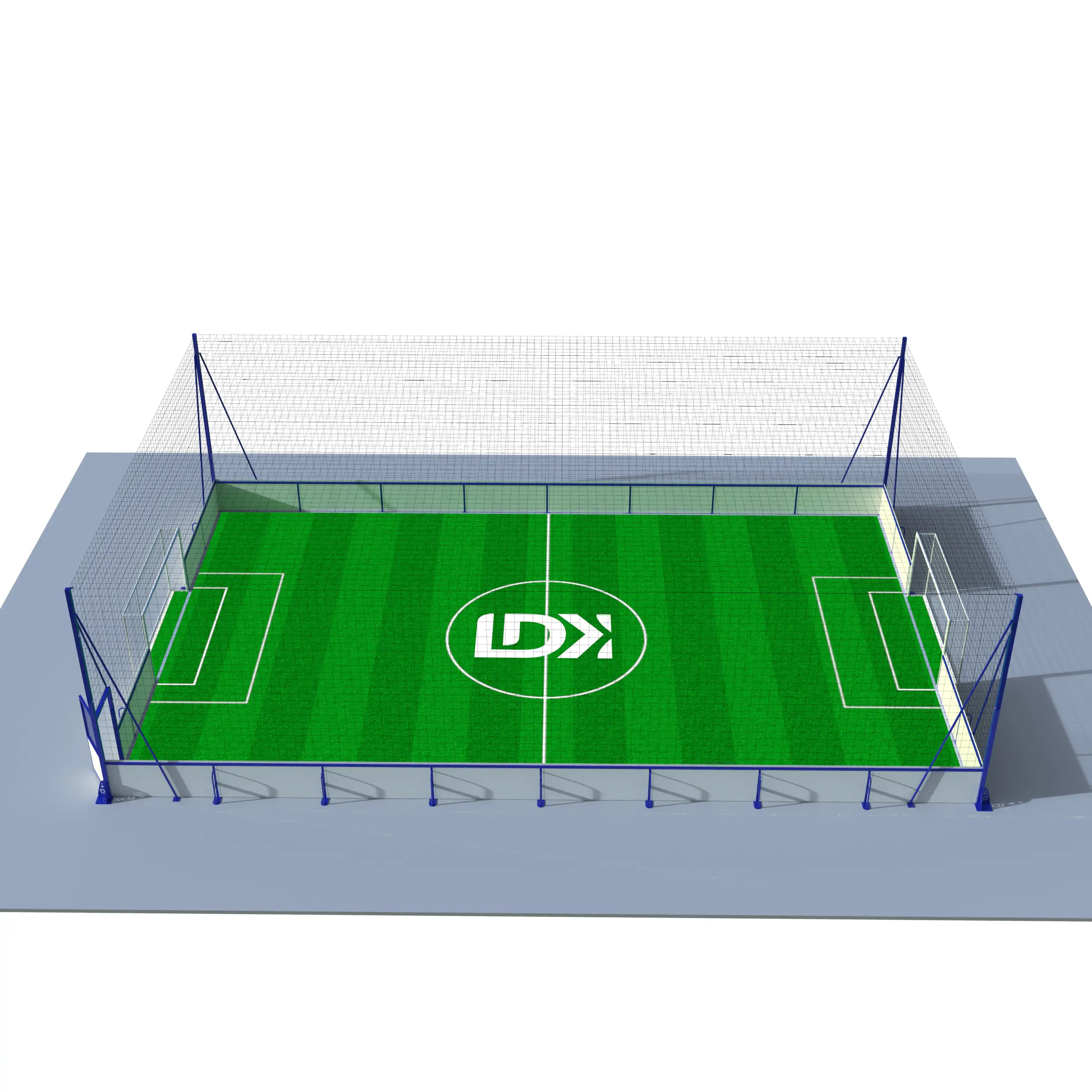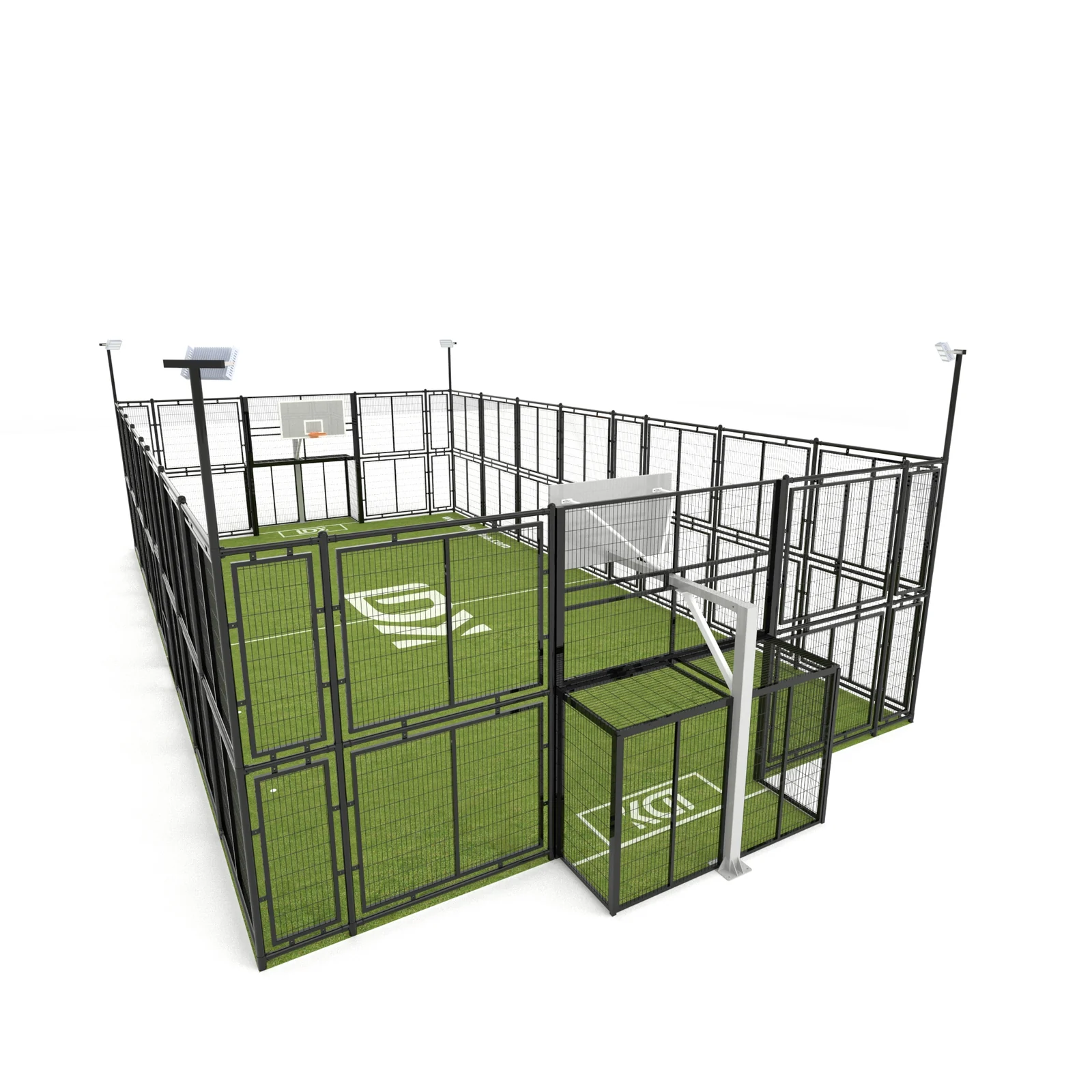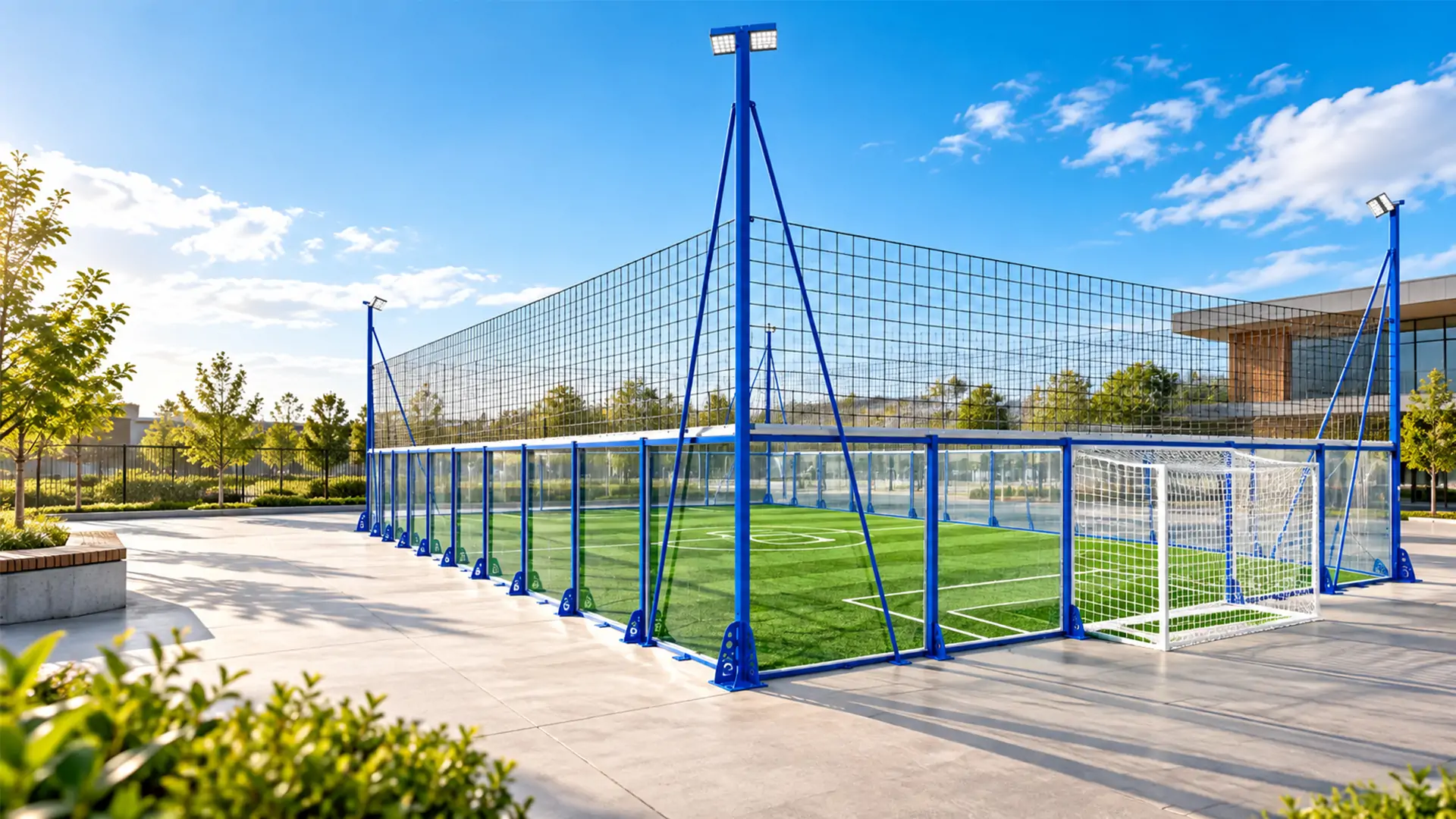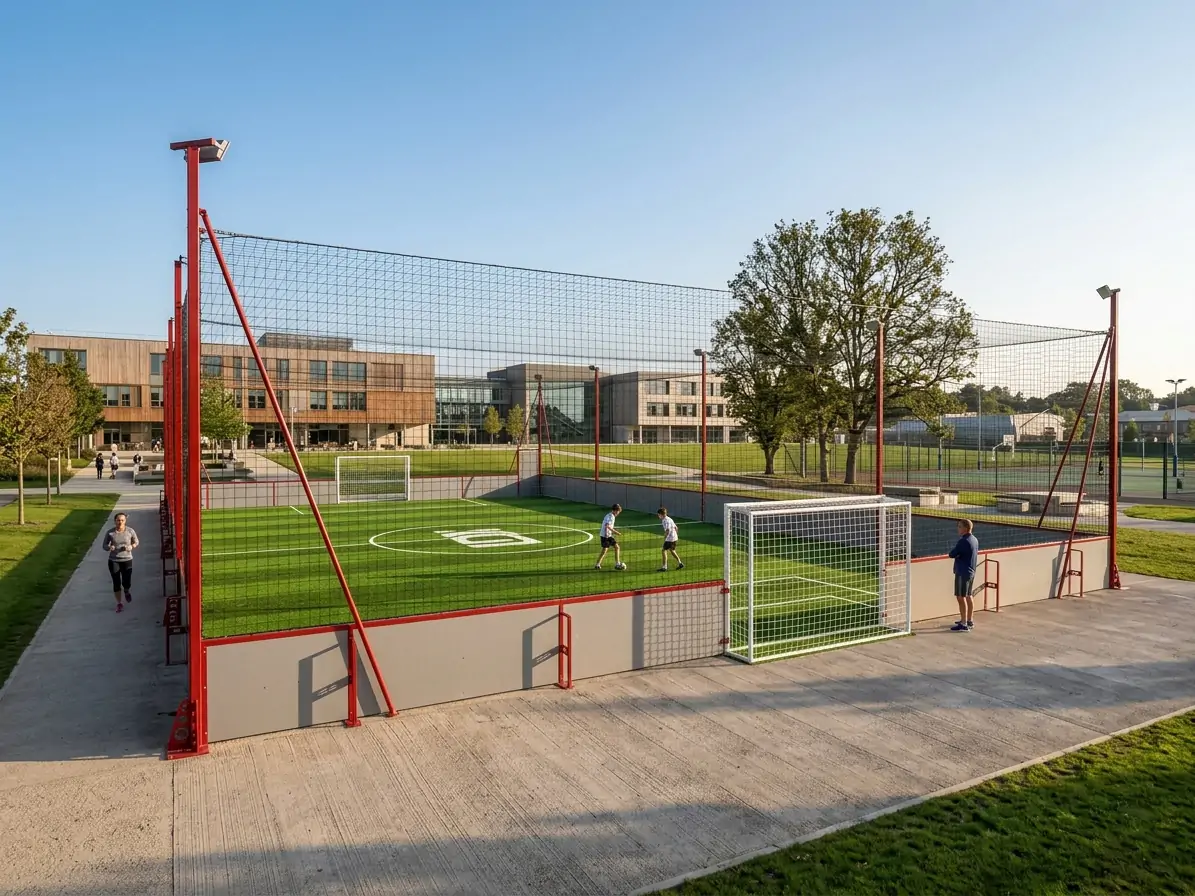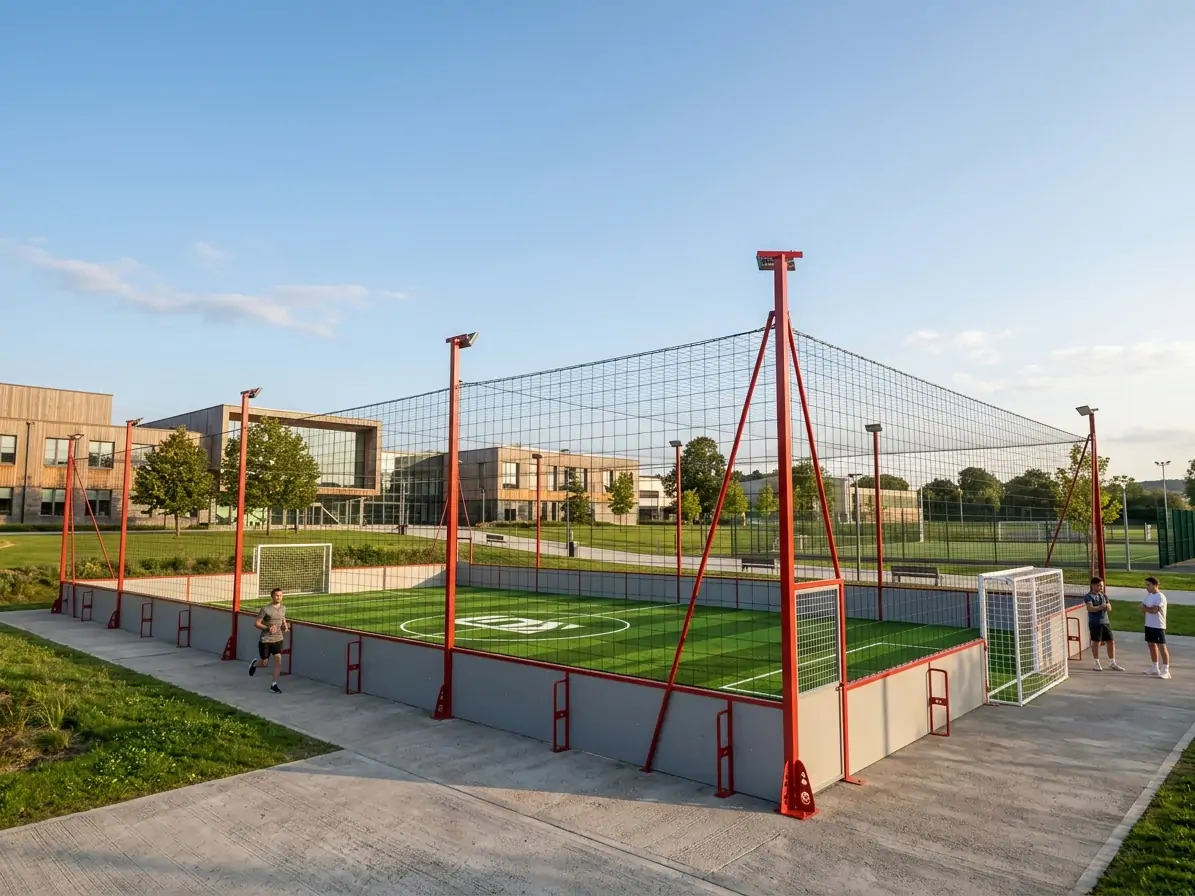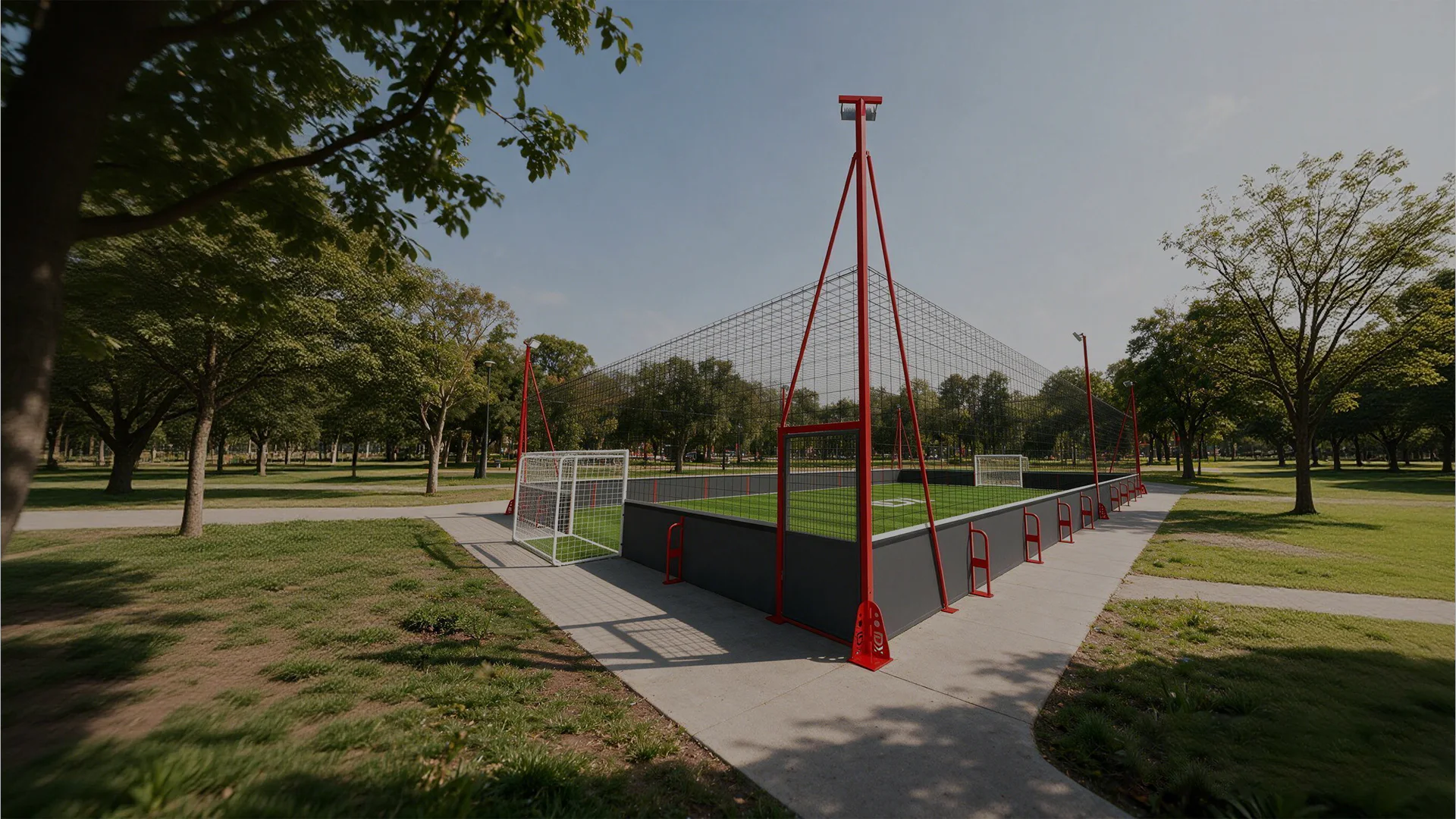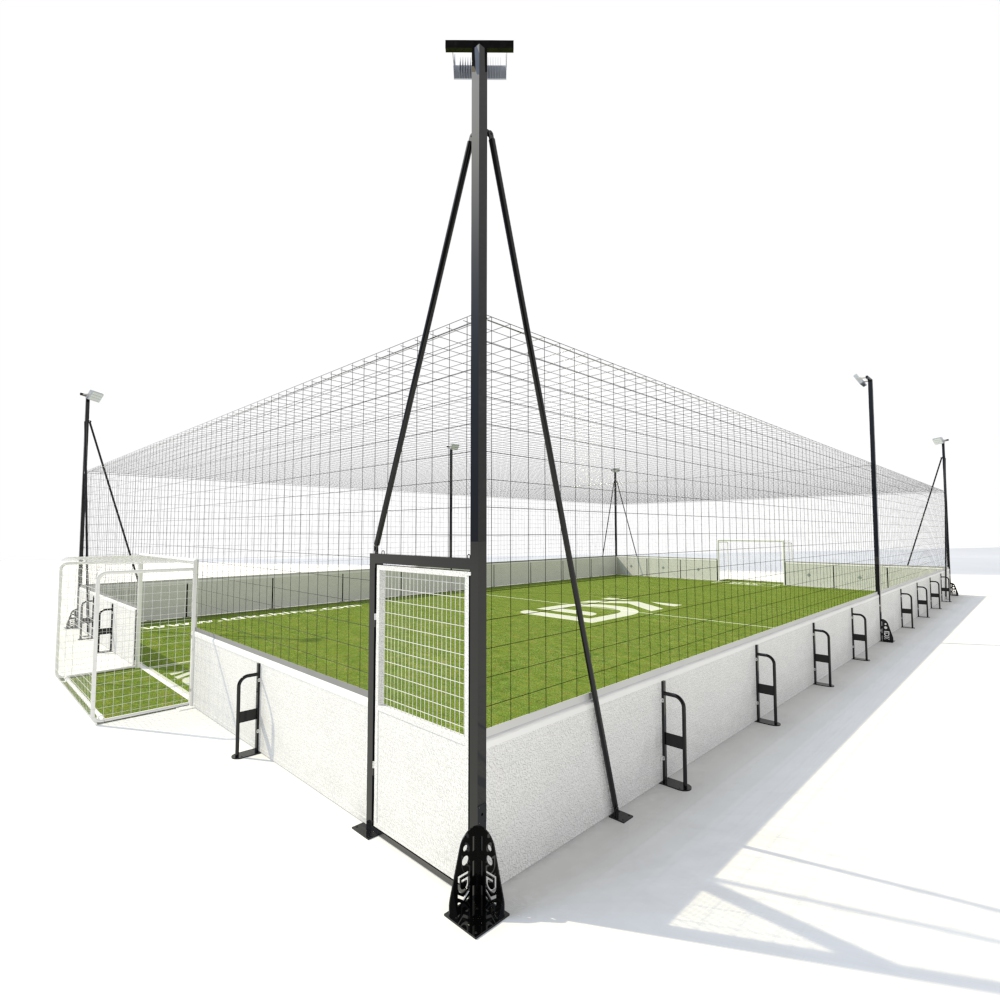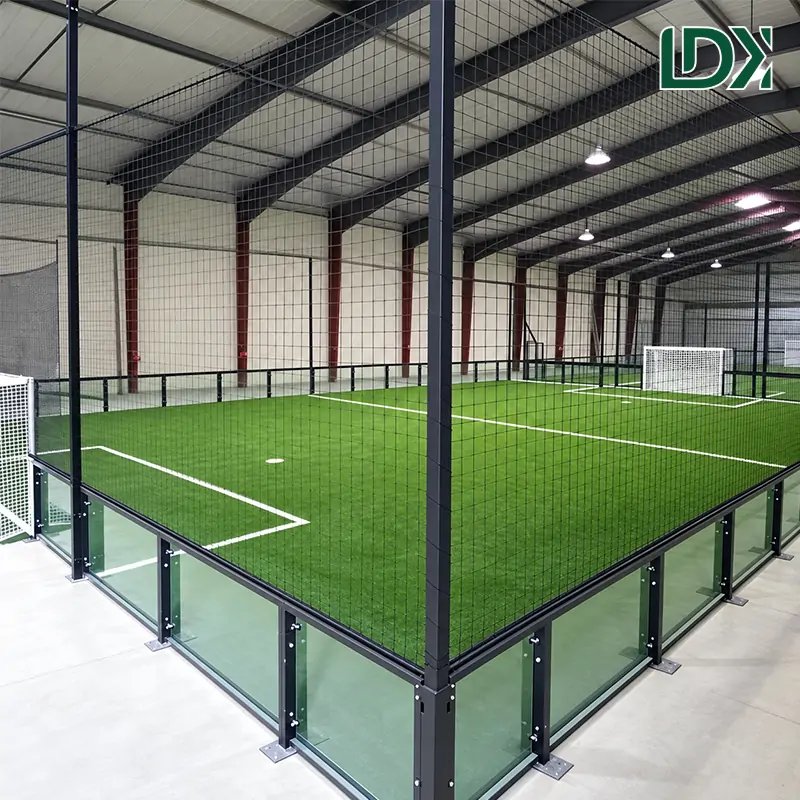
Outdoor glass football cages have become a high-value addition to urban sports parks, school campuses, commercial fitness venues, football academies and community recreational spaces. Unlike traditional mesh or metal barrier enclosures, fully glazed football cages deliver unobstructed spectator visibility, consistent ball rebound, superior structural durability and a premium visual finish. For project contractors, facility owners, developers and procurement teams, selecting the right outdoor system requires careful evaluation of safety standards, material performance, weather resistance, installation requirements and total lifecycle cost.
What Is an Outdoor Glass Football Cage?
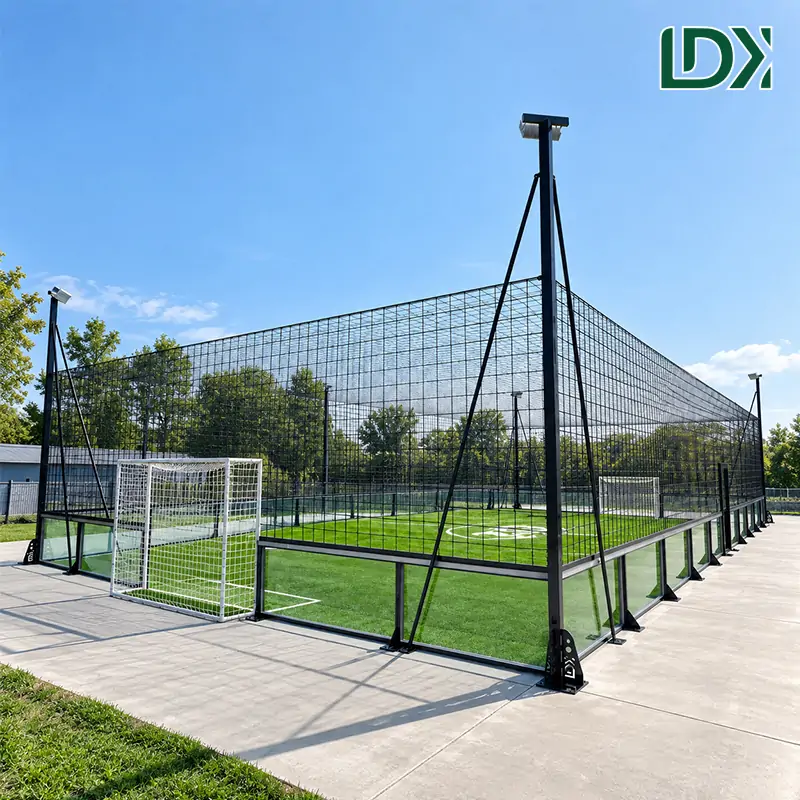
An outdoor glass football cage is a fully enclosed small-sided football structure that uses tempered safety glass as perimeter barriers, supported by a rigid metal frame. It is purpose-built for permanent outdoor installation and designed for 3v3, 4v4 or 5v5 play formats.
Key functional advantages over mesh or netting systems:
• Unobstructed sightlines for spectators, coaches and venue management
• Higher impact resistance and longer service life
• More consistent ball rebound behavior for improved play quality
• Lower long-term maintenance with no regular net replacement
• High-end aesthetic suitable for commercial and public-facing venues
Standard Dimensions & Site Requirements
Glass football cages are available in industry-standard sizes aligned with common small-sided football formats, as well as fully custom dimensions for site-specific projects.
| Play Format | Typical Internal Length | Typical Internal Width | Recommended Perimeter Clearance |
|---|---|---|---|
| 3v3 | 12 m | 8 m | 1 m minimum on all sides |
| 4v4 | 16 m | 10 m | 1 m minimum on all sides |
| 5v5 | 20 m | 12 m | 1.5 m minimum on all sides |
Mandatory site preconditions
• A flat, level base with maximum 3 mm per meter surface deviation
• Stable subsoil suitable for the selected foundation type
• Unobstructed access for delivery of full-size glass panels
• Compliance with local building codes for outdoor structural wind loads
• Proper site drainage to prevent standing water around the foundation
Key Performance Criteria for Glass Panels
The glass barrier is the safety-critical component of the system and must meet strict international standards for sports impact applications.
1. Glass type and safety certification
All commercial outdoor systems use fully tempered safety glass, which fractures into small blunt-edge fragments on extreme impact to minimize injury risk.
Standard thickness: 10–12 mm for recreational and commercial use; upgraded thickness available for high-traffic professional venues.
2. Impact and play performance
• Must withstand repeated football impacts at match velocity without cracking or loss of structural integrity
• Uniform surface rigidity ensures consistent ball rebound across all panel positions
• Soft body impact rating required for player contact safety
3. Outdoor durability
• Glass edges must be properly treated to resist moisture ingress
• Compatible with UV-stabilized gaskets and sealants for long-term outdoor exposure
• Resistant to thermal stress from seasonal temperature swings
Frame & Structural Material Options
The support frame carries all static and dynamic loads of the enclosure, including glass weight, wind force and impact energy. Two materials dominate the commercial market:
| Frame Material | Corrosion Resistance | Structural Strength | Weight | Typical Service Life | Best Application |
|---|---|---|---|---|---|
| Anodized Aluminum | Excellent | High | Lightweight | 20+ years | Coastal locations, premium venues, modular systems |
| Hot-Dip Galvanized Steel | Very Good | Very High | Heavier | 15–20 years | High wind zones, high-traffic public facilities, budget projects |
Additional specification notes:
• All fasteners and hardware should be stainless steel for outdoor corrosion protection
• Modular frame designs enable simpler panel replacement and future expansion
• Custom powder coating is available for both materials to match venue branding
Weather Resistance for Outdoor Installation
Systems designed for indoor use will fail rapidly in outdoor environments. Verify these critical weatherproofing features before purchase:
1. Wind load compliance: Rated for the maximum wind speed specified by local building codes
2. Water management: Integrated drainage channels in the base frame and sealed vertical joints to prevent water ingress
3. Thermal movement accommodation: Floating glass mounting systems that allow for expansion and contraction without inducing panel stress
4. UV stabilization: All gaskets, sealants and frame coatings rated for continuous UV exposure
Installation & Foundation Considerations
Foundation quality and installation precision directly determine the long-term safety and performance of the cage.
Common foundation types
• Reinforced concrete slab: Recommended for permanent commercial installations; provides uniform load distribution and maximum stability
• Ground anchor system: Suitable for semi-permanent installations; requires competent subsoil conditions
Installation timeline
A standard 5v5 outdoor glass football cage typically requires 3–5 working days for a two-person professional installation crew, subject to site readiness and weather conditions.
Pre-installation checks
• Confirm underground utility locations before any ground works
• Verify site flatness and dimensions against fabrication drawings
• Ensure adequate access for heavy glass panel delivery and lifting
Cost Factors & Total Cost of Ownership
Upfront purchase price represents only a portion of the full lifecycle investment. Buyers should evaluate total cost of ownership over a 15–20 year lifespan.
Upfront capital costs
• Core glass cage system
• Transportation and onsite delivery
• Site preparation and foundation works
• Professional installation and commissioning
Ongoing operational costs
• Routine cleaning and periodic safety inspection
• Gasket and sealant replacement every 8–12 years
• Occasional glass panel replacement in case of accidental damage
As a general principle, premium aluminum-framed systems carry a higher initial investment but lower long-term maintenance and replacement costs.
How to Select a Reliable Manufacturer
Supplier capability is the single biggest factor in project success. For commercial and public sector projects, prioritize manufacturers with:
• Documented third-party certification for all safety and structural standards
• A verified portfolio of completed outdoor glass cage projects
• In-house engineering support for custom design and site adaptation
• Clear, written warranty terms for materials and workmanship
• Availability of spare parts and technical after-sales support
• Knowledge of local building codes and regulatory requirements in your region
FAQ
Are glass football cages suitable for children’s play areas?
Yes, when manufactured and installed to certified safety glass standards. Tempered safety glass is the same glazing material used in public playground barriers and commercial building facades.
Can I add lighting or integrated goals?
Most modular glass cage systems support optional add-ons including integrated LED floodlighting, built-in goal units and ball return systems. Always confirm compatibility with the manufacturer at the design stage.
Final Recommendations
An outdoor glass football cage is a long-term infrastructure investment. Prioritize verified safety certification, material durability and manufacturer track record over the lowest upfront price.
Always ensure proposed systems meet all applicable local building codes and sports facility standards before placing an order.
If you are developing an outdoor glass football cage project and need custom specification advice, engineering support or a detailed quotation, the LDK technical team can provide site-specific guidance and reference project cases tailored to your requirements.