Football Cage Planning Guide: Sizes, Components and Project Quotes
A football cage gives a small-sided game a defined playing area, with perimeter structures that help keep the ball in play. For a school, club or commercial sports facility, the right setup depends on the available site, playing format, indoor or outdoor use, and the equipment included in the supplier’s quotation.
There is no single layout that fits every project. Start with the site and intended use, then compare the field dimensions, enclosure, turf, goals, lighting and delivery scope as one system. This guide explains what to confirm before you request a football cage quote.
What Is a Football Cage?
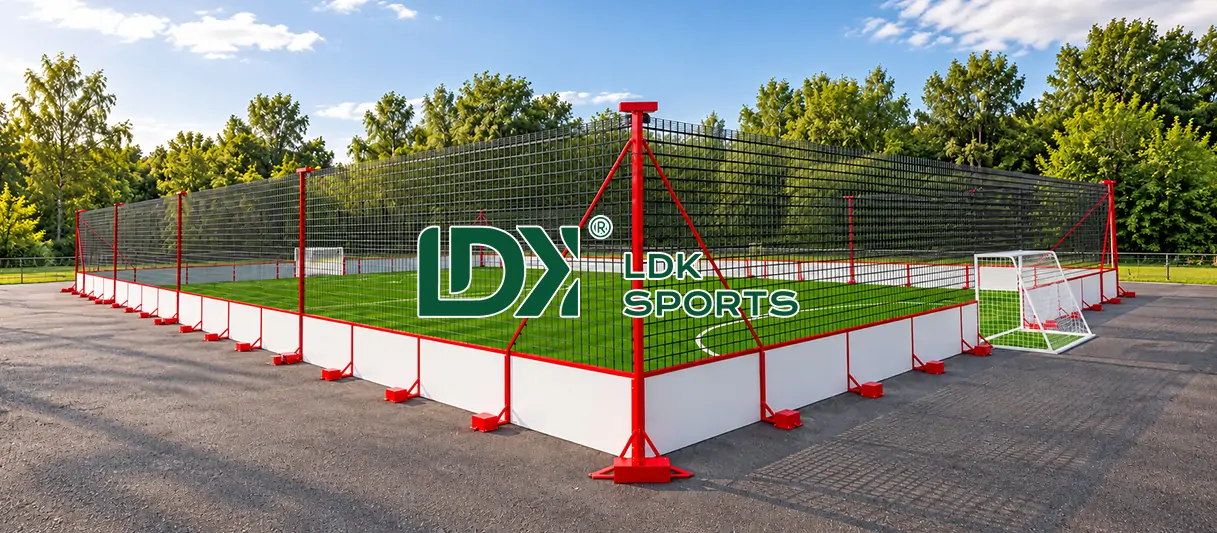
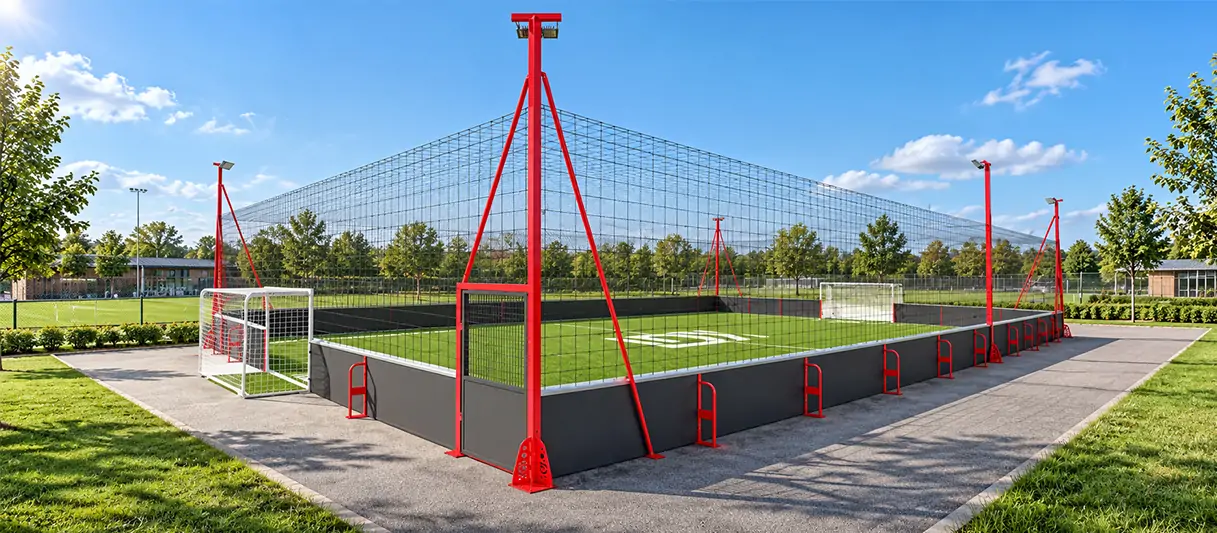
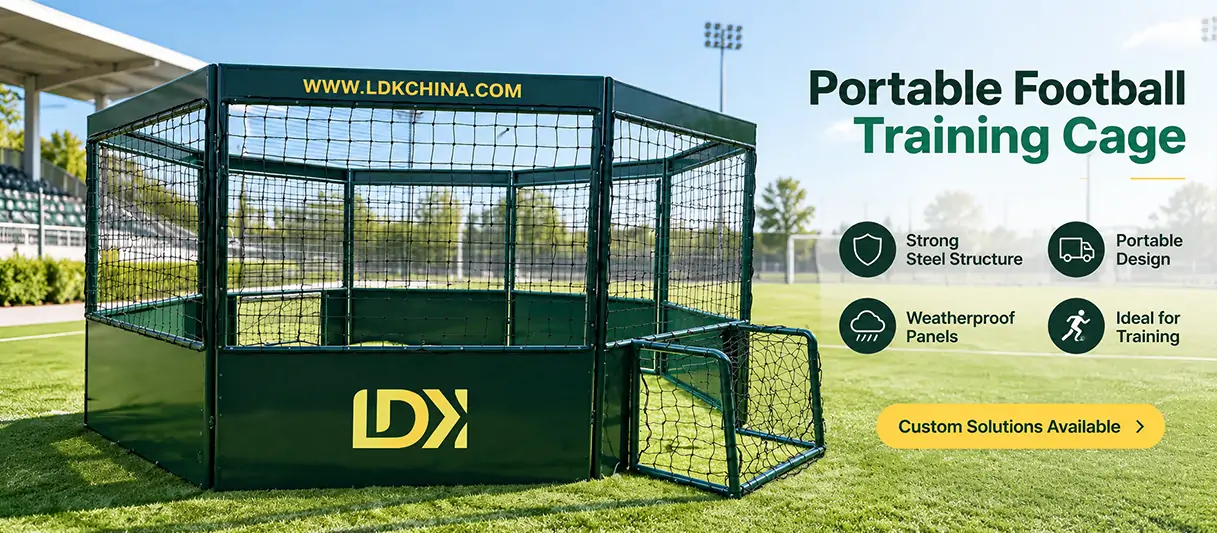
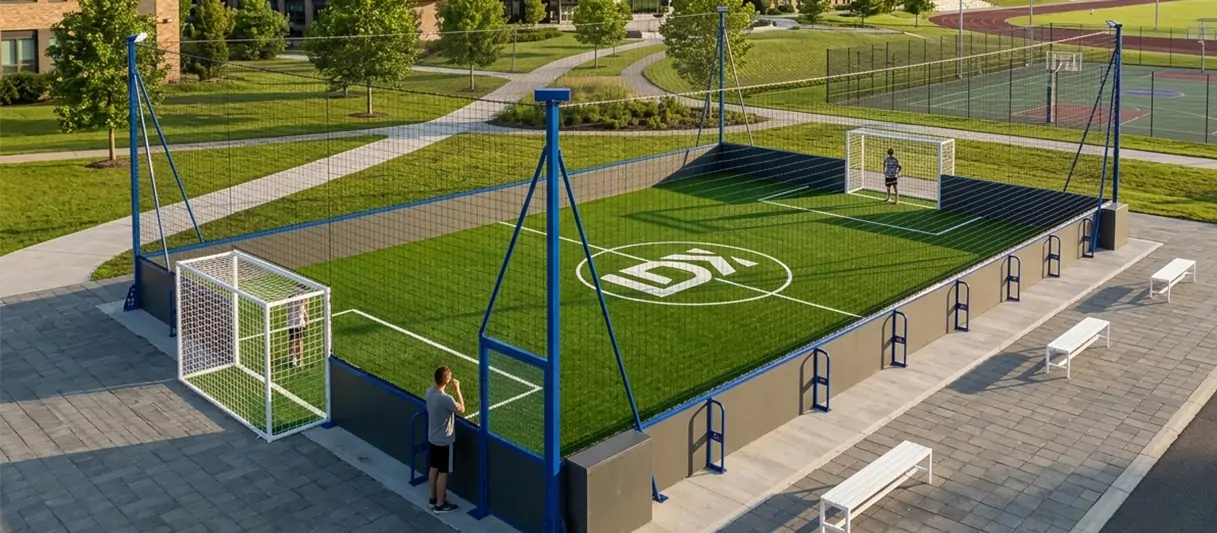
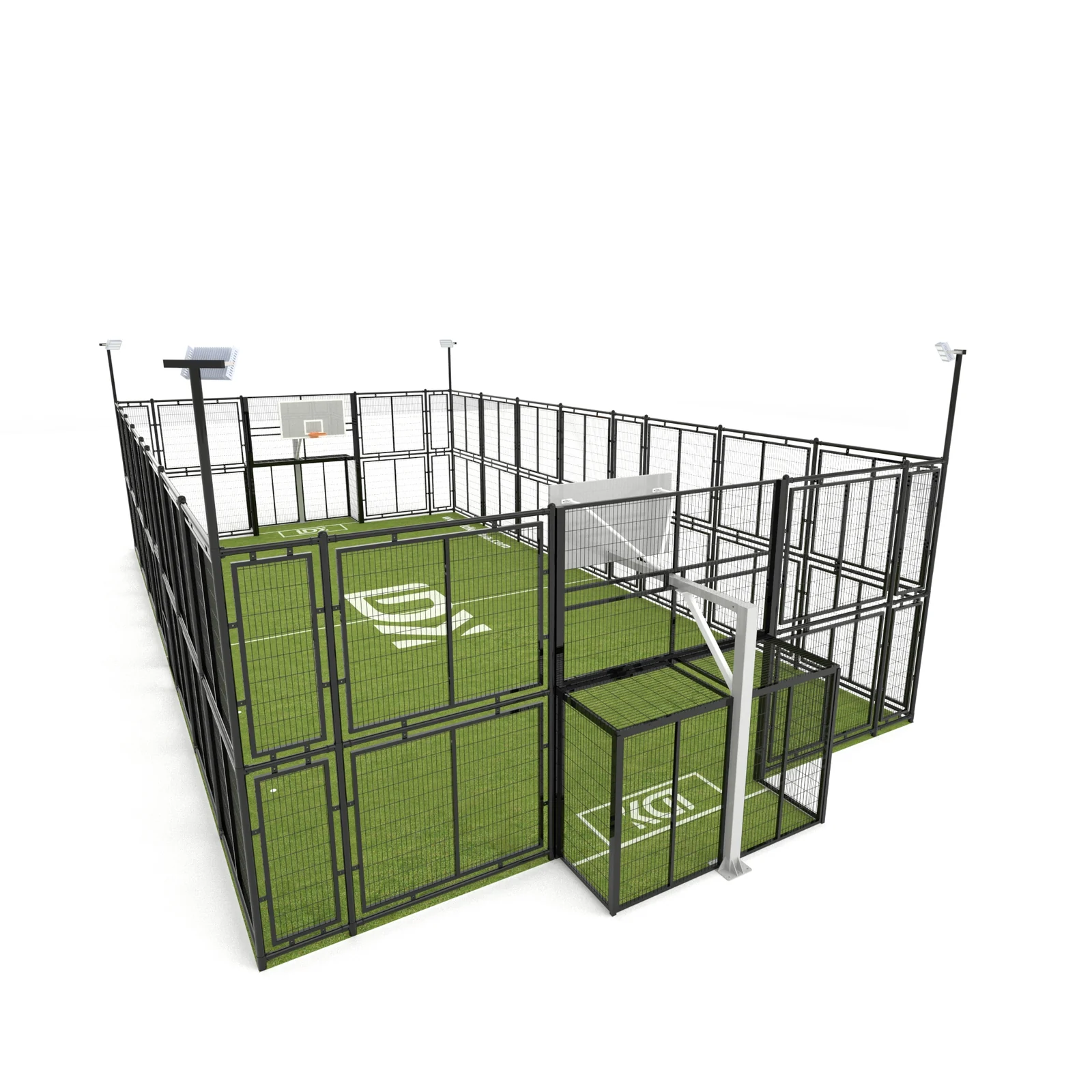
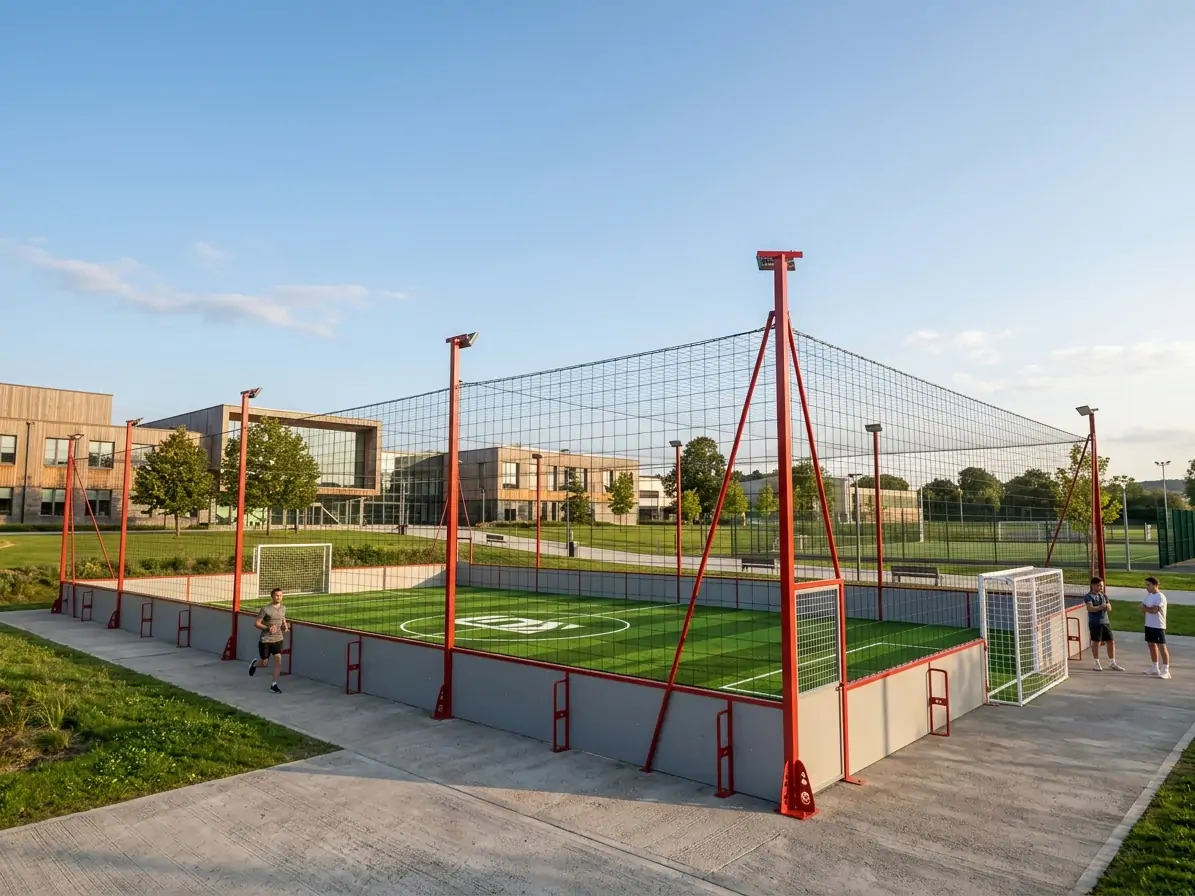
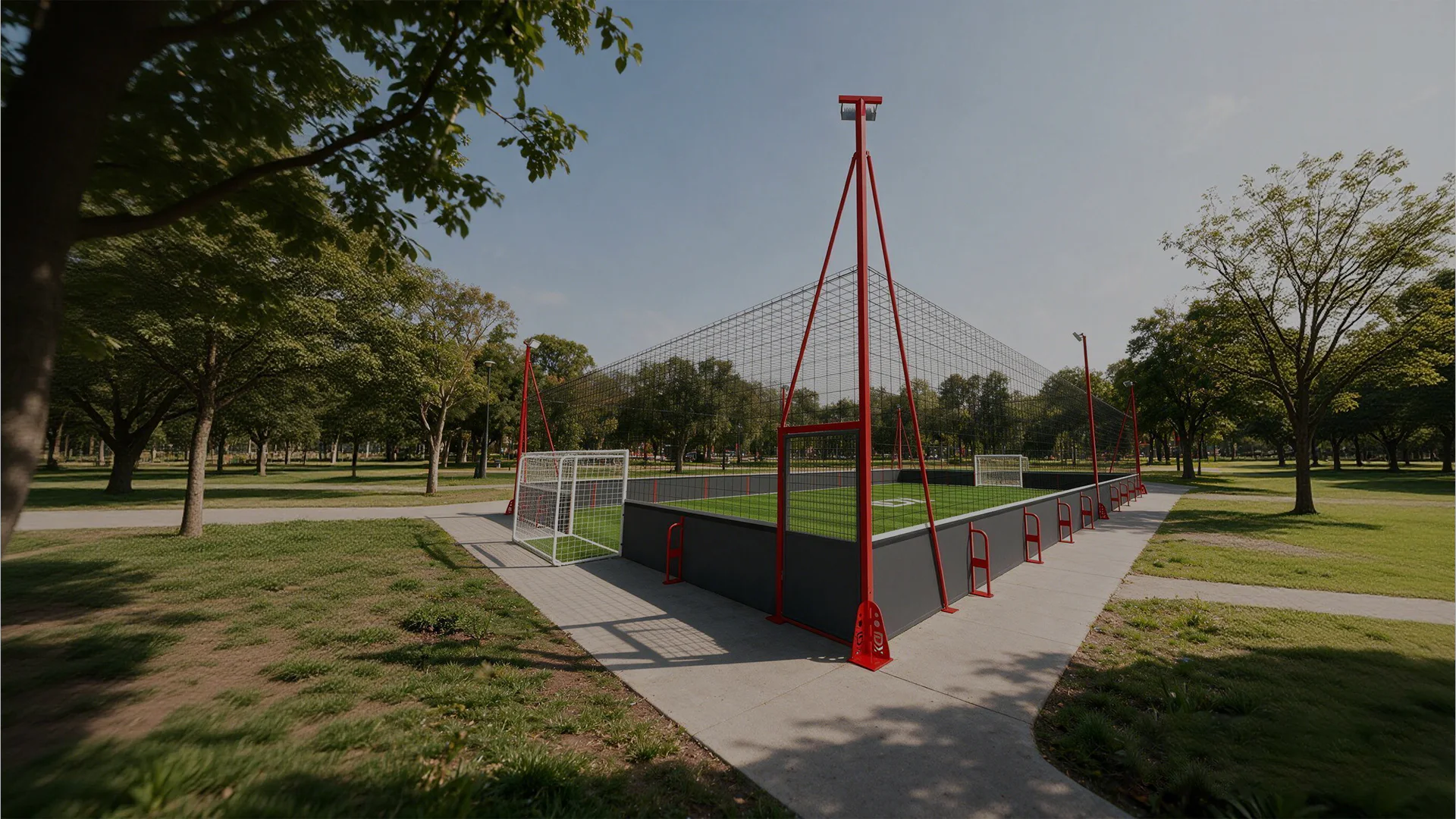
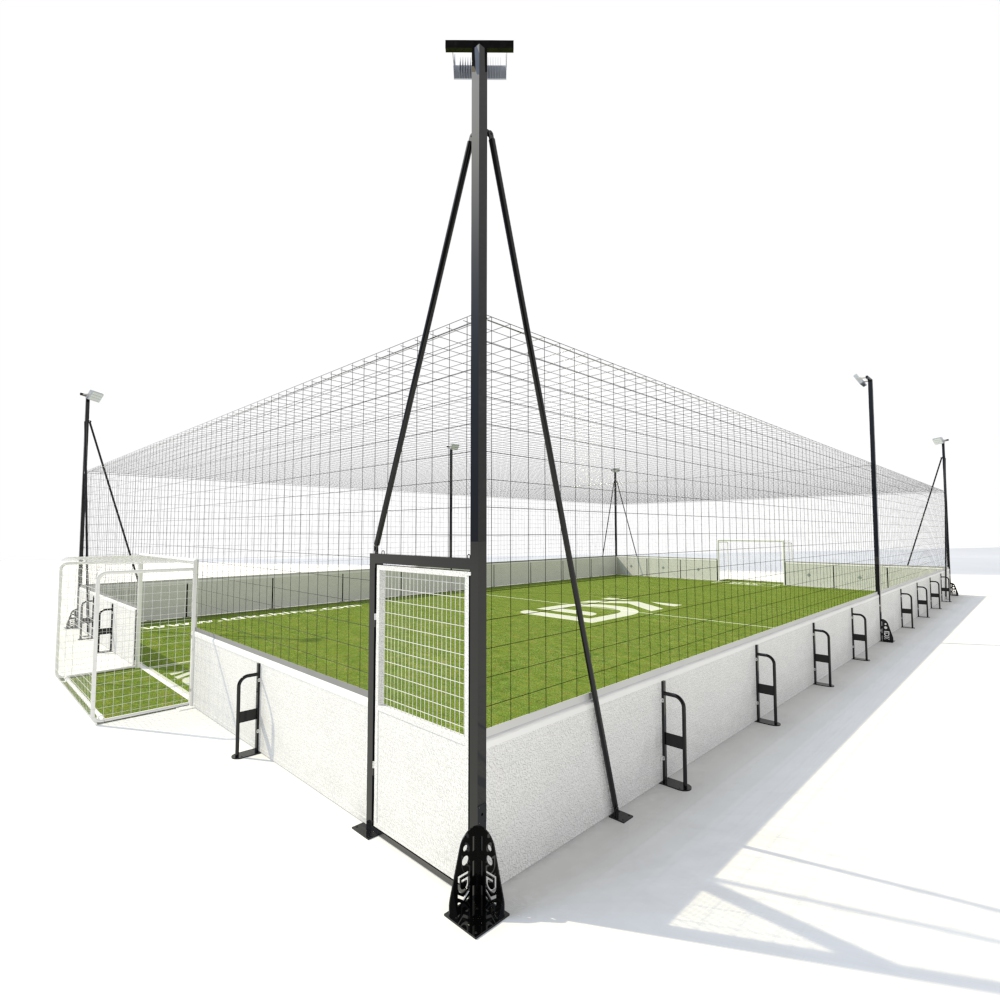
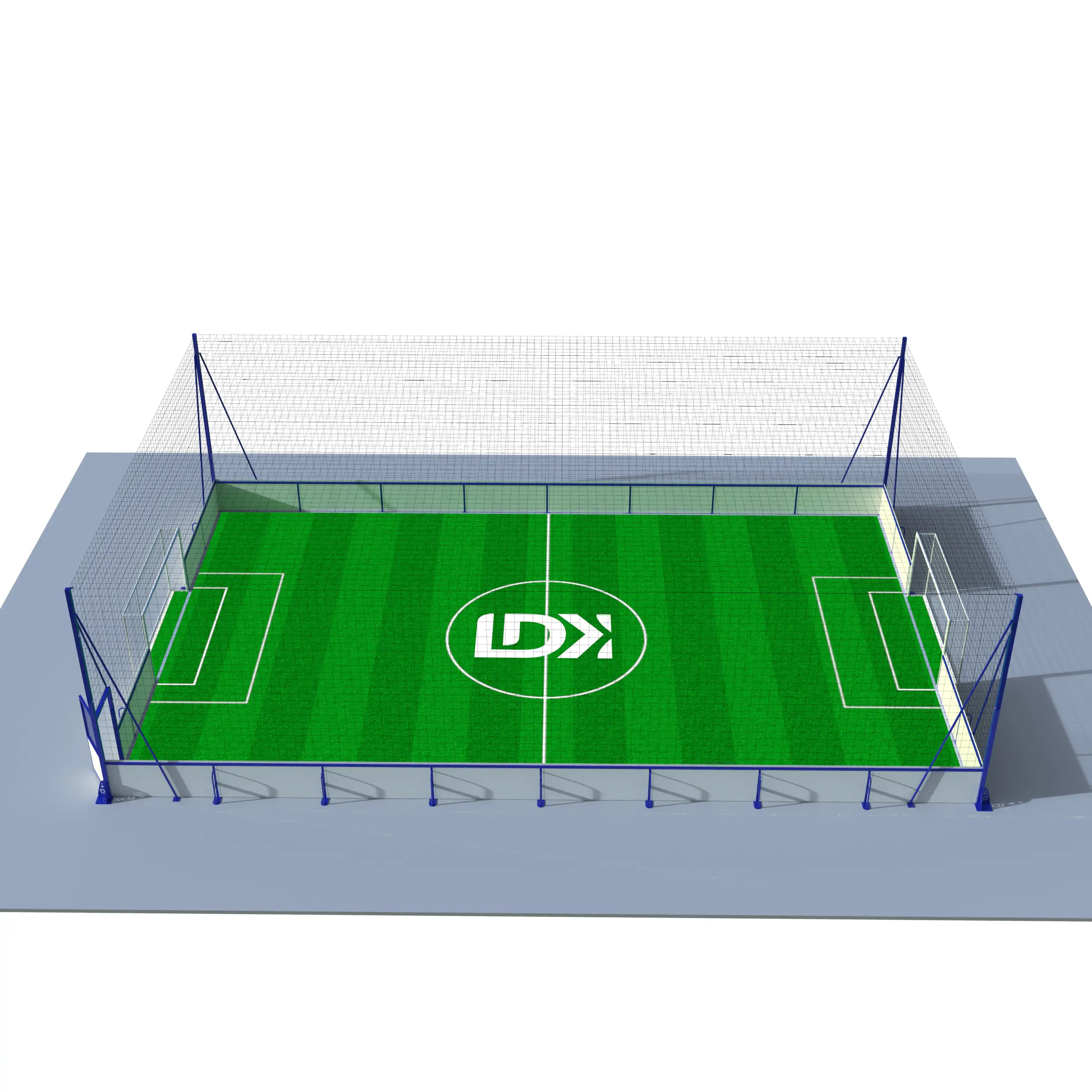
A football cage is an enclosed area for small-sided football. Depending on the project, the perimeter can combine a frame, boards or panels, mesh or netting, and goals. Some formats are permanent facilities for schools, clubs or sports centers; others are compact, temporary or recreational cages. The name alone does not tell you the dimensions, materials, team format or intended level of use.
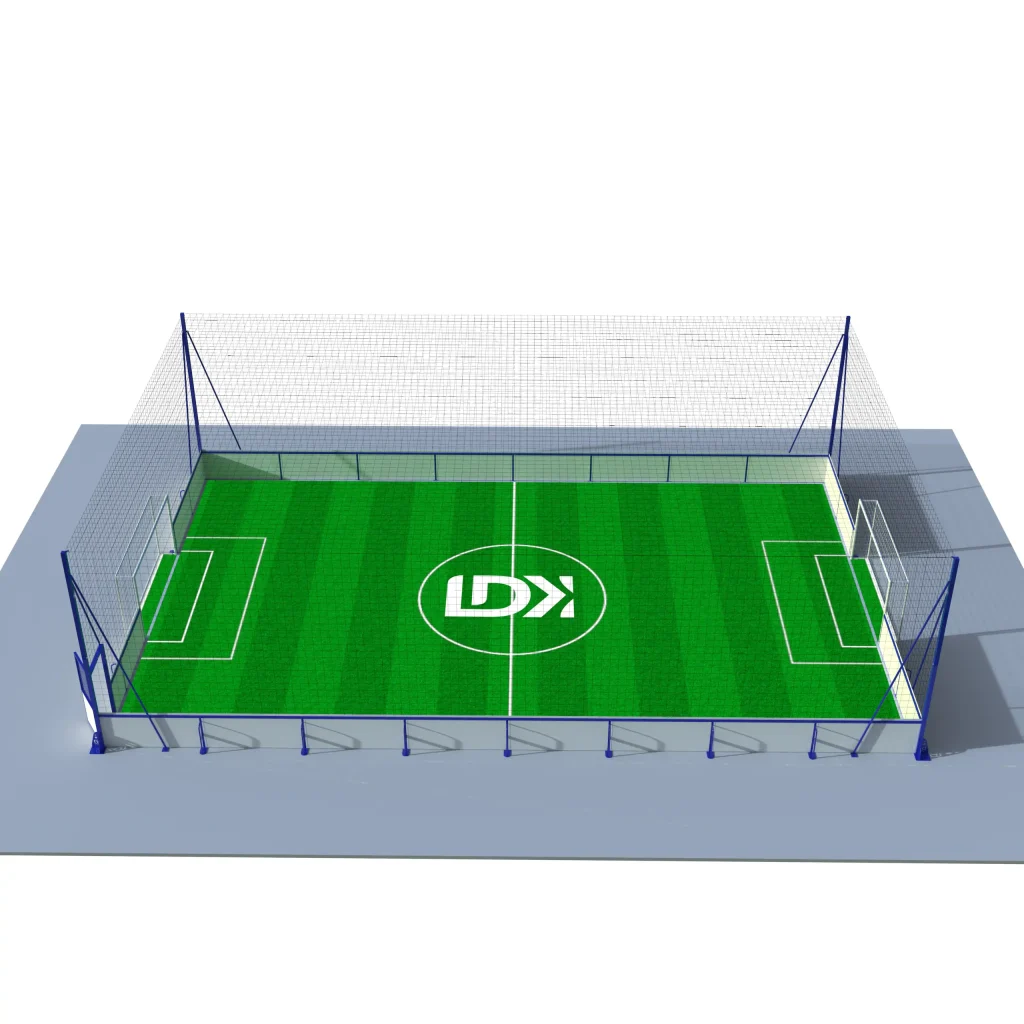
When comparing products, ask whether the offer is for a complete playing area or only part of the system. A cage package may include some combination of the enclosure, goals, playing surface and accessories. Site preparation, foundations, electrical work, unloading and installation may be priced separately, so have the supplier define the scope in writing.
Start With the Site and Playing Format
Before selecting a model, prepare a basic site brief. Measure the usable area and note fixed obstacles, access routes, nearby buildings and the intended indoor or outdoor location. If you have a target format, such as 5-a-side or 7-a-side, include it in the brief and ask the supplier to confirm a layout that fits the site.
It also helps to distinguish the boundary available for the whole installation from the playing area you want inside it. Mark entrances, columns, walls, storage areas and routes for players or maintenance on the drawing. If you do not yet have a scaled plan, send measured photos and a simple sketch, then ask the supplier what additional dimensions are needed before design approval. A quick site brief at the start can prevent a quote from being based on an assumed footprint.
Do not use a product example as a universal minimum or standard. A supplier may be able to customize a field to the site, but the final layout still needs to account for the playing area, enclosure, entrances and any local project requirements. Ask for a dimensioned drawing before approving the order.
Useful information to prepare includes:
- Site length, width and any height restrictions
- Indoor or outdoor installation
- Intended team format and expected use
- Preferred turf type and color
- Number and position of access gates
- Lighting requirements and available electrical connection
- Delivery location and any access restrictions for unloading
Compare Indoor and Outdoor Configuration Examples
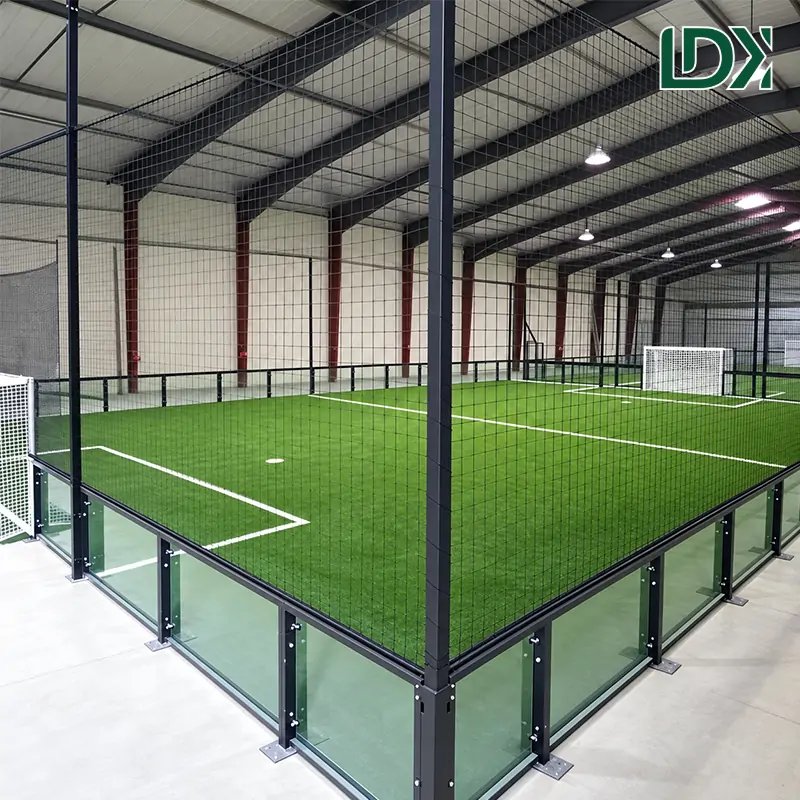
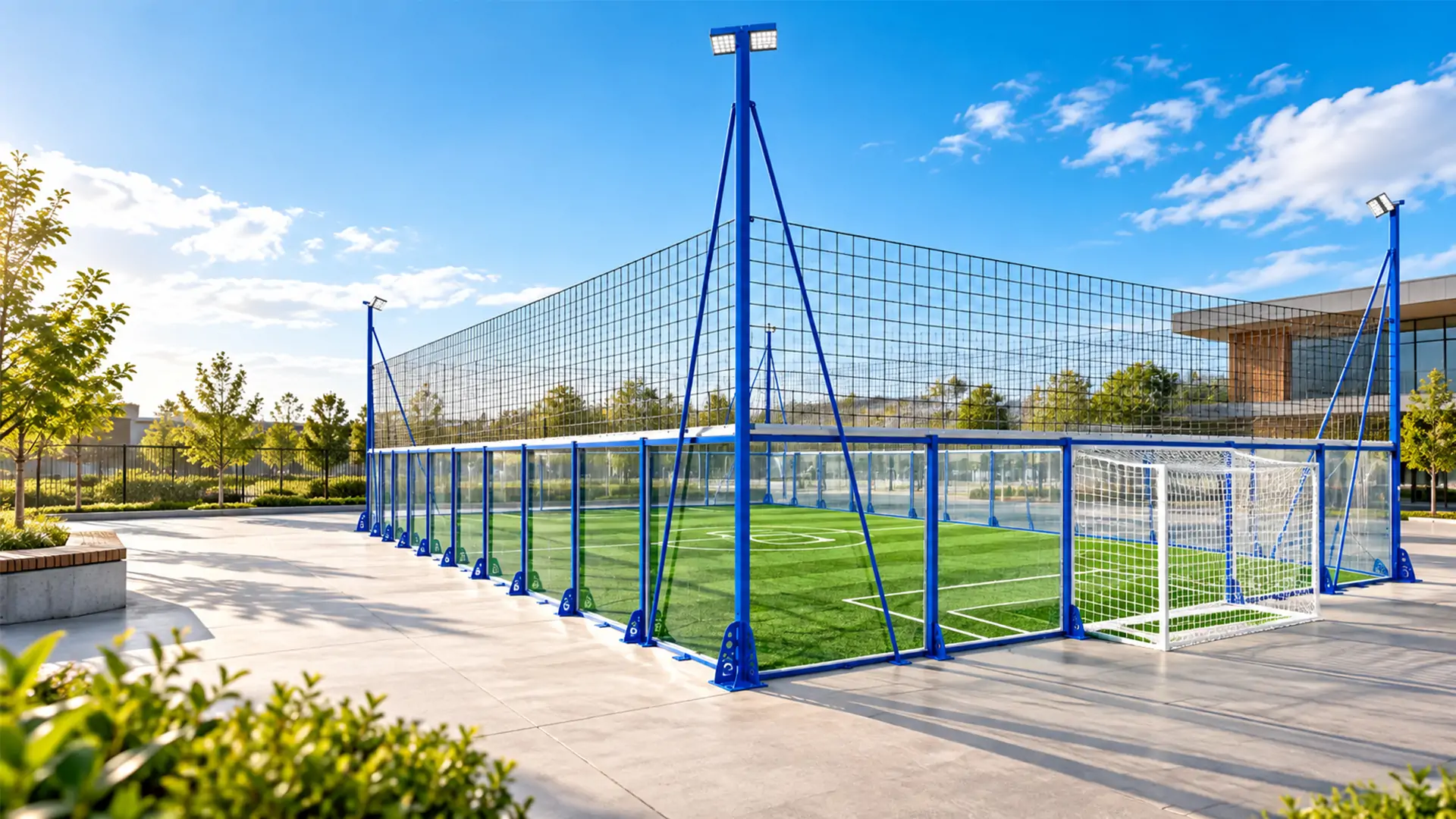
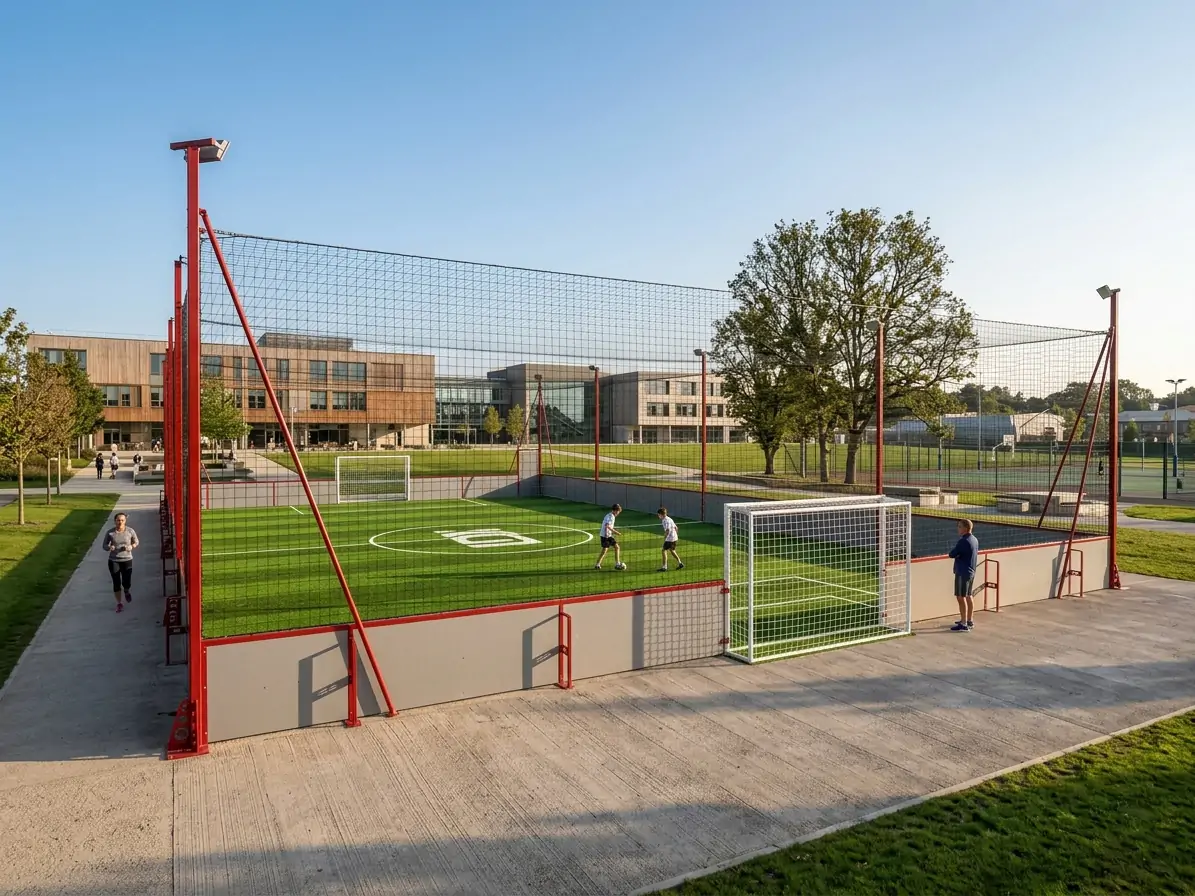
Indoor and outdoor projects can use different dimensions, surface specifications and options. The table below summarizes two configurations shown in LDK source quotations. They are examples from separate quotation sheets, not standard football-cage dimensions or a recommendation for every site.
| LDK quotation example | Field dimensions | Listed total height | Turf detail in source sheet |
|---|---|---|---|
| Indoor configuration | 20 × 35 m | 4 m | 25 mm pile height |
| Outdoor configuration | 20 × 30 m | 4 m | 50 mm pile height |
The figures describe those source configurations only. They do not establish that an indoor cage must be longer, that an outdoor field should use a particular turf height, or that either layout will suit your project. Confirm the current design, turf system and complete bill of materials with the supplier before comparing quotations.
For an outdoor field, also ask who is responsible for site preparation, drainage design, electrical connections and any local approvals. For an indoor project, confirm clear height, floor and access conditions, and how the enclosure will be fixed to the building or playing surface. Those requirements depend on the actual site and should be reviewed by the project’s qualified professionals.
LDK’s separate indoor and outdoor quotations show project-specific examples, so ask the team to confirm the dimensions and turf specification for your site.
Specify the Enclosure, Surface and Goals
A quote is easier to compare when each major component is identified separately. Ask the supplier to describe the frame and posts, perimeter boards or panels, netting, gates, goals, turf and any underlay or infill. Confirm dimensions, material descriptions, finishes, quantities and what is included in the quoted package.
For the playing surface, request the exact turf description and any listed shock pad, infill, seam tape or adhesive. Those items can affect what must be sourced locally and what needs to be shipped with the main equipment. Avoid comparing a turf-only price with a package that includes additional layers or accessories; ask for each line item to be identified so you can see what the quotation covers.
One LDK quotation sheet, for example, lists round steel posts, a composite board, soft netting, a door and a soccer goal. These details are tied to that listed configuration; other projects may use different components or options.
| Specification to confirm | Questions for the supplier |
|---|---|
| Frame and posts | What material, dimensions and finish are specified? |
| Boards or panels | What height and construction are included? |
| Netting | What mesh, material and coverage are quoted? |
| Goals and gates | How many are included, and where are they positioned? |
| Turf and infill | What surface system and accessories are included? |
| Optional items | Which items are excluded or priced separately? |
Do not compare quotations by headline price alone. Check that each supplier has priced the same field area and a comparable list of components. If an item is not clearly named, ask whether it is included, optional or outside the supplier’s scope.
One LDK quotation lists 76 × 2.5 mm round steel posts, 1 m-high, 5 cm-thick composite boards and 4 mm netting with 100 × 100 mm mesh; confirm these specifications for the configuration you request.
Check Lighting, Access and Installation Scope
Lighting can be specified as part of a football-cage project, but confirm whether the fixtures, poles, cabling and electrical connection are included. The required arrangement depends on the site, use schedule and local requirements; have the project team confirm the design rather than relying on a product-page description alone.
Access details also affect planning. Confirm gate size and location, delivery access, unloading responsibilities and whether installation is included. If the supplier provides drawings or assembly guidance, ask when they will be issued and what site conditions must be ready before delivery.
Use a responsibility checklist before placing an order:
- Who prepares the site and any required foundation?
- Who handles drainage, electrical work and permits, where applicable?
- Who arranges shipping, customs clearance and local transport?
- Is unloading equipment needed, and who supplies it?
- Is on-site installation included, optional or arranged locally?
- Which party confirms the final dimensions and bill of materials?
The answers should appear in the current quotation or project documents. Do not assume that a supplier’s equipment quote includes construction, freight or installation unless the scope says so.
What to Include in a Football Cage Quote Request
Send suppliers enough information to quote the same project. Include the destination, site dimensions or drawing, indoor or outdoor use, intended playing format, quantity of fields and preferred surface. Add any requirements for gates, lighting, branding, colors, goals, delivery and installation.
Ask each supplier to return an itemized scope that identifies:
- Field dimensions and total enclosure height
- Frame, boards, netting, gates and goals
- Turf system and any underlay or infill
- Lighting and electrical items, if requested
- Packaging, shipping terms and destination costs
- Site preparation, unloading and installation responsibilities
- Exclusions, optional items, lead-time assumptions and quote validity
If you are comparing multiple suppliers, keep the same assumptions in each request. State whether the field is indoors or outdoors, whether the surface is included, and whether you expect equipment-only supply or help with installation. If a proposal uses a different dimension or material from your brief, ask the supplier to flag the change rather than silently substituting it. This makes the offers easier to review with your project team.
Share the same brief with each supplier so the proposals can be compared on scope, not just on price. Before approving a drawing or deposit, check that the dimensions, components, delivery terms and exclusions match the project you intend to build.
LDK’s product page lists customization choices for field size, indoor or outdoor use, frame, netting, turf, lighting, panels, goals and branding; confirm which options fit your project.
FAQ
Can a football cage be customized to fit a specific site?
Customization may be available for field size and selected components. Provide a site plan and usable dimensions, then ask the supplier to confirm a final layout and bill of materials before ordering.
What should a football cage quotation include?
A useful quotation identifies the field dimensions, enclosure, turf, goals, gates and optional equipment, plus shipping and installation scope. Ask the supplier to state exclusions and separately priced items.
Are indoor and outdoor football cages the same size?
Not necessarily. The LDK materials reviewed show separate indoor and outdoor quotation examples with different field dimensions. Treat them as examples only; the project layout should be confirmed for the site.
Can lighting be added to a football cage?
Lighting may be offered as an option. Confirm fixture and pole quantities, electrical scope and whether installation is included in the current quotation.
Can the turf, colors or branding be changed?
Customization options may include surface and appearance choices. Confirm the available options, any minimum quantities and the final specification directly with the supplier.
Conclusion: Plan the Configuration Before Comparing Quotes
The examples in this guide are based on product information and quotation materials; no field-performance or installation test was conducted for this article. Have qualified local professionals review site-specific design and installation requirements.
A football cage is a project-specific facility, not just a frame around a pitch. Define the site, playing format and equipment scope first. Then compare itemized quotations that clearly separate the cage structure, turf, goals, lighting, shipping and installation.
To request a project quote from LDK, send your site dimensions, indoor or outdoor setting, preferred playing format and equipment list, and ask for an itemized scope and exclusions.