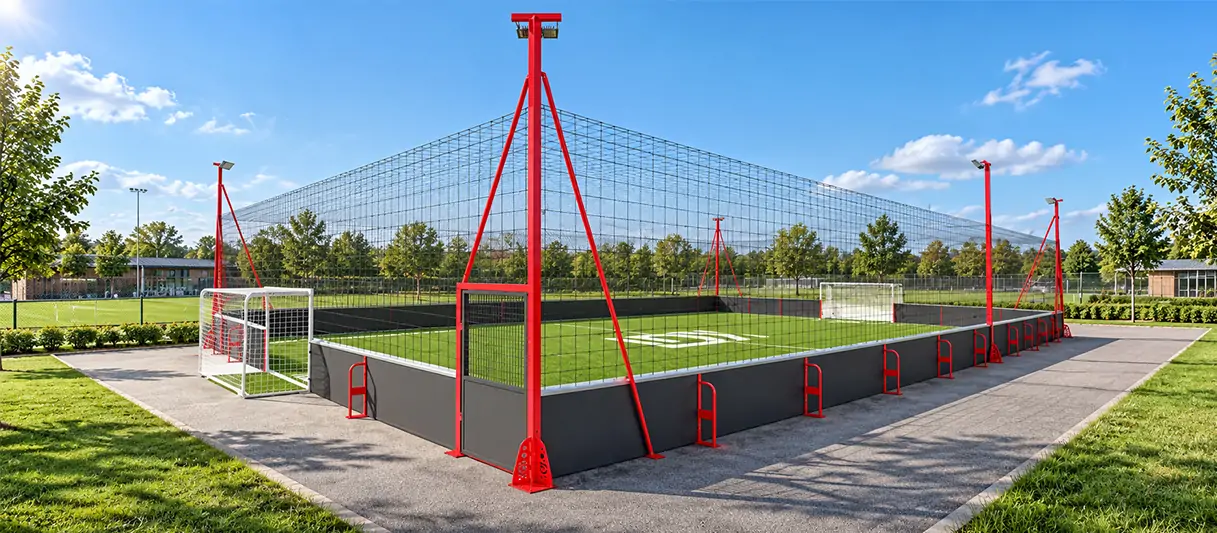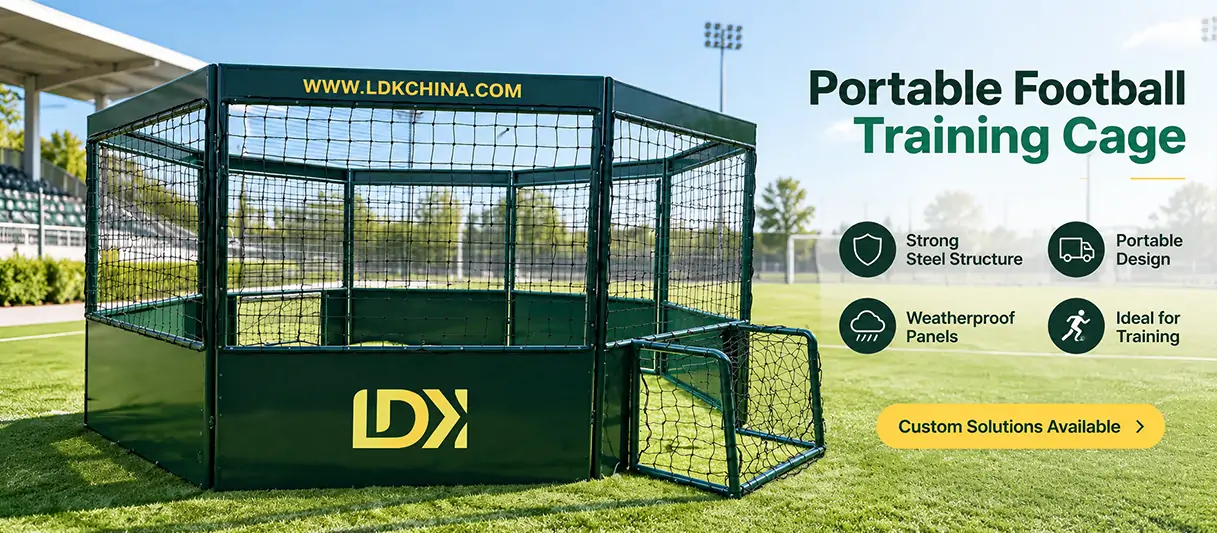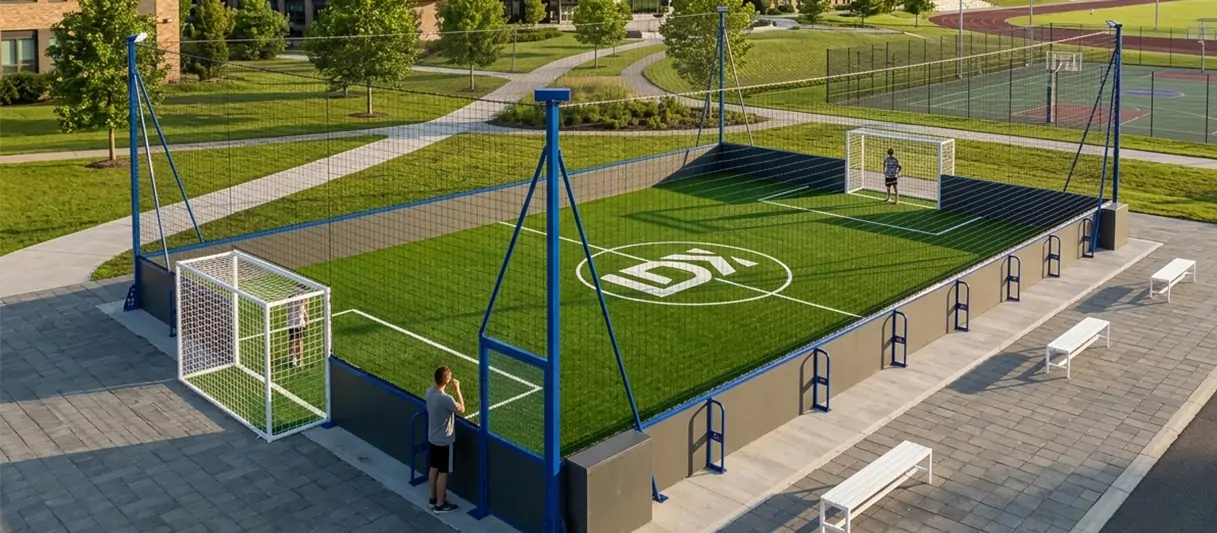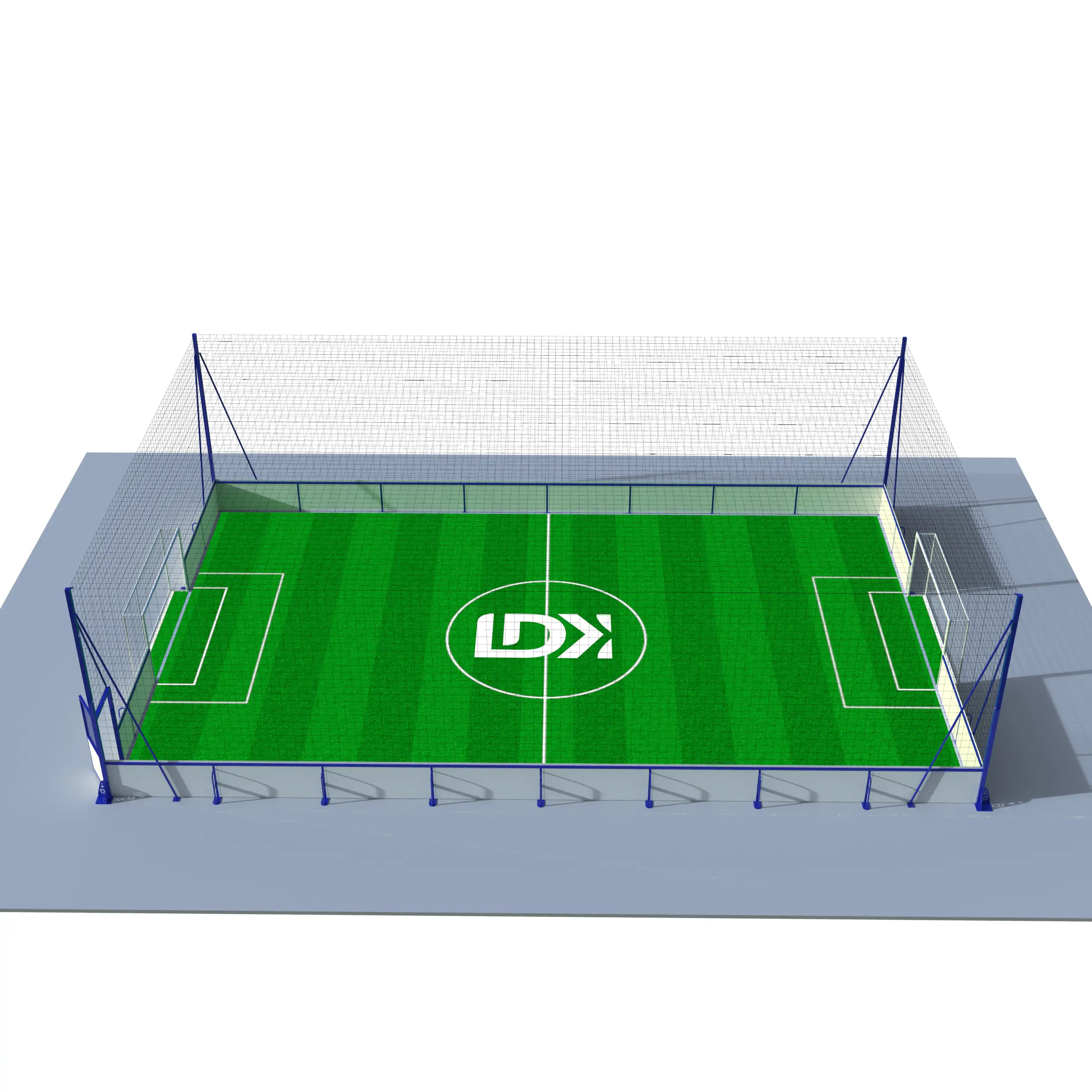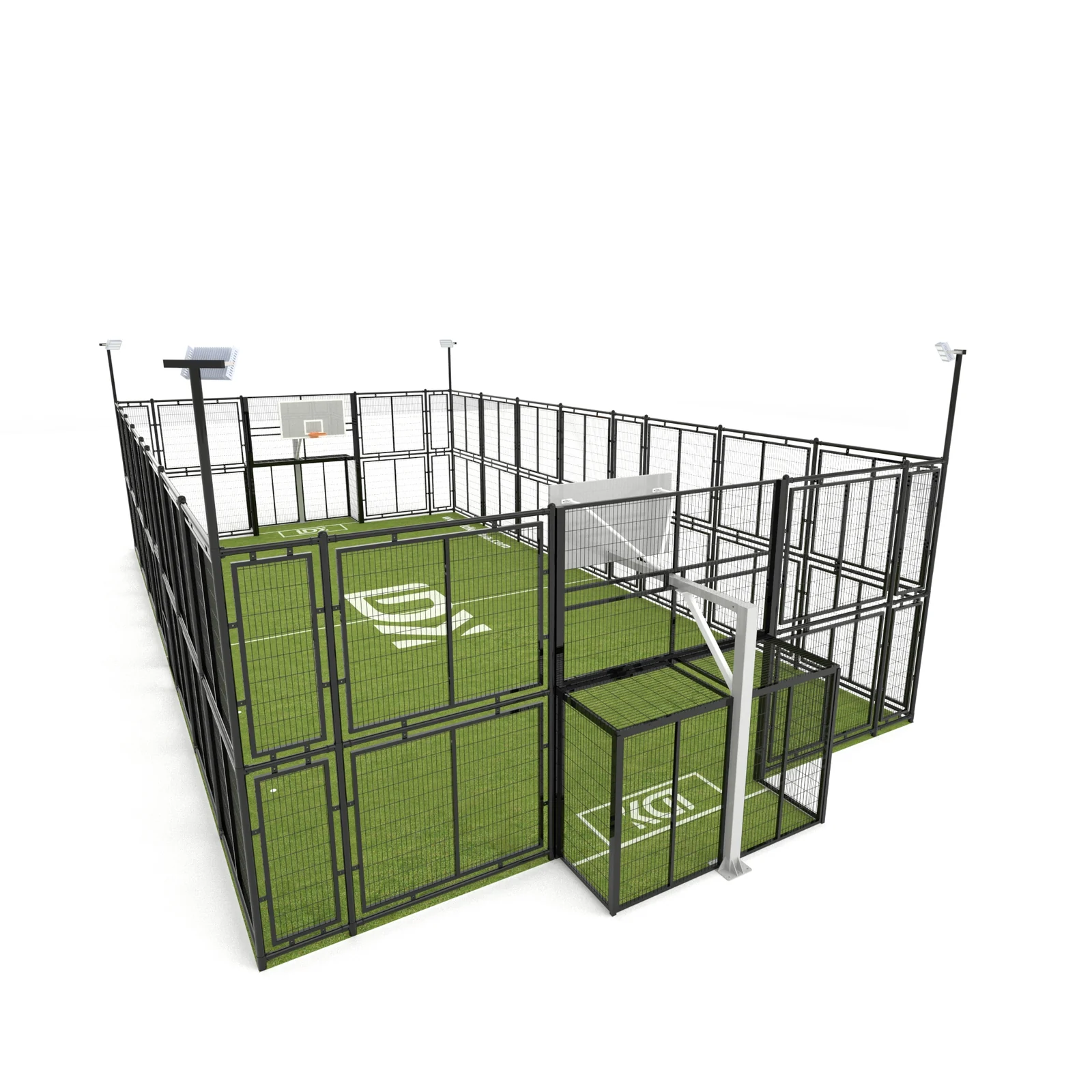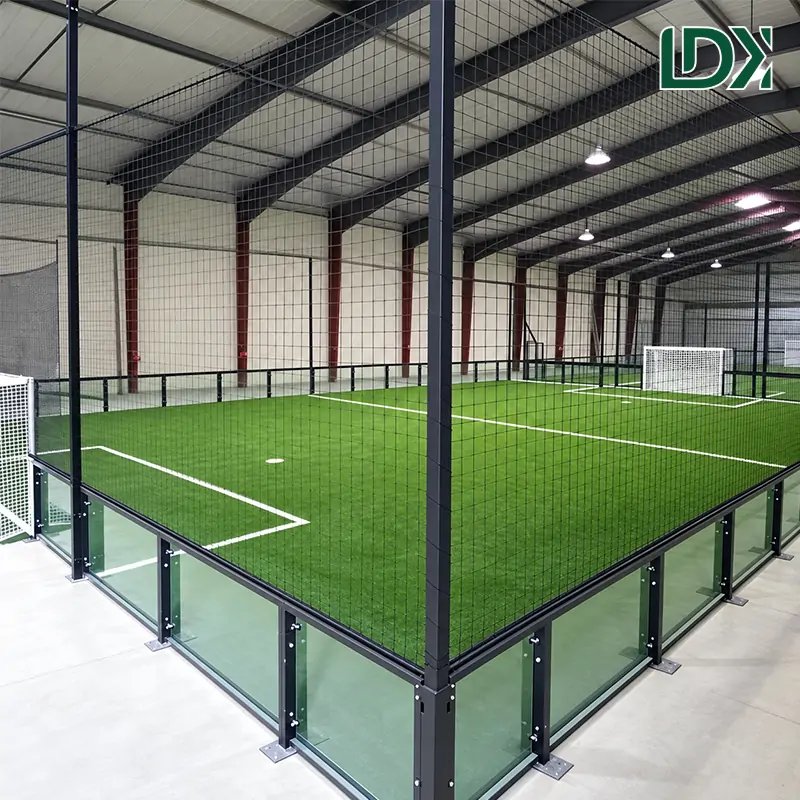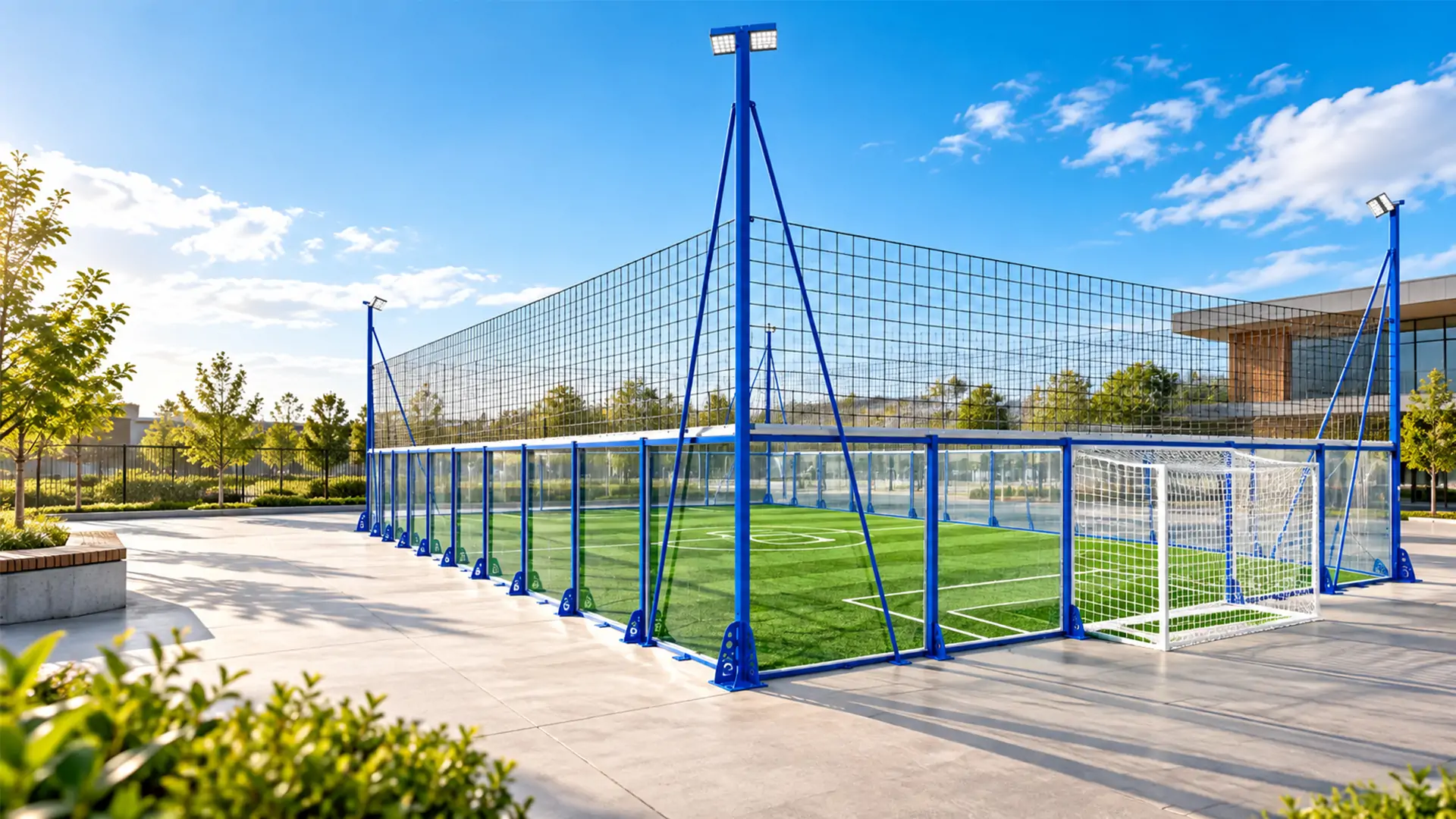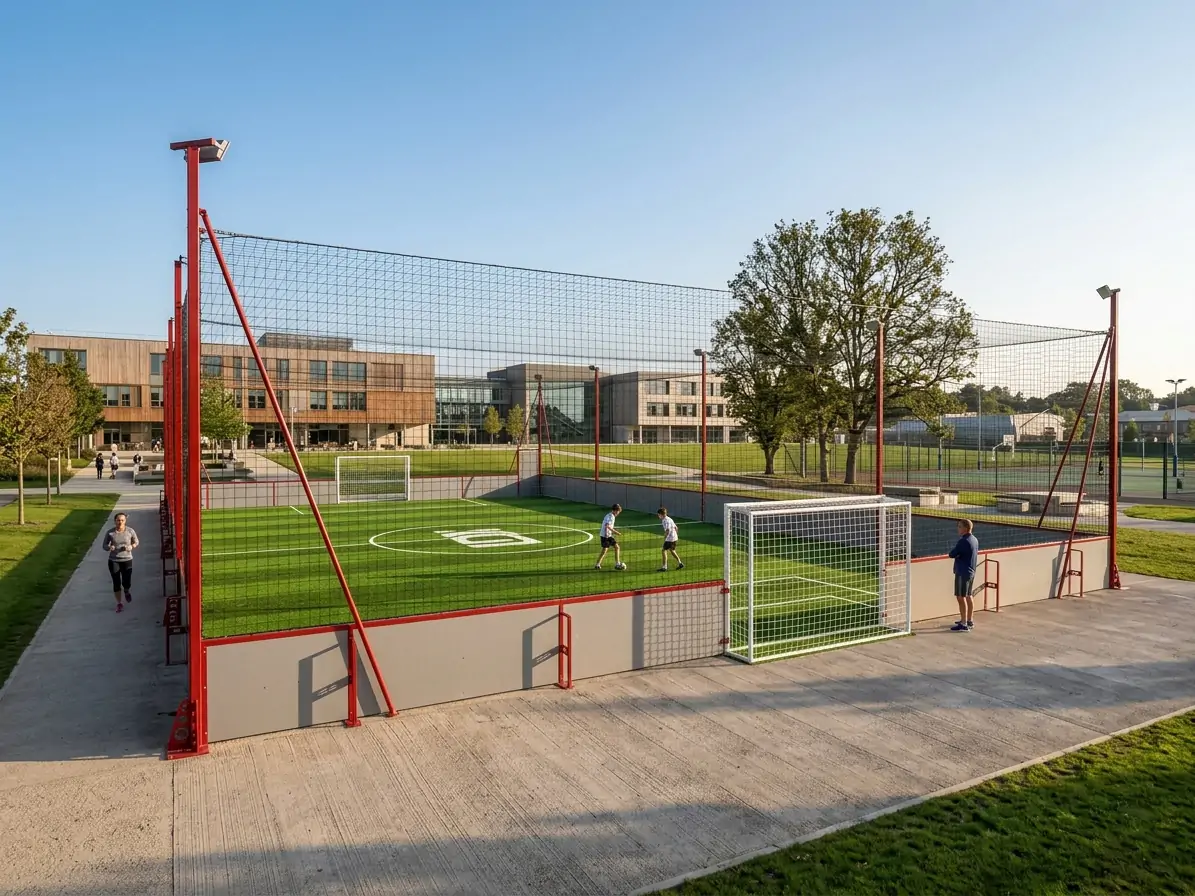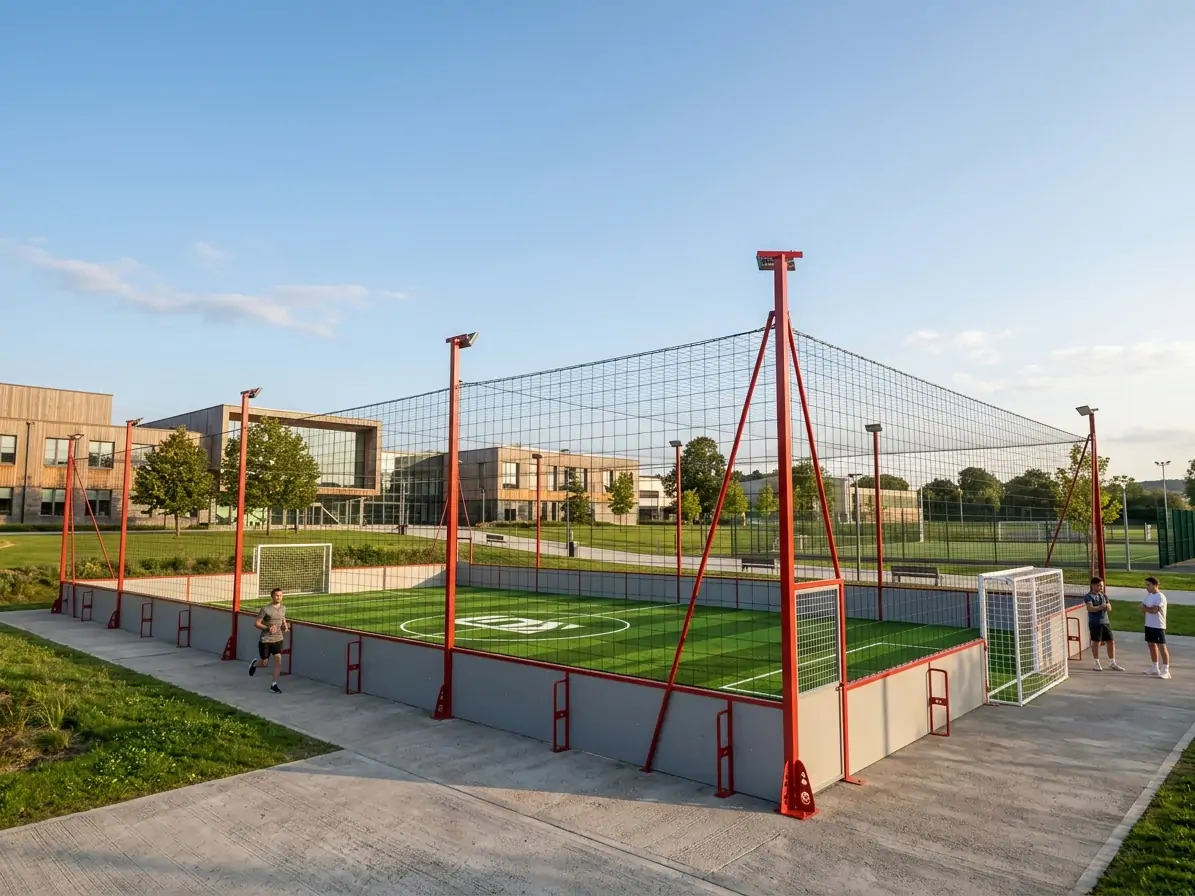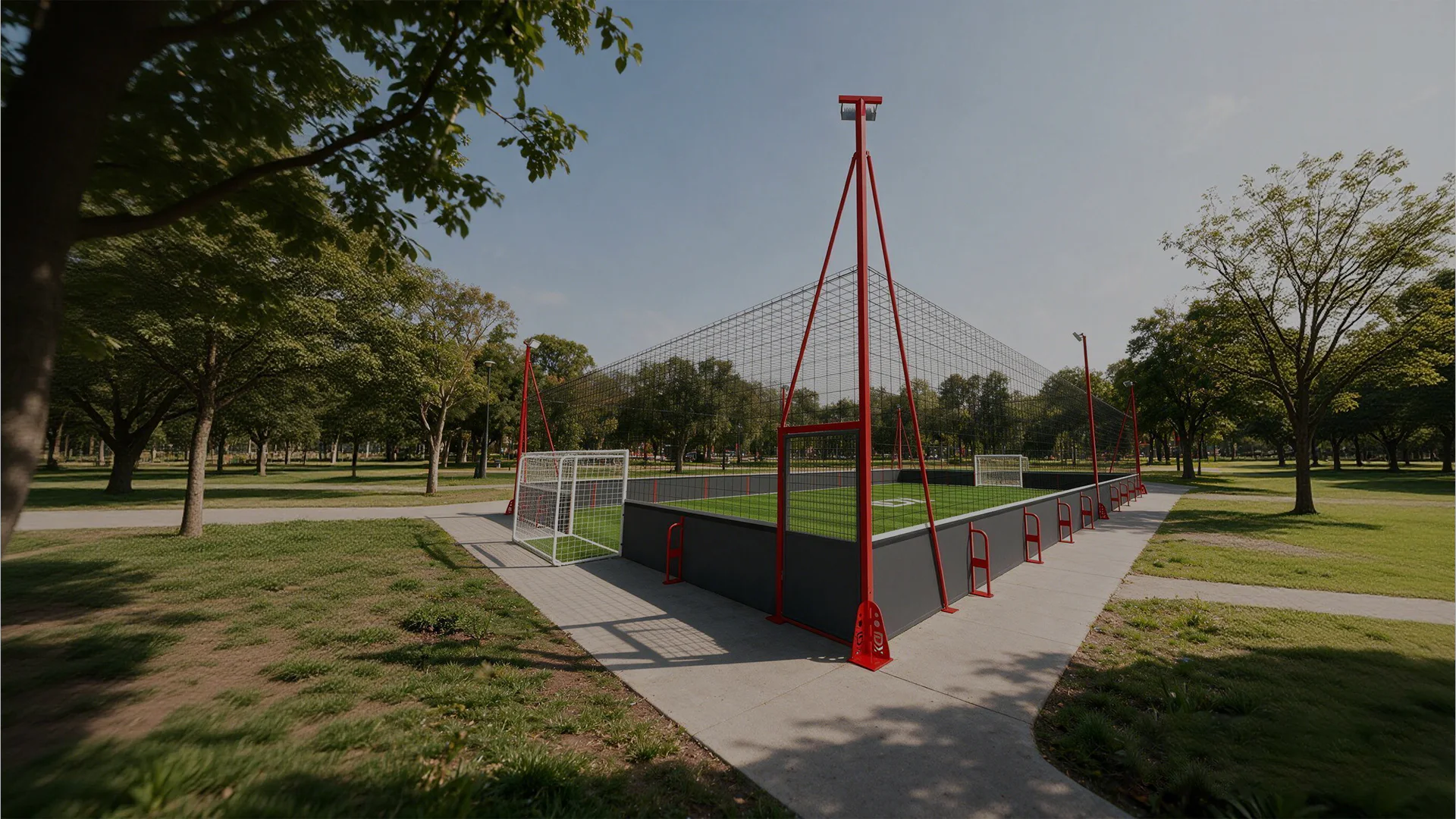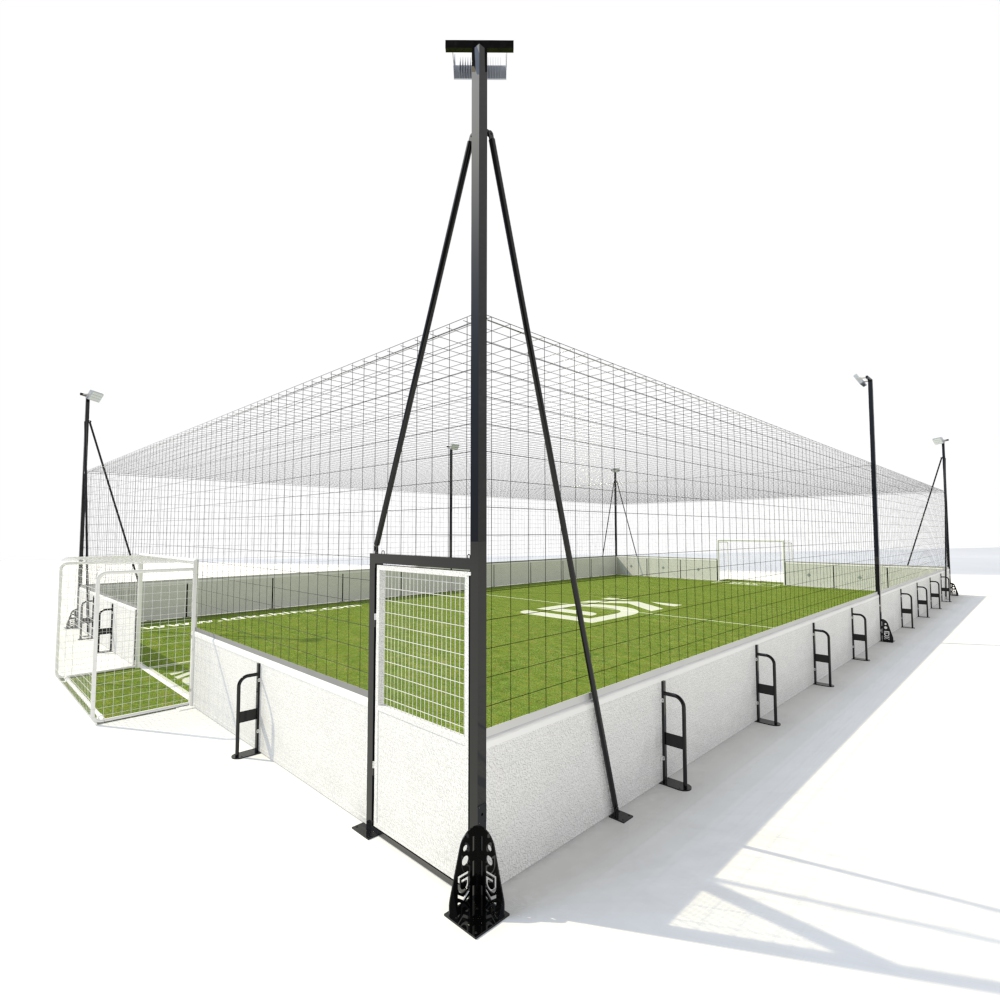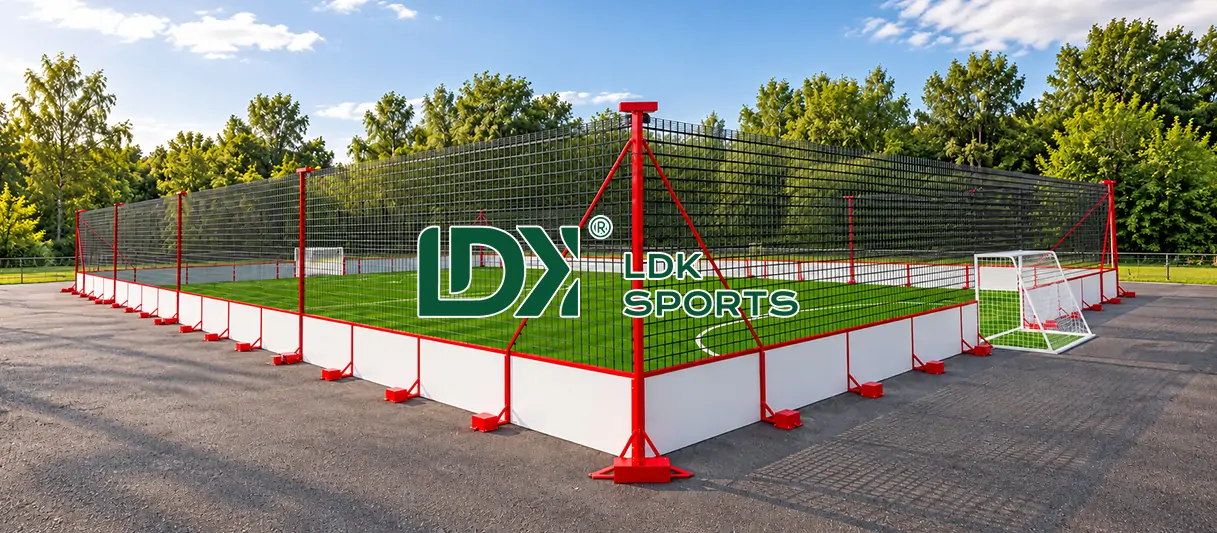
A quick check before play can help facility staff spot visible damage to a Removable Composite Plate football cage before players enter the field. The routine below covers the components staff can inspect visually: boundary panels, frame connections, removable supports, netting and—if included—the playing surface.
Catalogue
- Football cage check
- When to keep the area closed
- Netting and turf need separate care
- Record checks and follow-up
- Frequently asked questions
- Contact LDK about your system
Football cage check
Walk around the cage and check these five areas:
| Component | Check for |
|---|---|
| Composite boundary panels | Cracks, panels that have shifted or come loose, separated joints, or exposed sharp edges |
| Frame and visible connections | Bent or visibly damaged parts, missing fasteners, loose connections, or corrosion around hardware |
| Support feet and counterweights | Supports or weights that have moved from their specified positions, or parts that are missing or damaged |
| Netting | Broken mesh, cuts, pulled or frayed seams, and detached connections |
| Entrances and goals | Damage or loose, missing components that could interfere with normal use |
For the removable configuration, confirm that the support feet and counterweights remain arranged as specified for that installation. Do not guess at tightening values or change the support arrangement; use the supplied product instructions or contact the supplier.
Repeat the visual check after a severe weather event, a noticeable impact or any move of the cage before reopening the area.
When to keep the area closed
Keep the affected area closed if you find a cracked or detached panel, a bent frame part, a missing or loose structural connection, a shifted support or counterweight, or torn or detached netting.
Take a photo, note the component and location, and contact the supplier for inspection or repair instructions. Reopen the area after the issue has been assessed and addressed according to the product instructions.
Netting and turf need separate care
Netting needs its own checks. LDK recommends inspecting mesh and hardware visually each day, with more detailed checks weekly; it says the inspection frequency should reflect the netting’s exposure and risk. Its recommended checks include looking for broken mesh, cuts, frayed borders, damaged support cables and missing hardware. Apply the maintenance instructions supplied for the cage specific netting.
If artificial turf is included, treat it as a separate component. FIFA stadium guidance lists regular brushing and removing debris from artificial turf among its maintenance requirements. Follow the turf manufacturer’s instructions for the specific surface
Record checks and follow-up
Use a simple log for each check:
| Date | Area checked | Issue found | Action taken | Reopened |
|---|---|---|---|---|
| specific situation | specific situation | specific situation | specific situation | specific situation |
This record helps staff see whether the same panel, connection or section of netting needs follow-up. Attach photos when reporting damage to the supplier.
FAQ
How often should staff check the cage?
Use a visual check before the first session each operating day, and repeat it after severe weather, impact or movement of the cage. Follow the product instructions for mechanical inspections and servicing. For netting, LDK recommends daily visual checks and more detailed weekly checks, adjusted to exposure and risk.
What should staff do if a panel or support has moved?
Keep the affected area closed. Photograph the issue and ask the supplier for inspection or repair instructions. Do not move counterweights or tighten structural connections by guesswork.
Does the playing surface follow the same maintenance routine?
No. The cage structure, netting and playing surface are separate components. Follow the relevant supplier’s instructions for each; FIFA’s guidance for artificial turf includes regular brushing and debris removal.
Contact LDK about your system
LDK published removable cage configuration includes composite boundary panels, an aluminium-alloy frame, support feet and counterweights. For system details or help identifying the correct maintenance instructions.