Table of Contents
- Why More Sports Facilities Are Considering Artificial Grass
- Understanding the Complete Turf System
- Five Factors That Determine the Right Artificial Grass
- International Applications and Cost Comparisons
- Installation and Maintenance
- Frequently Asked Questions
- Final Thoughts
Why More Sports Facilities Are Considering Artificial Grass
A school football field may serve physical education classes in the morning, team training in the afternoon, and community matches at weekends. For commercial operators, the same surface needs to accommodate regular bookings while remaining consistent and presentable.
Natural grass can struggle to recover between these activities. Worn goalmouths, muddy areas, and weather-related closures reduce access precisely when demand is highest.
FIFA illustrates this pressure with an example amateur club schedule totalling 58 hours of training and matches per week across its teams. Although individual venues differ, the example shows how quickly shared pitch demand can accumulate.
Artificial grass can support more intensive use, provided the surface, installation, and maintenance programme suit the venue. Choosing well means understanding how these elements affect playing performance, construction costs, and long-term operation.
Understanding the Complete Turf System
Sports artificial grass works as part of a layered construction. Synthetic fibres and backing form the carpet, while seams, infill, and a shock pad—where required—help create the intended playing surface. Beneath them, the base and drainage provide support and manage water.
Each layer affects the others. A high-quality carpet laid over an unstable base can develop uneven areas. Similarly, permeable backing offers limited benefit if the underlying construction prevents water from reaching an outlet.
Five Factors That Determine the Right Artificial Grass
1. The Sport and Expected Playing Hours
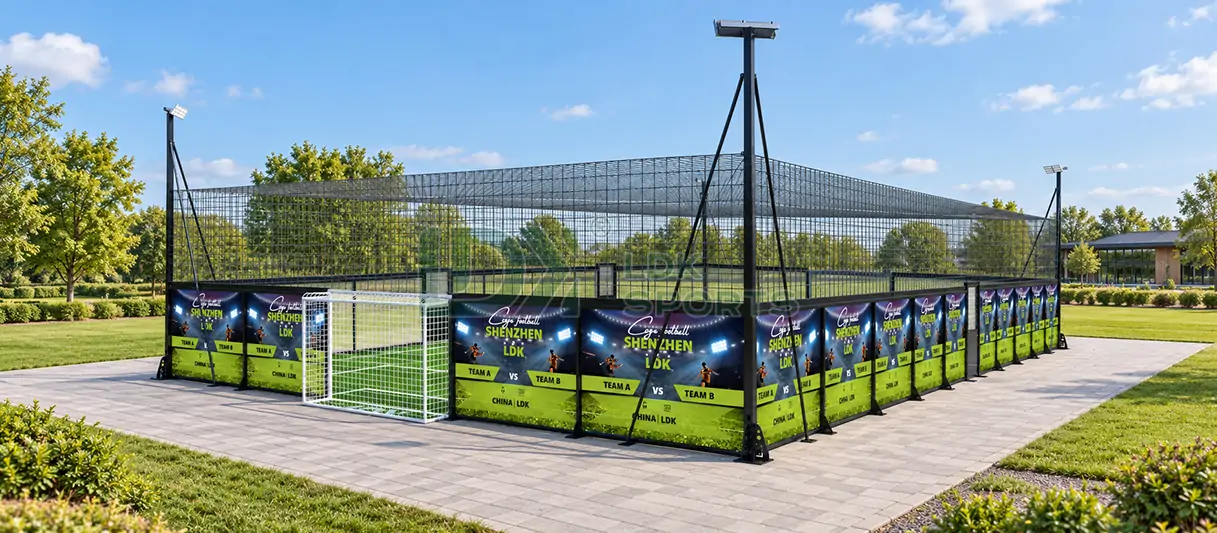
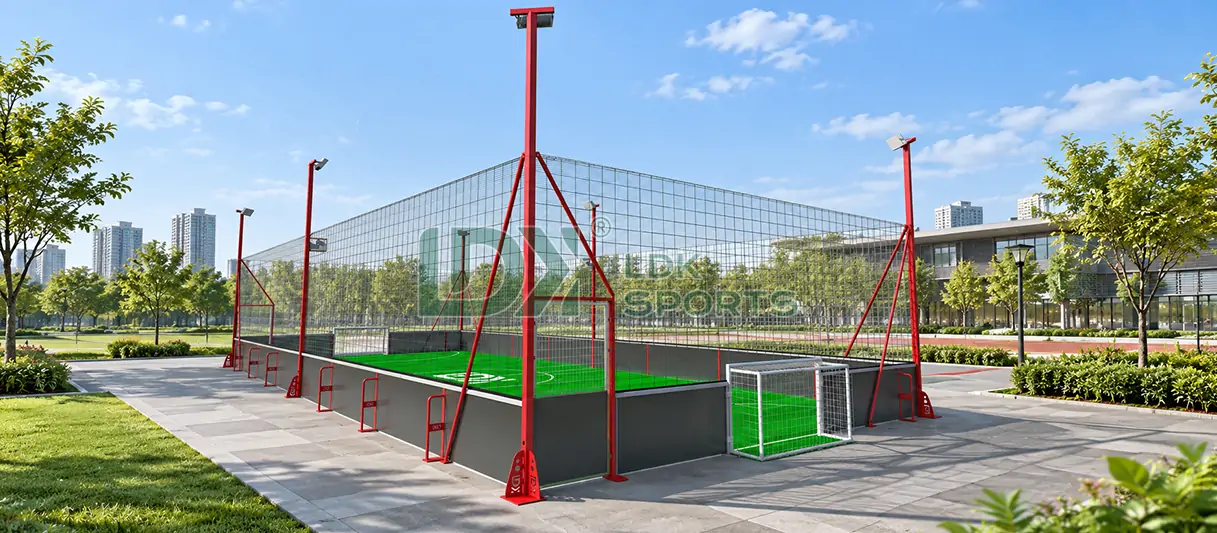
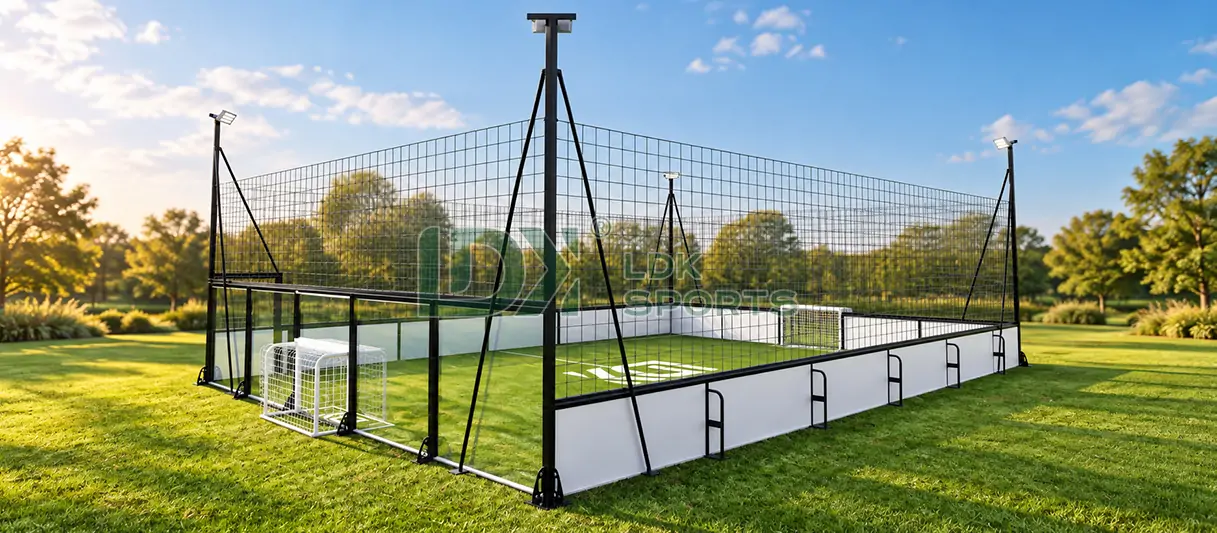
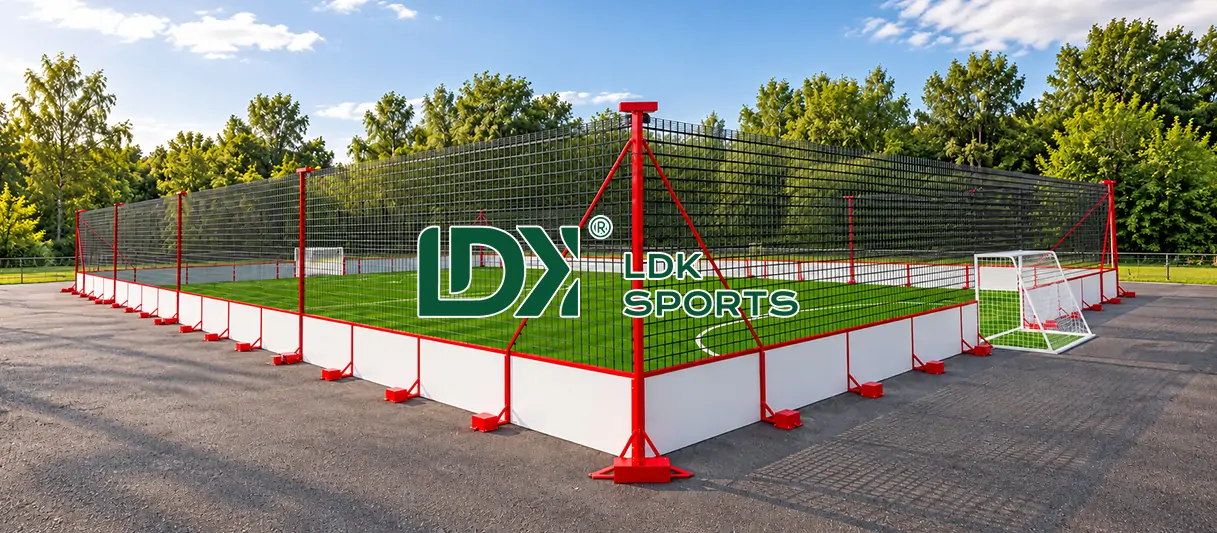
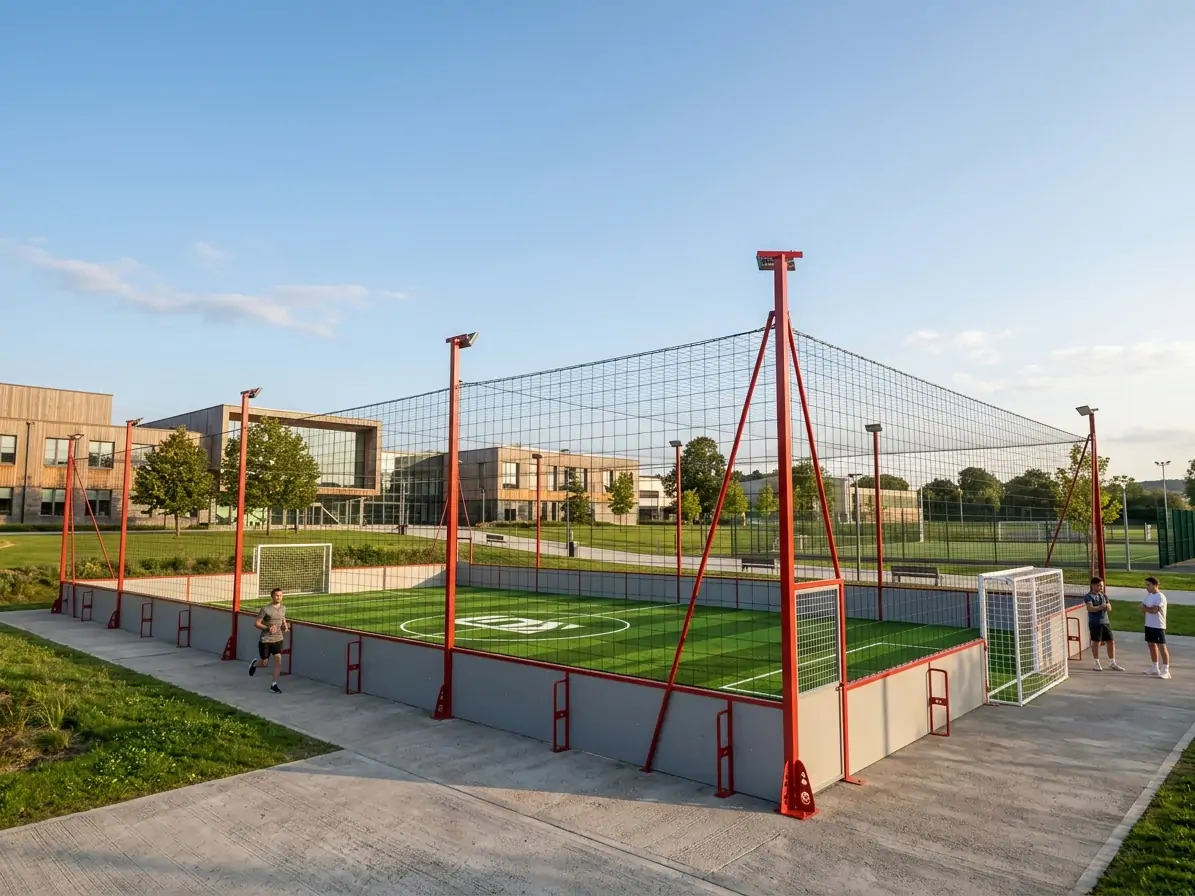
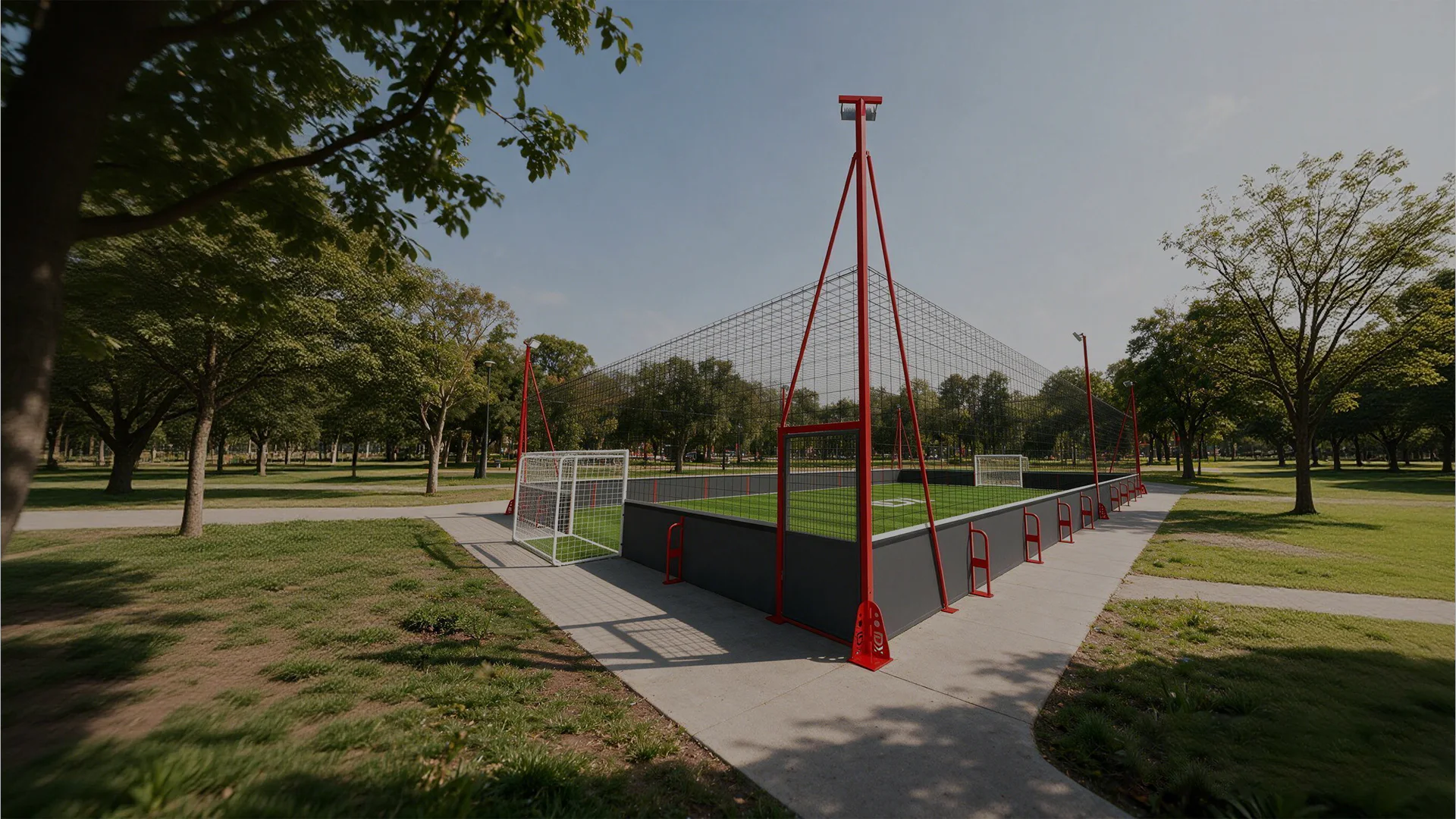
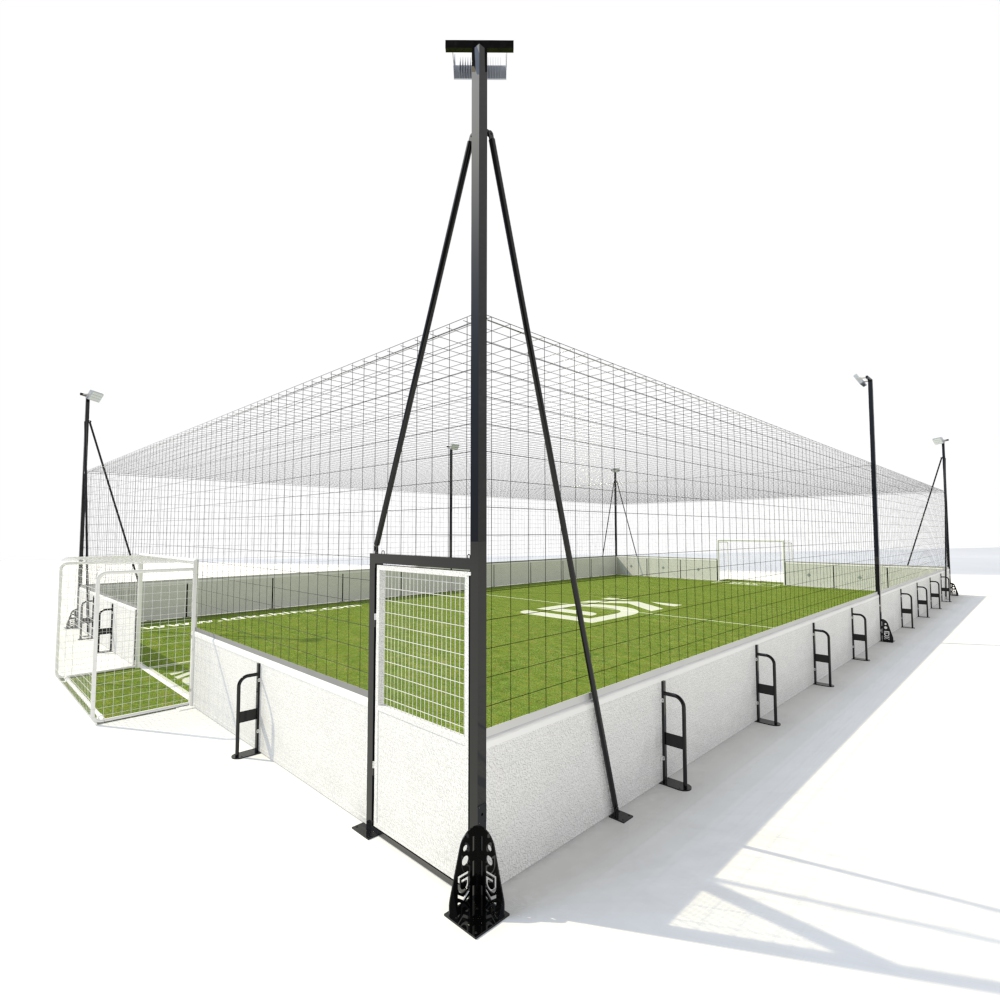
Start with how the facility will be used. A football academy running daily sessions has different requirements from a hotel football cage or a school field used for several activities.
Provide the supplier with the sport, competition level, expected weekly playing hours, and permitted footwear. These details help establish an appropriate specification and a realistic maintenance plan.
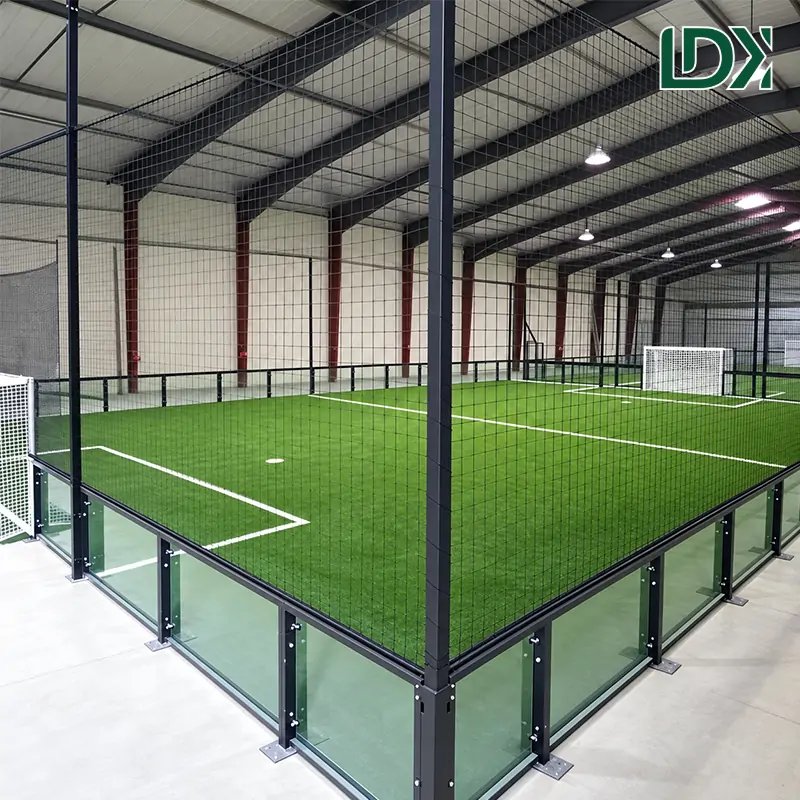
Sport-specific selection also prevents unsuitable substitutions. LDK football cage turf uses 20-50 mm pile height and is offered for indoor and outdoor Football field. A football surface should be assessed against its own playing requirements rather than selected because its appearance or price resembles a.
2. Fibre Construction and Backing
Pile height, yarn type, Dtex, stitch density, and backing should be checked together.
When comparing options, request exact-model data sheets and relevant test results. Check that the sample, quotation, and supplied material refer to the same specification.
LDK artificial soccer turf range includes PE monofilament yarn, multilayer backing, and customization options. This flexibility allows buyers to discuss a configuration around their venue, with the final combination stated clearly in the purchase agreement.
3. Drainage and Local Conditions
Rainfall, ground conditions, and the available drainage outlet should influence the construction plan from the beginning.
A carpet permeability figure describes only part of the drainage route. The completed field also depends on grading, base permeability, drainage channels or pipes, and suitable discharge arrangements.
Before ordering, arrange a site assessment and confirm who will design and verify the drainage. For outdoor projects, review the proposed turf’s weather-resistance documentation alongside local operating conditions.
LDK offers football turf with UV-resistance and water-permeability features. These should be considered together with the base design and installation plan so that the complete field can meet its intended use.
4. Infill and Underfoot Performance
Infill and cushioning layers influence the behaviour of the complete playing surface.
Changing the infill material, application depth, or shock-pad construction may change the system’s performance. Buyers should ask whether the proposed combination is supported by relevant testing and whether substitutions require further assessment.
For LDK football projects, available shock-pad and infill options can be discussed as part of the overall configuration. Confirm the selected materials, quantities, installation requirements, and maintenance instructions before approving the order.
5. Total Cost and Installation Support
The carpet price is only one part of the investment. Site preparation, drainage, base construction, installation, freight, maintenance, and eventual replacement all affect the project budget.
An itemized quotation makes these costs easier to assess. It should identify the exact turf model, accessories, delivery terms, warranty conditions, and exclusions.
Installation support also deserves attention. LDK provides drawings, videos, and remote technical guidance; agree on how these resources will support the local contractor and which inspections are required before the field opens.
International Applications and Cost Comparisons
United States: Increasing Access at Beach Chalet
San Francisco’s Beach Chalet Athletic Fields were renovated in 2015 with synthetic turf and lighting. The city reports that the project tripled available playtime to more than 14,000 hours annually across the complex and saved approximately six million gallons of water each year.
The outcome reflects the combined improvements. Lighting extended usable hours, while the surface conversion changed field operation and water requirements.
For buyers, the lesson is to evaluate the complete facility plan. Turf, lighting, booking arrangements, and maintenance resources collectively determine how much additional access a project can deliver.
Installation and Maintenance
Prepare the Base Before the Turf Arrives
Confirm base stability, levels, and drainage before scheduling carpet installation. Resolve construction defects before they become hidden beneath the surface.
Agree on the roll layout, pile direction, seam positions, and field markings. The installation plan should also specify approved adhesive, suitable working conditions, curing requirements, and infill quantities where applicable.
Retain the approved sample, technical sheet, batch details, and inspection records.
Build Maintenance Into the Operating Schedule
Routine work may include removing debris, brushing fibres, checking infill distribution, inspecting seams, and keeping drainage routes clear.
Entrances, goalmouths, and repetitive training areas deserve particular attention. Note inspections and repair defects before continued use makes them worse.
A busy venue should allocate maintenance time between bookings. More playing hours create value only when the surface receives the care needed to support them.
Avoid Common Maintenance Mistakes
Artificial grass still requires regular care. Using unapproved equipment, applying unspecified chemicals, adding unsuitable infill, or leaving damaged seams unattended can create avoidable problems.
Make sure the maintenance team understands the system’s requirements and the warranty conditions. Include suitable equipment, staff training, and specialist servicing where required in the operating budget.
FAQ
What is the best artificial grass for football fields?
The best artificial grass for football fields is a complete system suited to the competition level, weekly usage, and site conditions. Compare documented performance, construction requirements, and maintenance needs alongside the carpet specification.
How much does artificial grass installation cost?
Artificial grass installation cost depends on ground preparation, drainage, base construction, turf selection, and local labour. An itemized quotation should separate these costs from delivery, accessories, and testing.
Can football artificial grass be used for padel courts?
Football turf should not be assumed suitable for padel court flooring. Choose a padel-specific system that addresses ball bounce, player movement, sand distribution, and the intended operating conditions.
How long does sports artificial grass last?
Sports artificial grass lifespan varies with the system, playing intensity, climate, and maintenance.
Final Thoughts
Choosing artificial grass begins with understanding how the venue will operate. The right specification should suit the sport and playing schedule, work with the supporting construction, and remain manageable within the maintenance budget.
A clear project brief also makes purchasing easier. It helps suppliers recommend suitable configurations and gives buyers a consistent basis for comparing proposals.
For a school field, football academy, commercial sports centre, or padel club, contact LDK to discuss your project. Share your location, dimensions, expected usage, and target opening date, then request a suitable specification, an exact-model sample, and an itemized quotation.