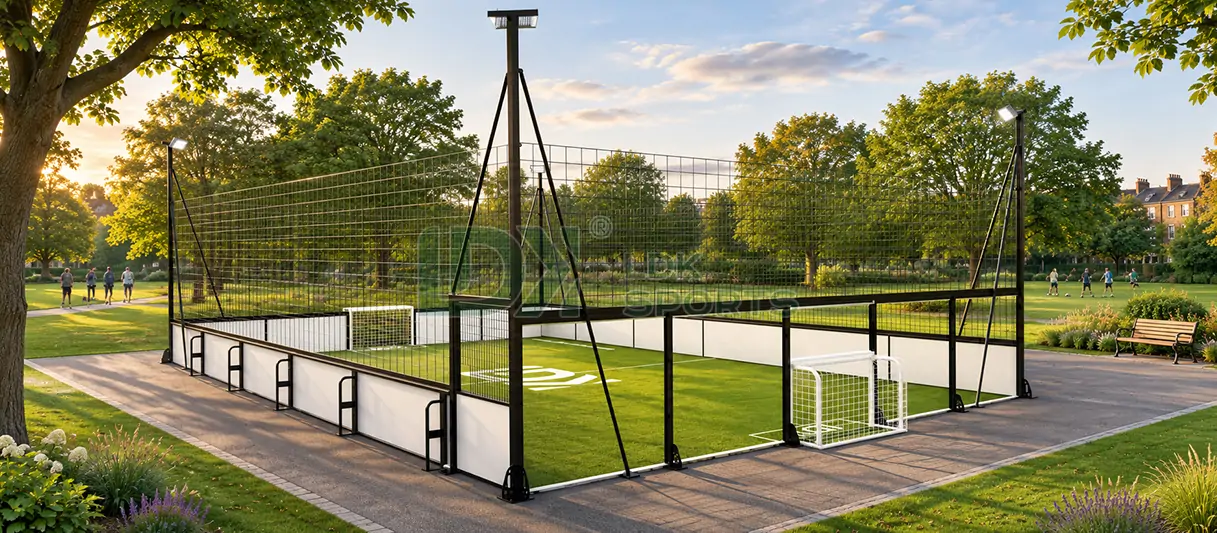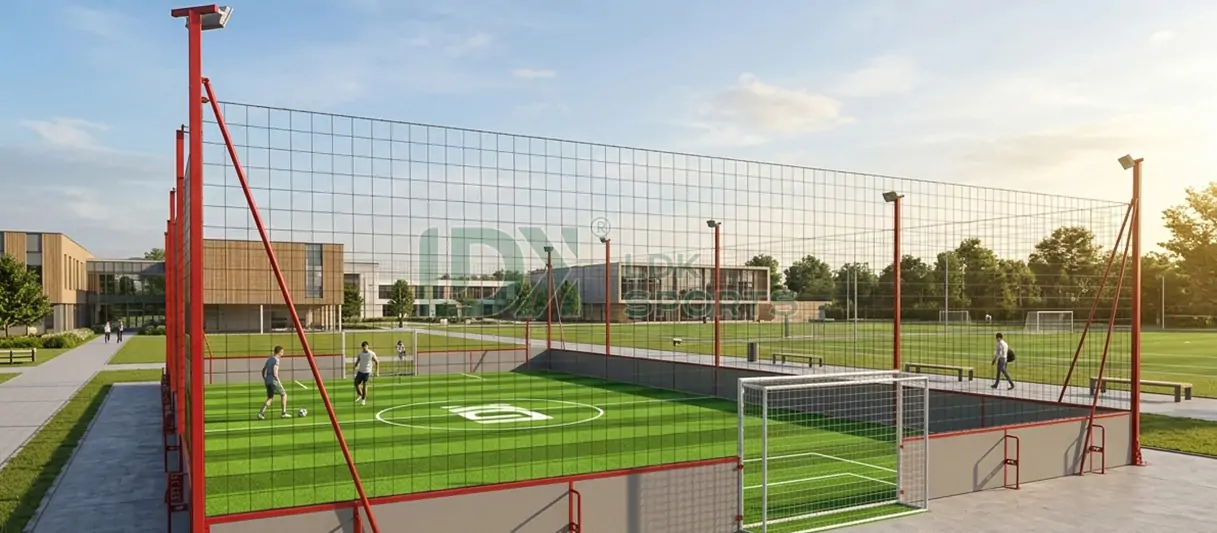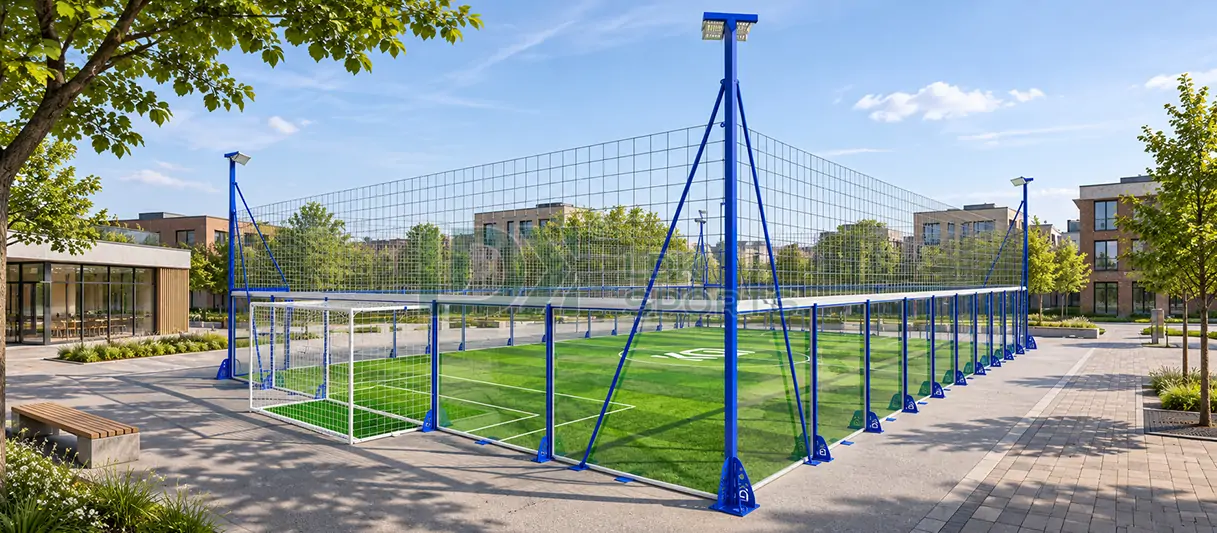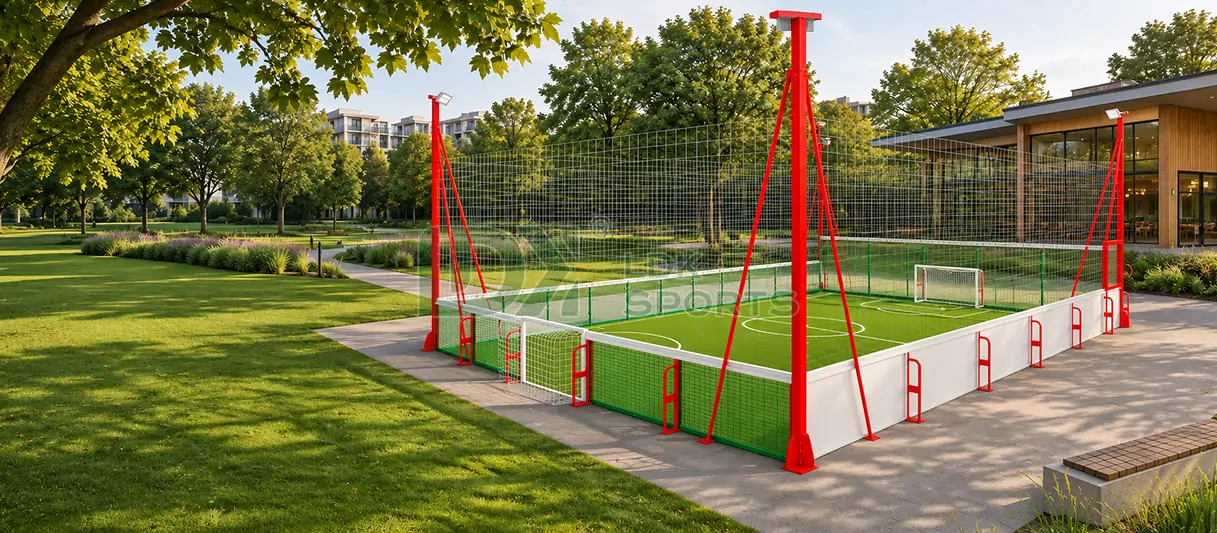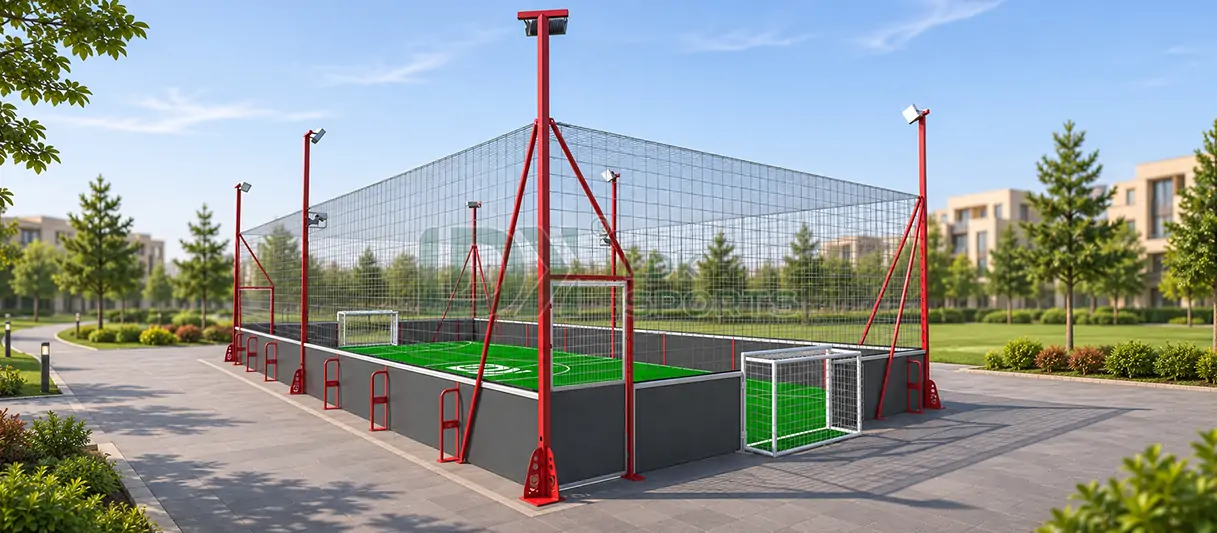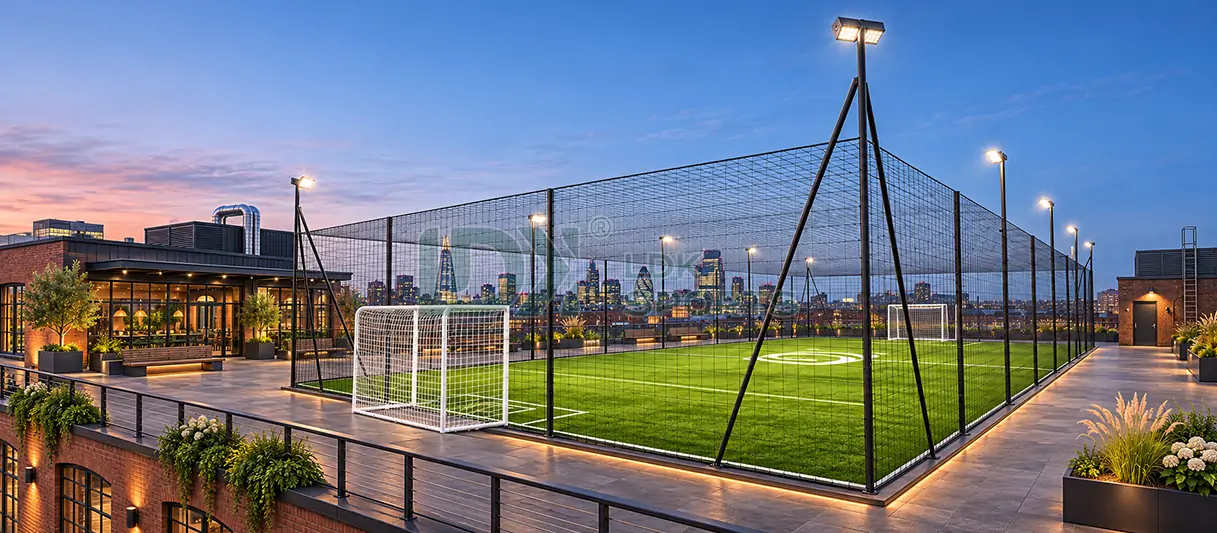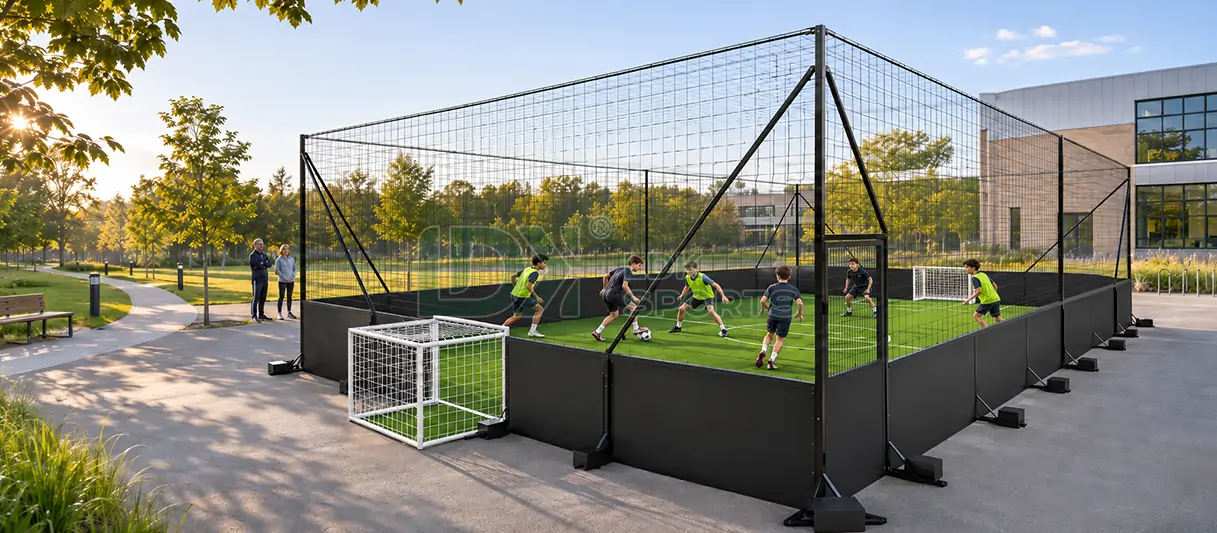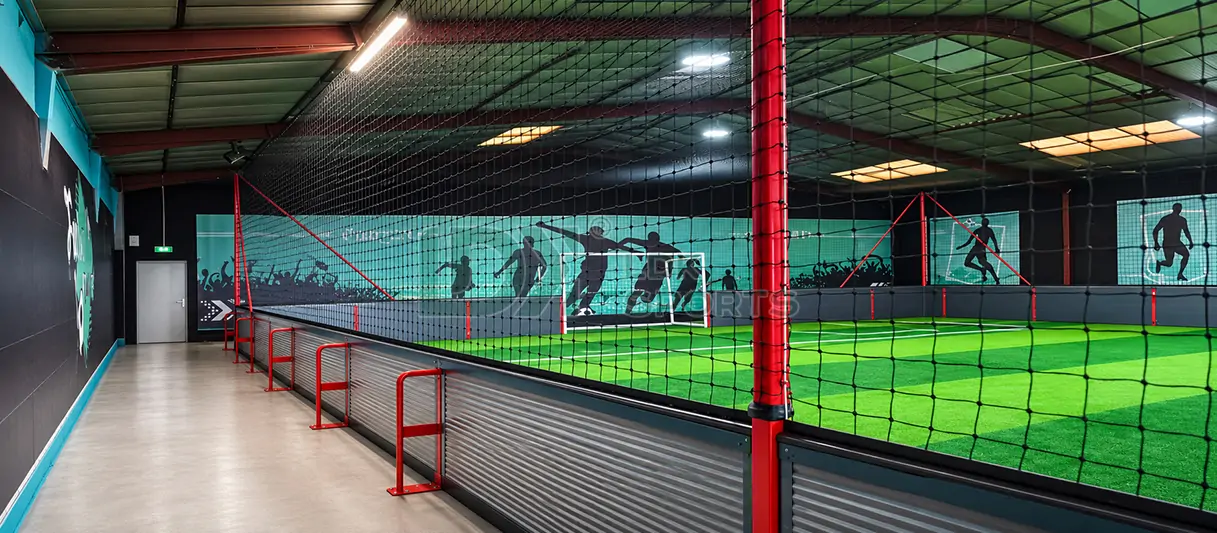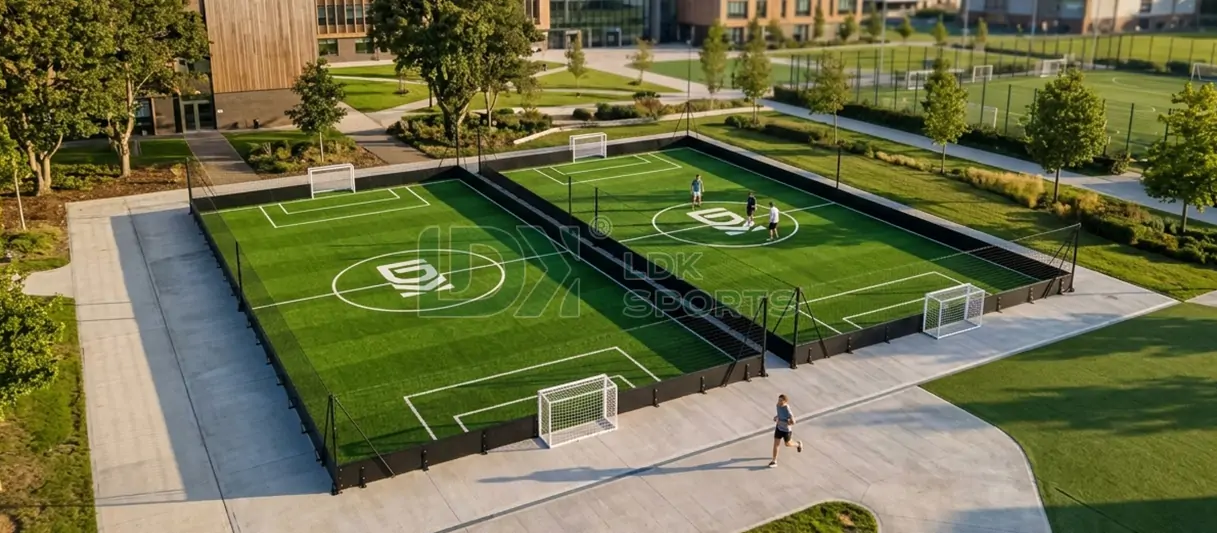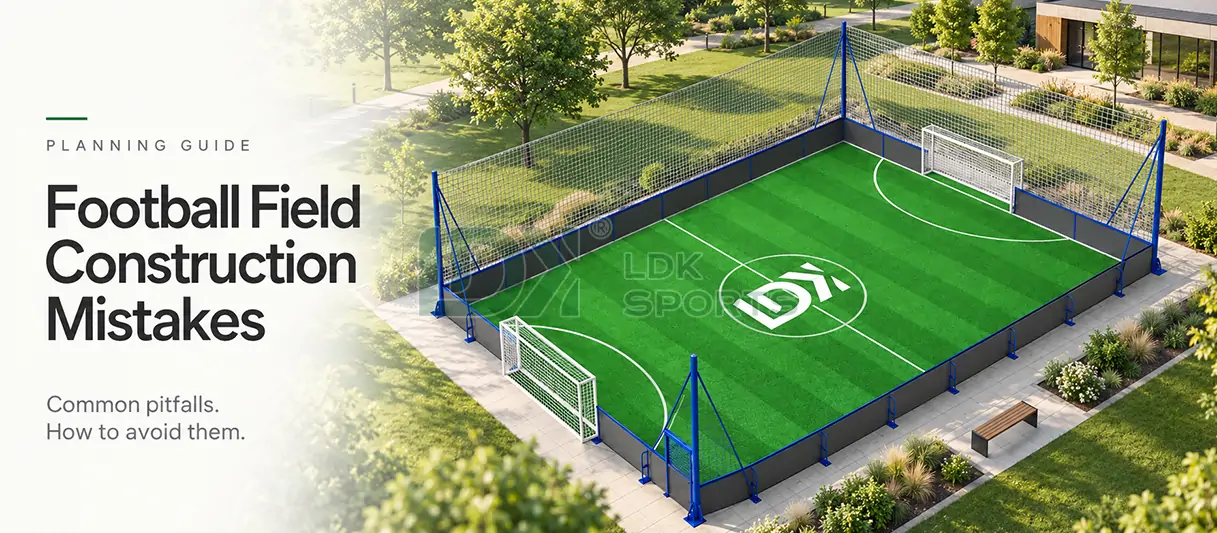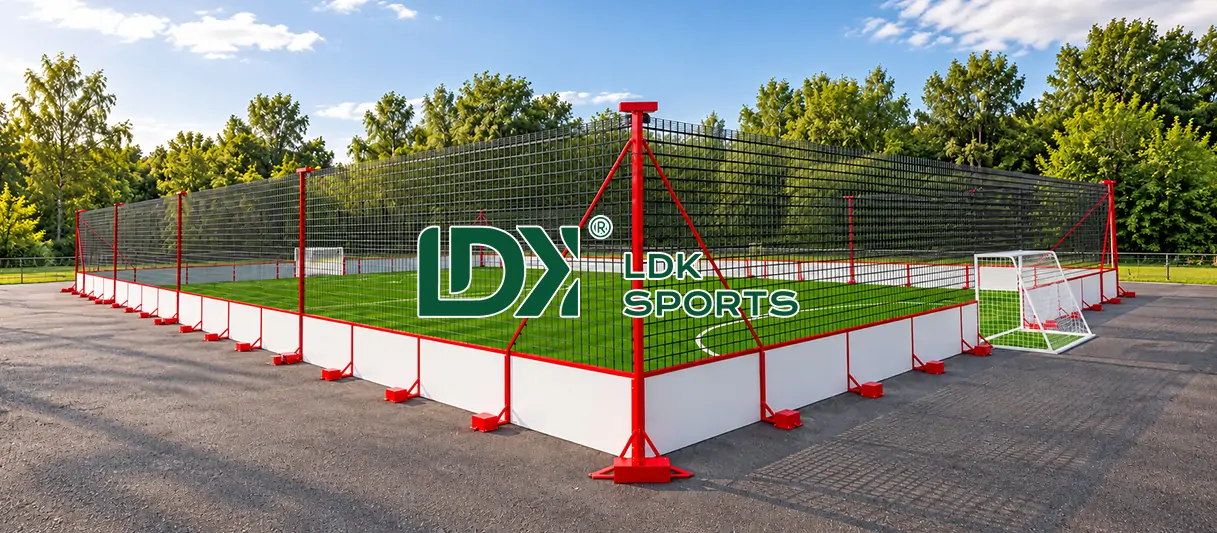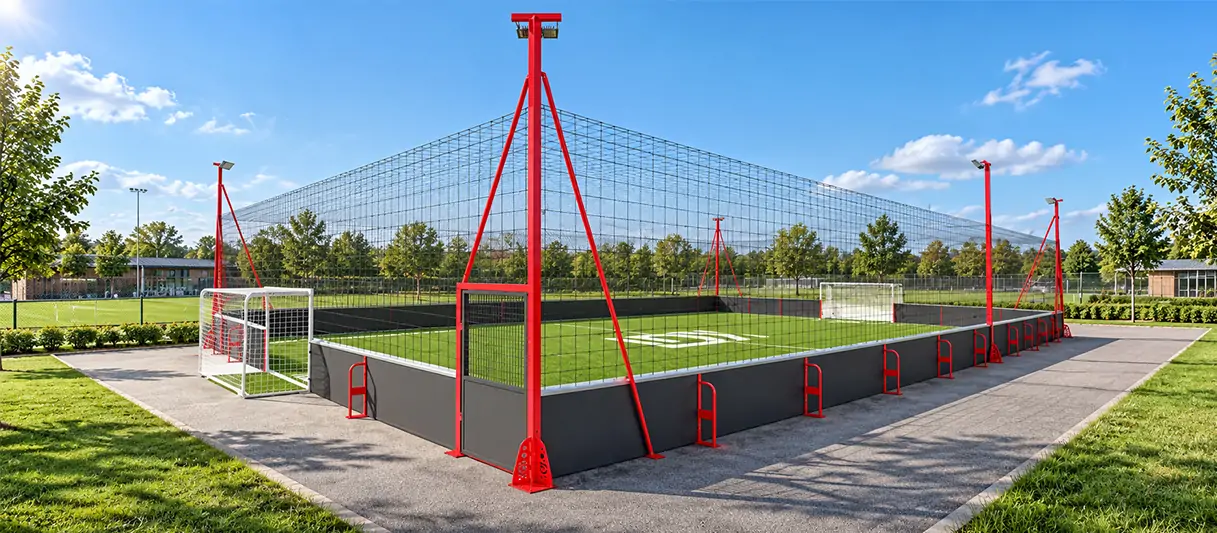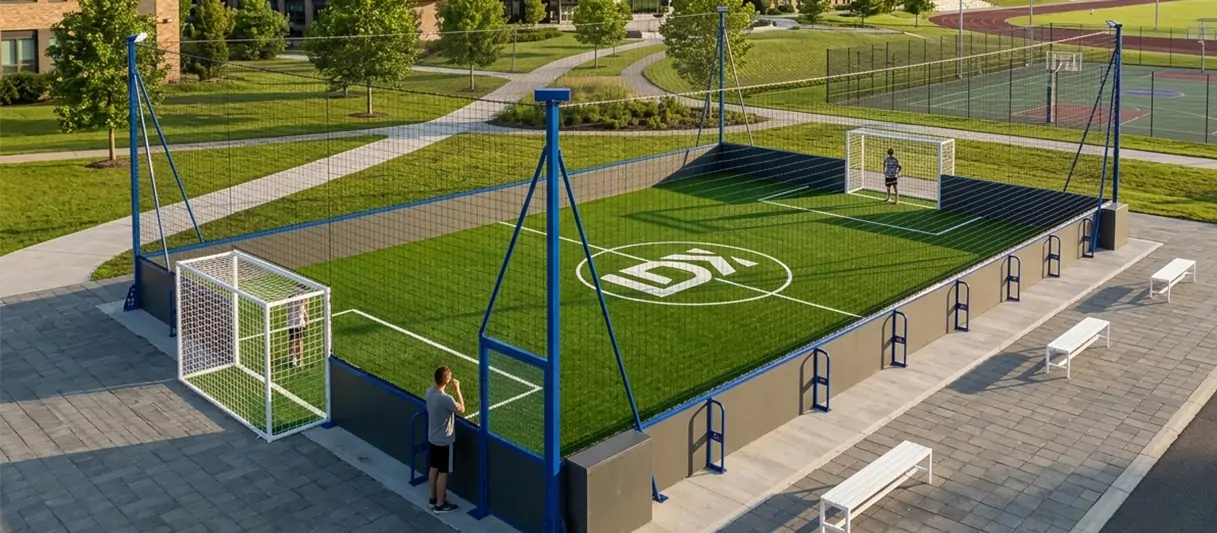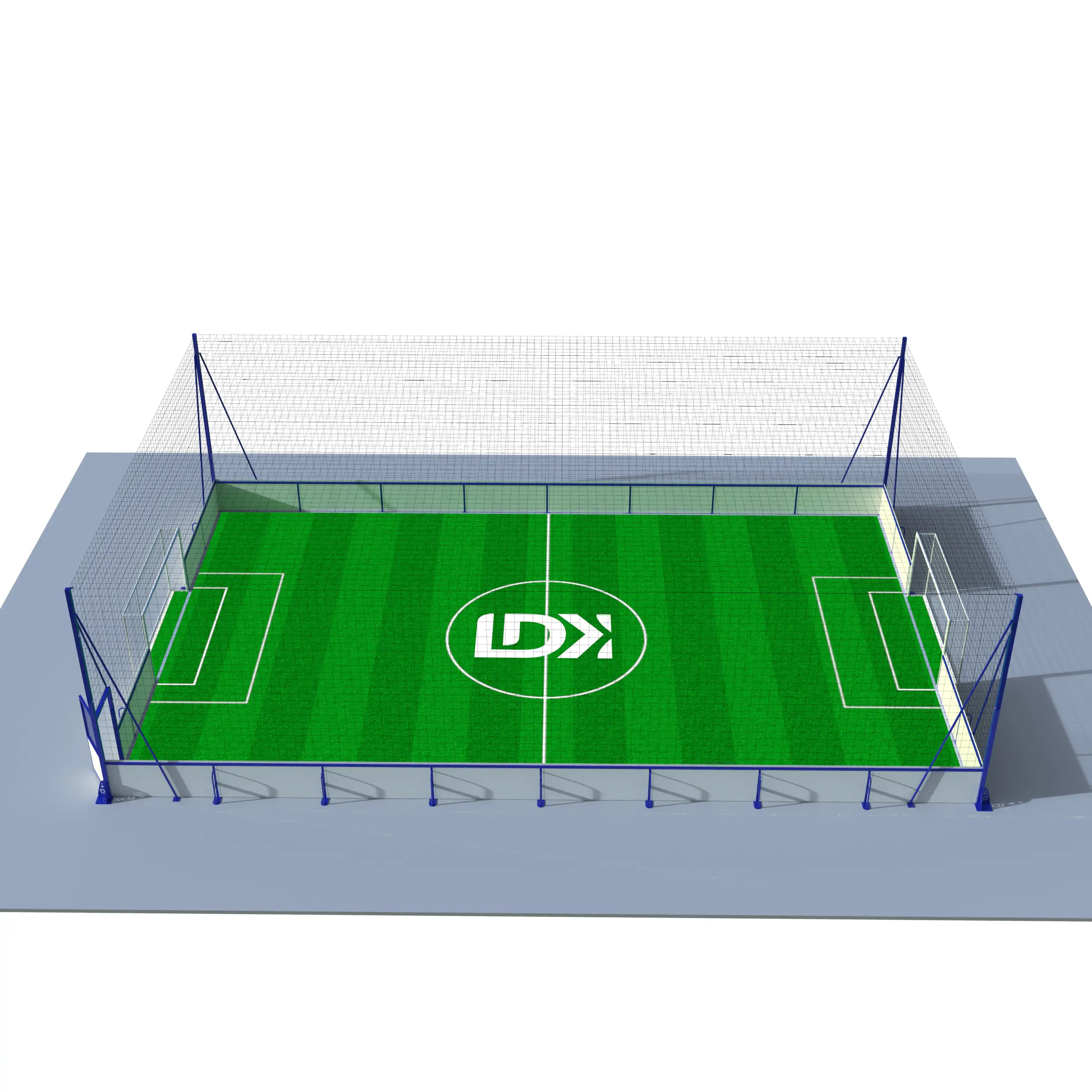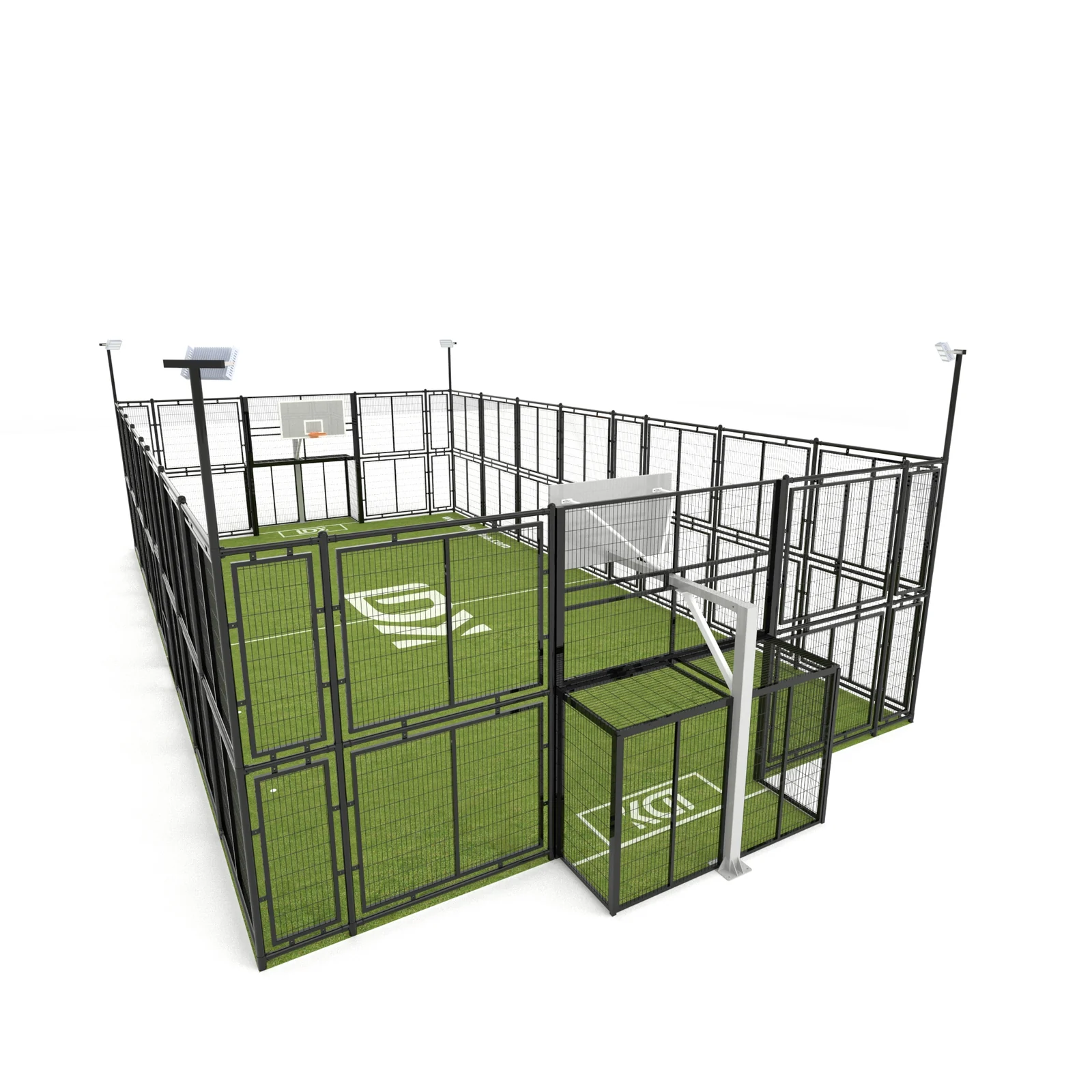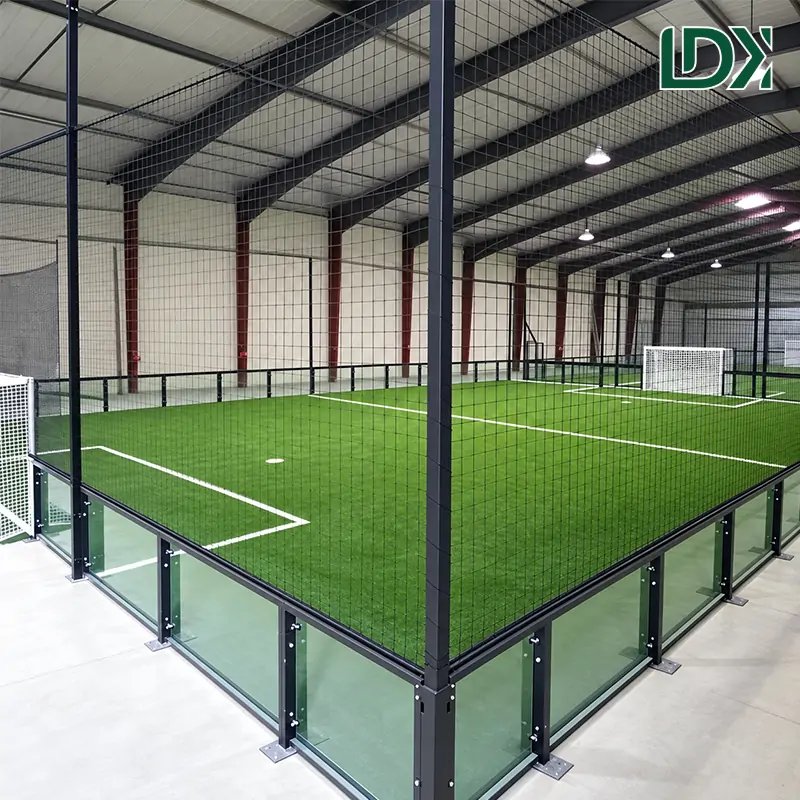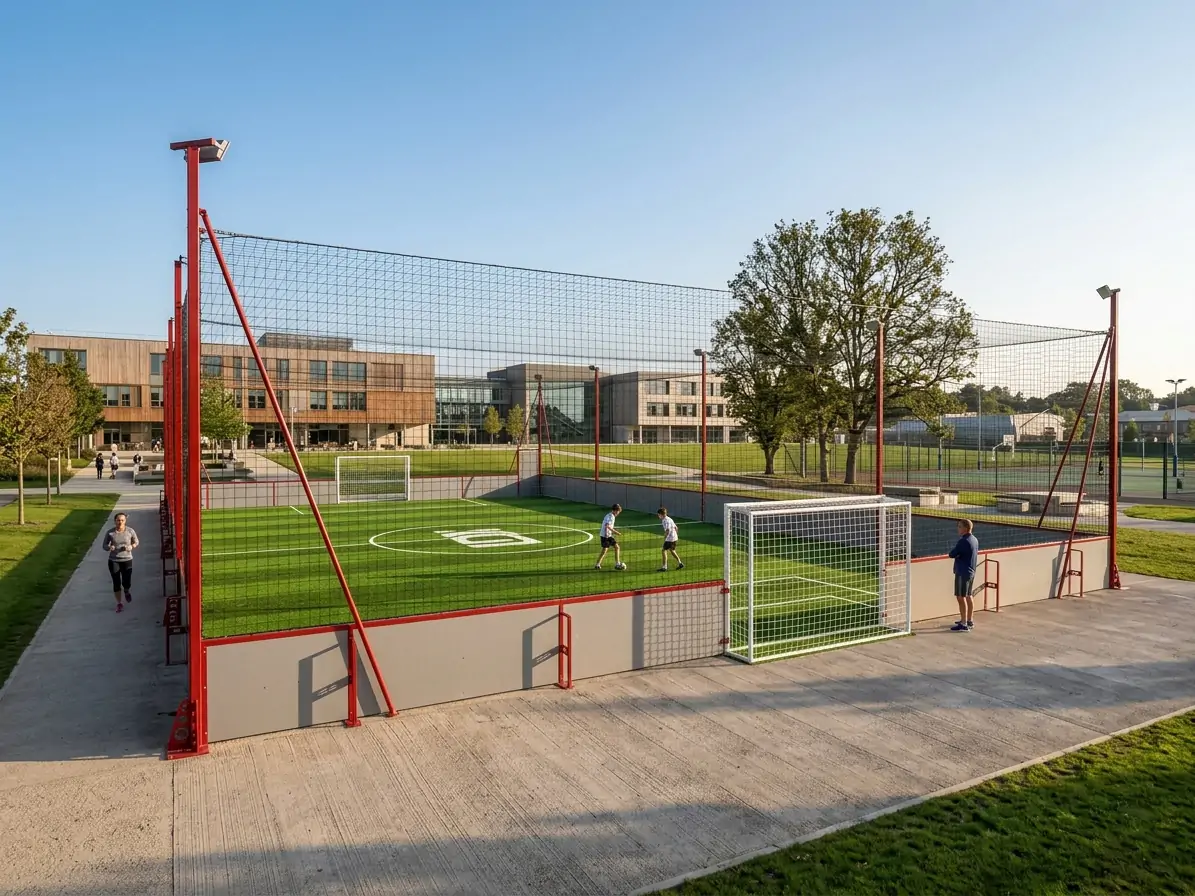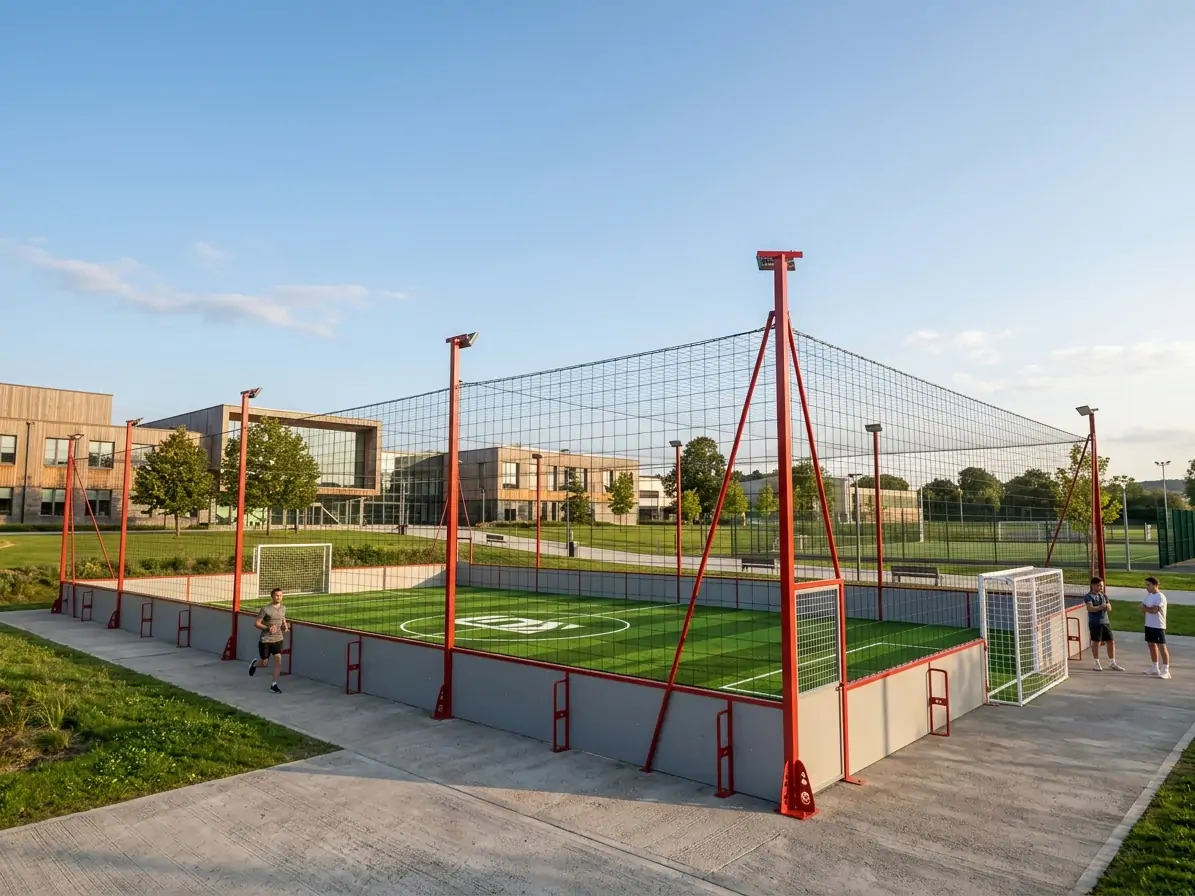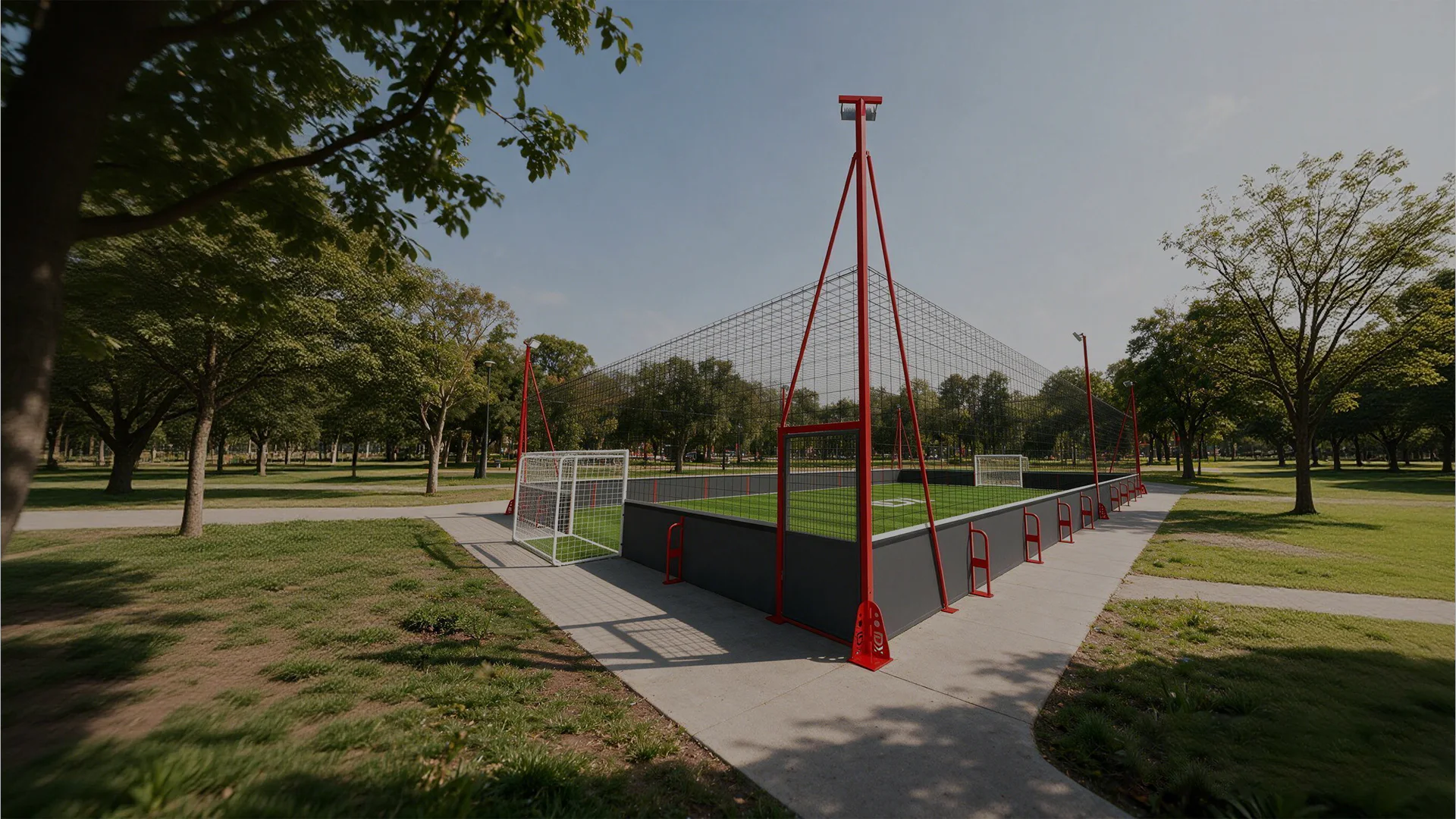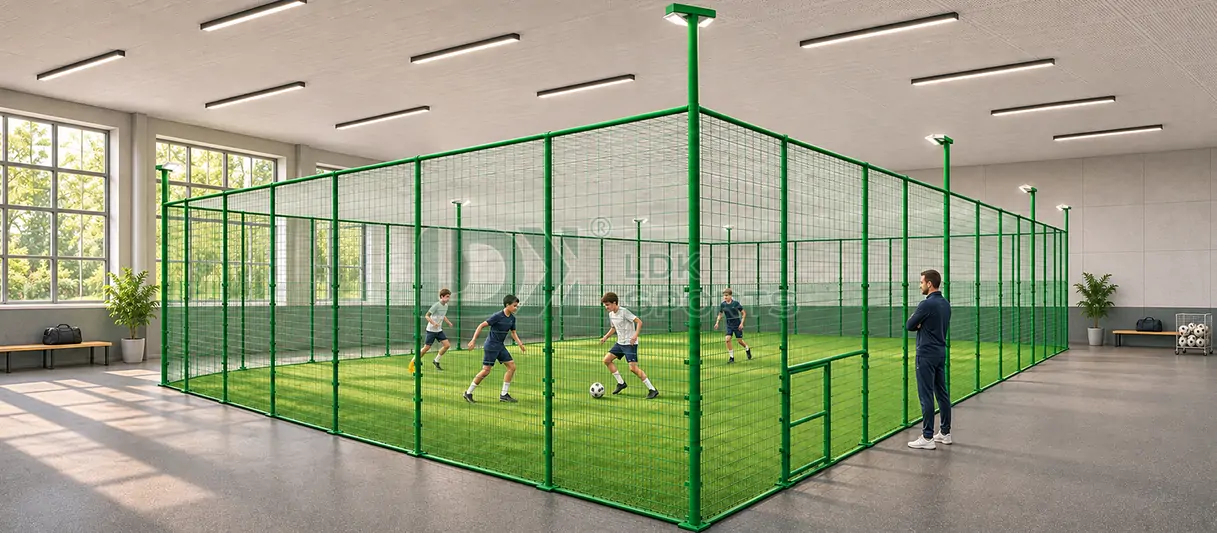
Enclosed 5-a-side football fields are giving parks, schools, residential communities and commercial developments a practical way to create usable football space on compact sites.
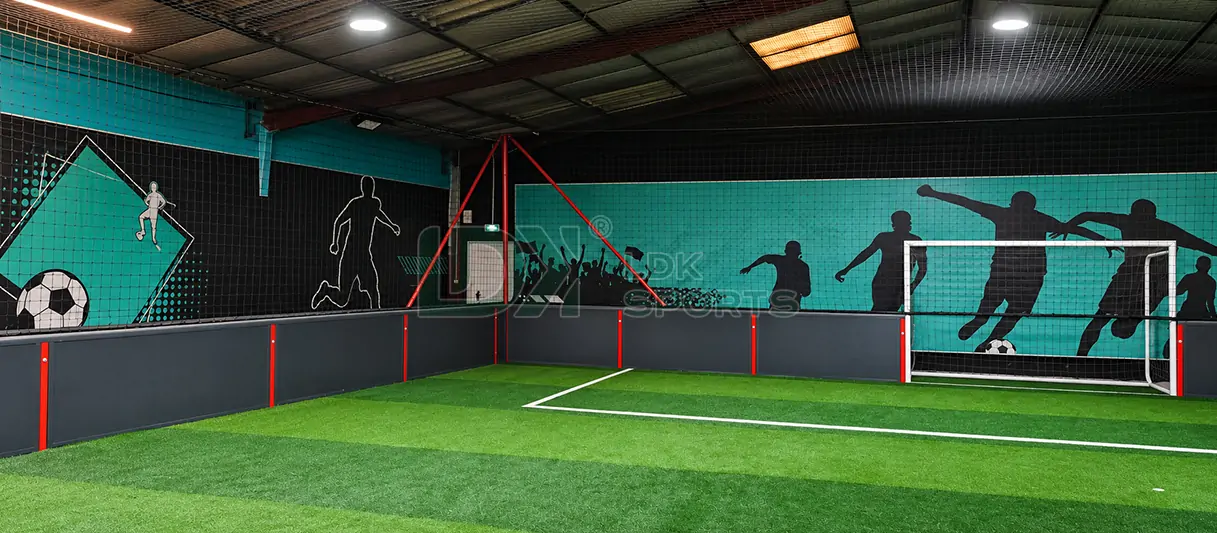
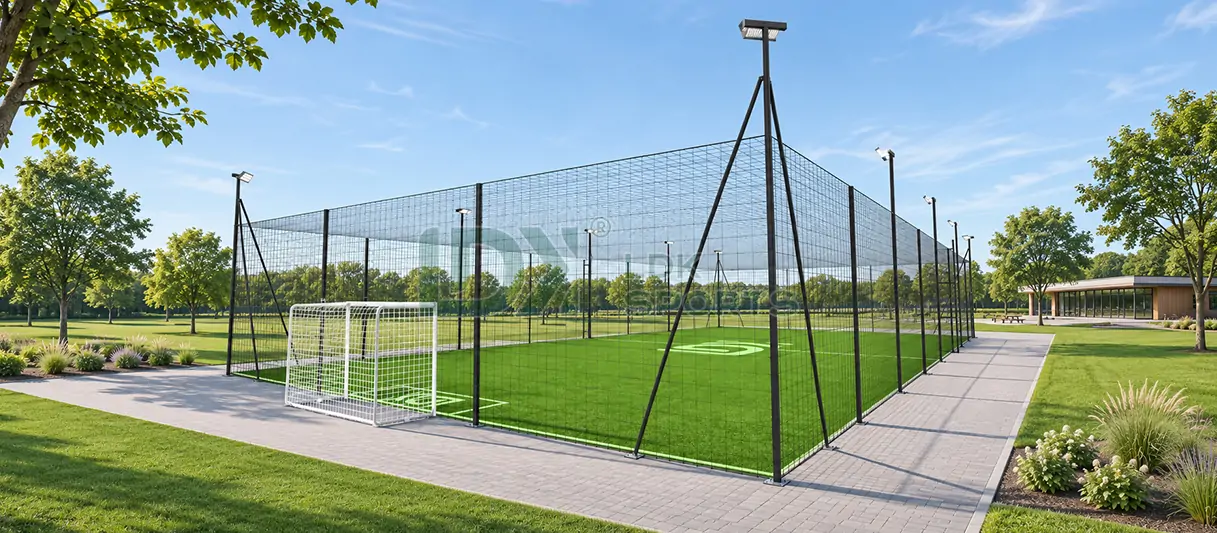
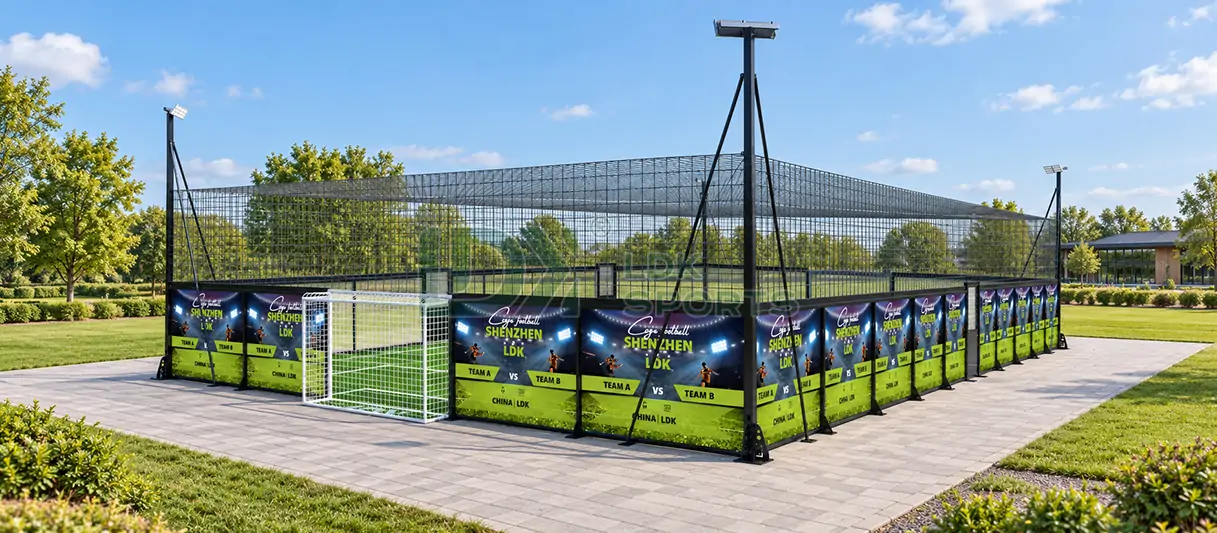
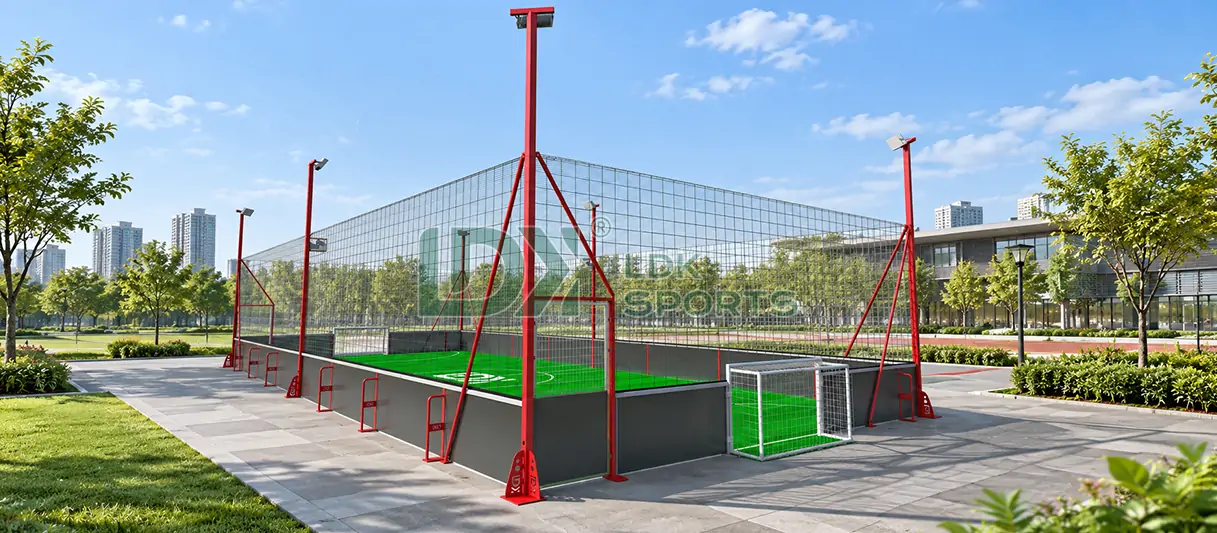
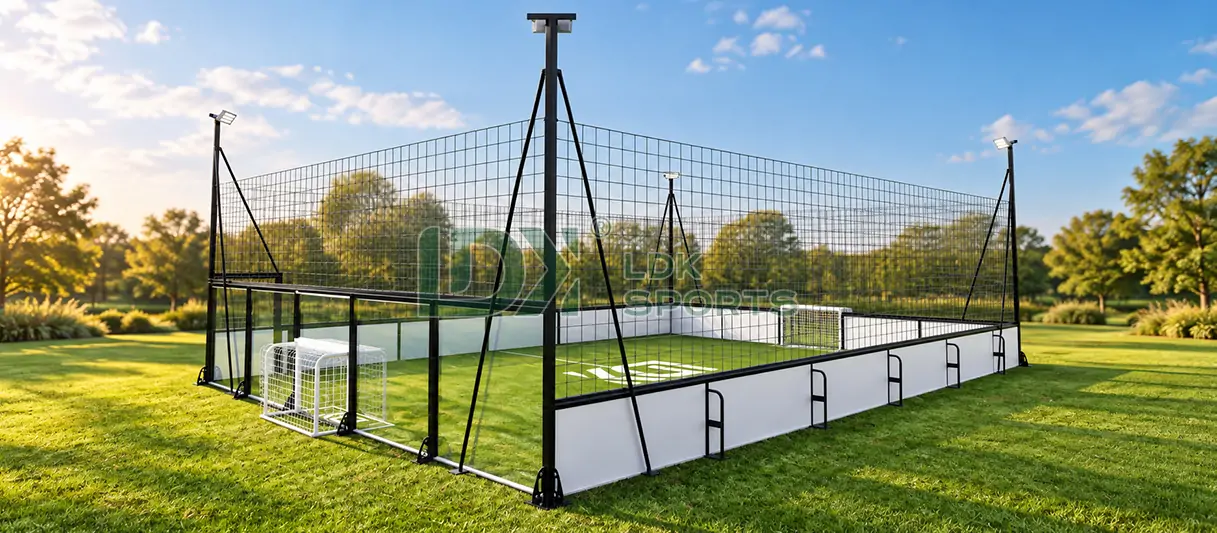
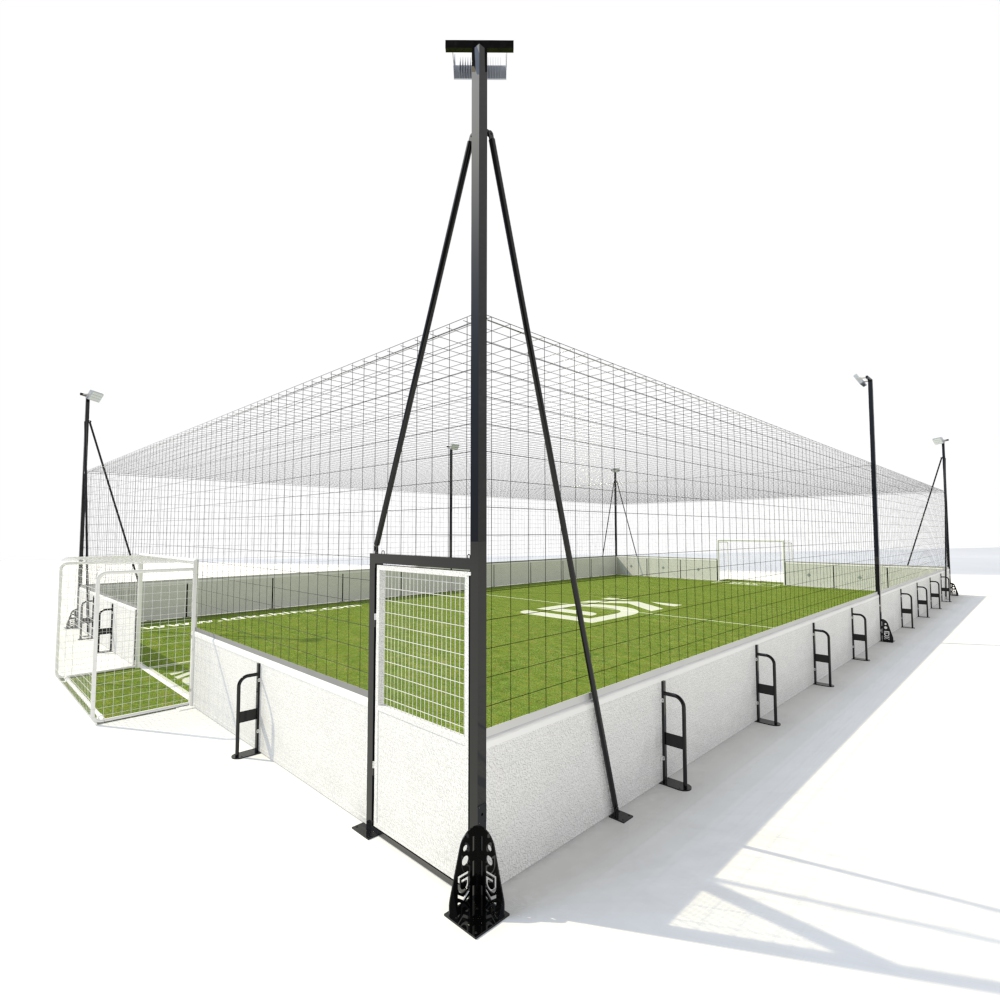
Unlike an open pitch, a cage football field combines a defined playing area with side and overhead containment. This format can help project teams use corners, courtyards and limited parcels more effectively, while keeping football activity contained within a clear boundary.
Contents
- From open space to reliable play space
- Design details that support high use
- Lighting and access planning
- Suitable public settings
- Frequently asked questions
- Plan your project
From Open Space to Reliable Play Space
Public sports projects are often expected to serve more users, operate for longer hours and fit within increasingly limited land areas. A cage football field responds to those needs by creating a dedicated space for small-sided games, training sessions and informal community play.
For operators, the enclosure can help reduce ball retrieval outside the pitch and provide clearer boundaries near walkways, parking areas and other shared facilities. For planners, it offers a focused solution where a full-size football field is not practical.
The key question is not simply how large the site is. It is how the facility will be used. Expected daily footfall, player age groups, local weather, surrounding activity and maintenance capacity should all inform the final specification.
Design Details That Support High Use
A cage football field intended for outdoor public use should be specified around durability, safety and local conditions.
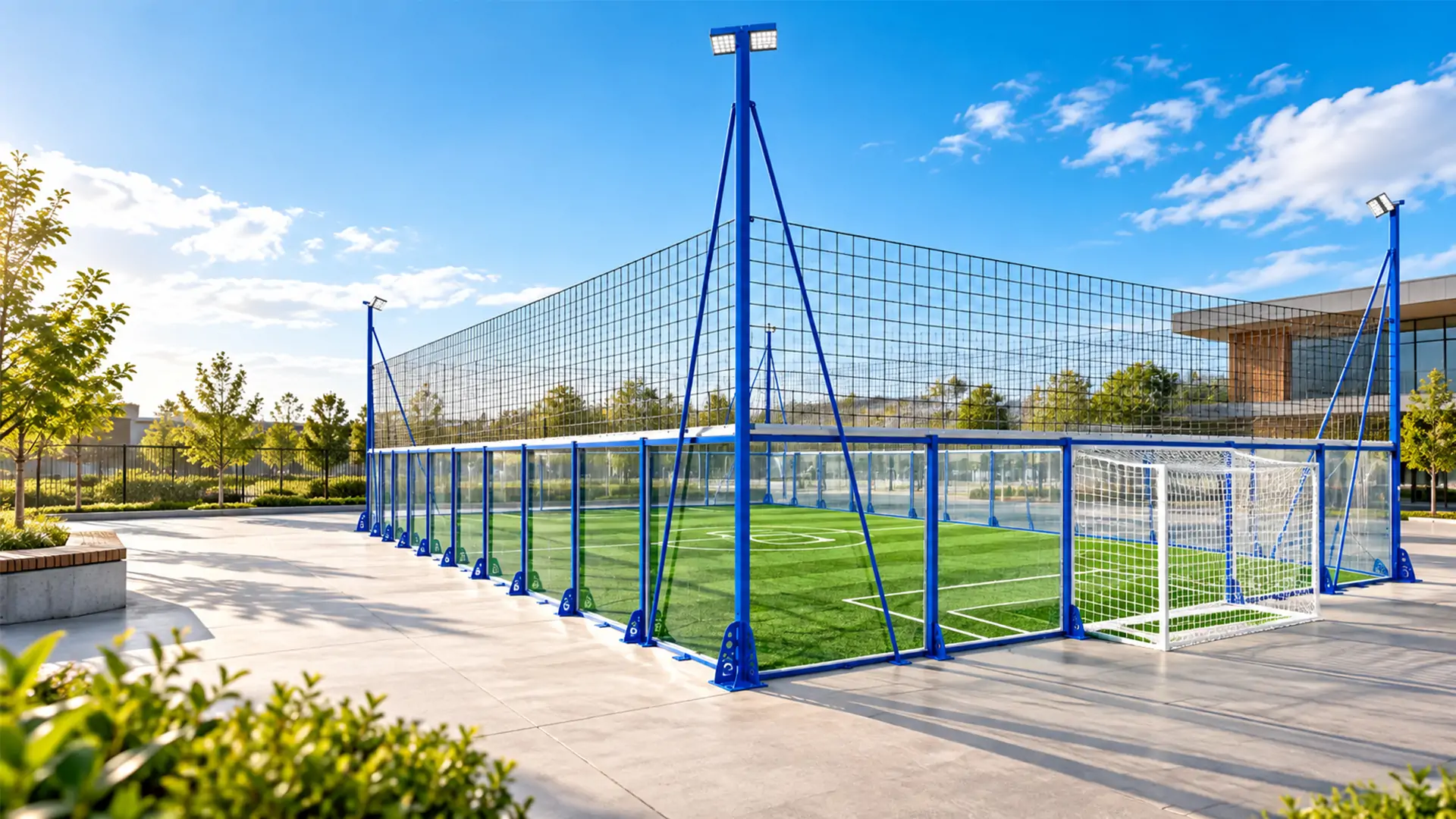
The supporting structure may use Q235B steel posts with diagonal bracing, combined with hot-dip galvanization and powder coating for corrosion protection. For coastal, humid or high-rainfall locations, the protection system, drainage plan and maintenance access should be reviewed carefully before installation.
The enclosure is also a safety feature. A typical design combines lower impact-resistant protection panels with side netting and overhead netting. This helps contain play while reducing direct contact with the steel frame in high-contact areas.
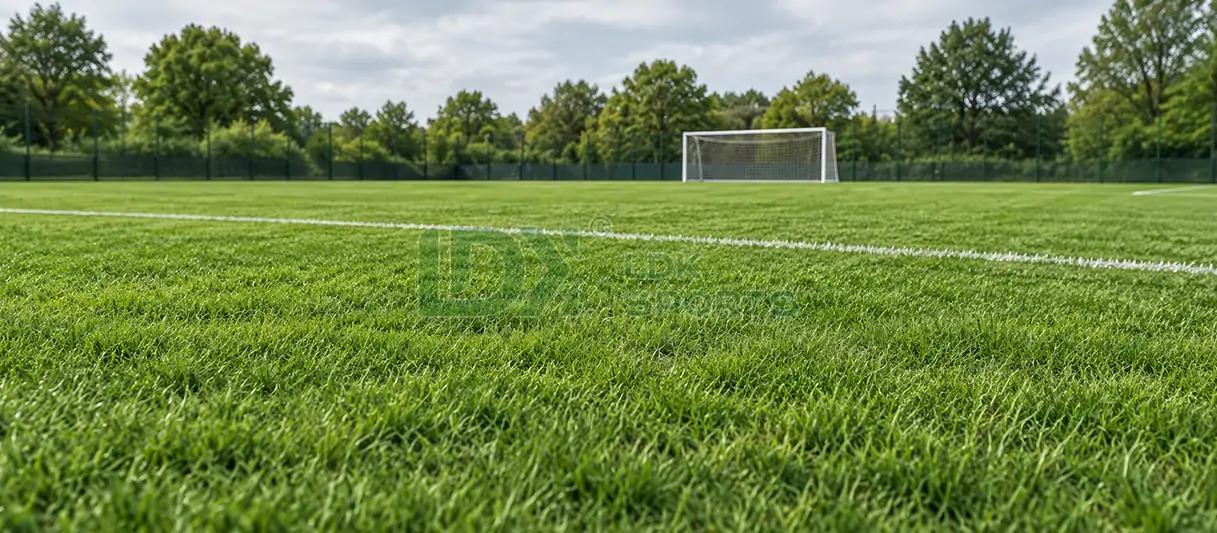
The playing surface should be chosen according to expected use. A 50 mm artificial football turf system can be considered for high-use projects, but the final decision should also account for base preparation, drainage, local climate and planned maintenance.
Lighting and Access Planning
Lighting can significantly extend the usable hours of a public football facility. When evening play is required, the project should consider glare control, electrical requirements, neighboring properties and safe routes for players and staff.
IP66-rated LED sports lights may be appropriate for outdoor installations, depending on the site’s electrical design and operating needs.
Access planning is equally important. A durable gate system with secure locking points can support controlled entry, while optional protective padding on high-contact columns may be suitable for schools, youth programs and other high-turnover environments.
Suitable Public Settings
Cage football fields can be considered for:
• Municipal parks and community recreation areas
• Primary schools, secondary schools and universities
• Residential communities and mixed-use developments
• Commercial parks and employee recreation facilities
• Youth football academies and training centers
• Urban renewal projects with limited available land
The shared need is simple: create a resilient, clearly defined place for football where land, staffing and operating time are limited.
Before procurement, project teams should confirm site dimensions, wind and corrosion exposure, drainage, lighting regulations, accessibility requirements and safety expectations. A clear technical brief gives suppliers the information needed to prepare a relevant layout, material schedule and installation proposal.
FAQ
How much space does a cage football field require?
The required footprint depends on the playing format, run-off areas, gate position and site limitations. A dimensioned site plan should be reviewed before the layout is confirmed.
Is a cage football field suitable for coastal or humid locations?
It can be, provided the project addresses corrosion exposure from the start. Steel treatment, coating systems, drainage and maintenance access should match the local environment.
Can schools and youth programs use enclosed 5-a-side fields?
Yes. The configuration should be matched to the user group and applicable safety requirements. Lower impact protection, controlled access, lighting and optional column padding are common considerations.
What should a project proposal include?
A useful proposal should cover the site layout, steel structure, turf system, enclosure treatment, lighting, gate arrangement, drainage interface, installation guidance and optional safety features.
Plan Your Cage Football Field Project
A successful project starts with a clear brief. Share your proposed location, available dimensions, intended users, expected daily use and any requirements for lighting, drainage, access or safety.
You can then request:
• A preliminary field layout and quotation
• A technical datasheet and materials schedule
• Guidance on site conditions and installation planning
• Options for lighting, turf, netting and protective padding
Request a project-specific proposal to turn your available space into a practical, durable football environment.