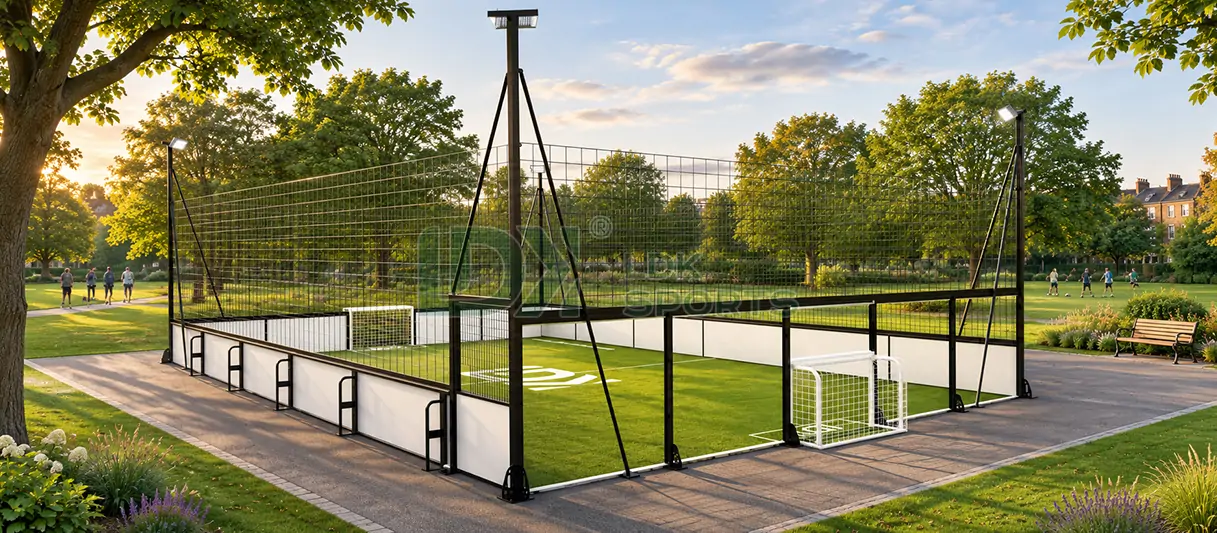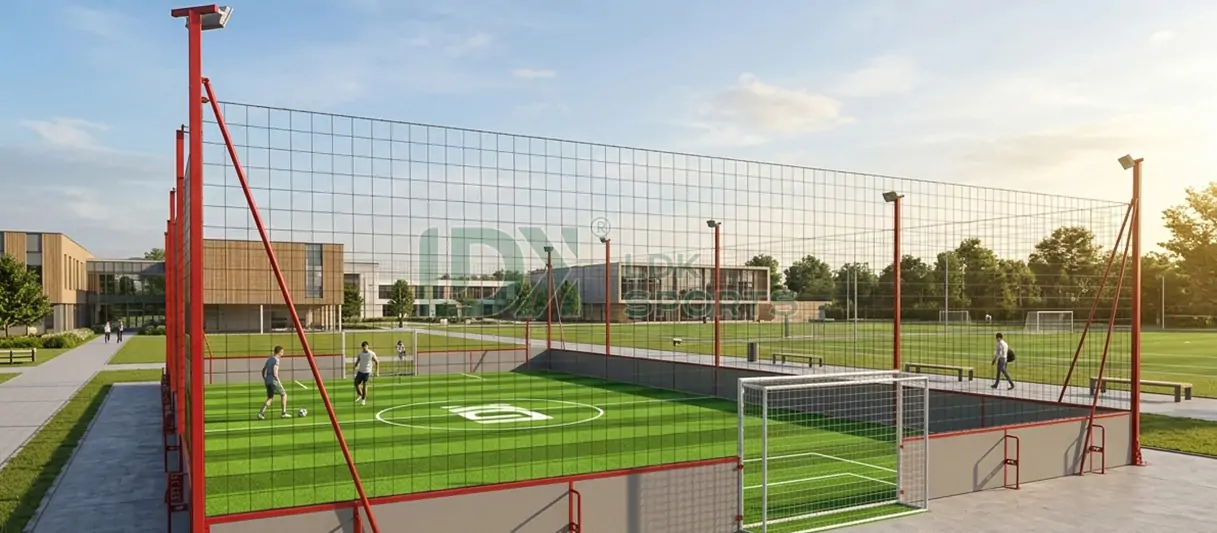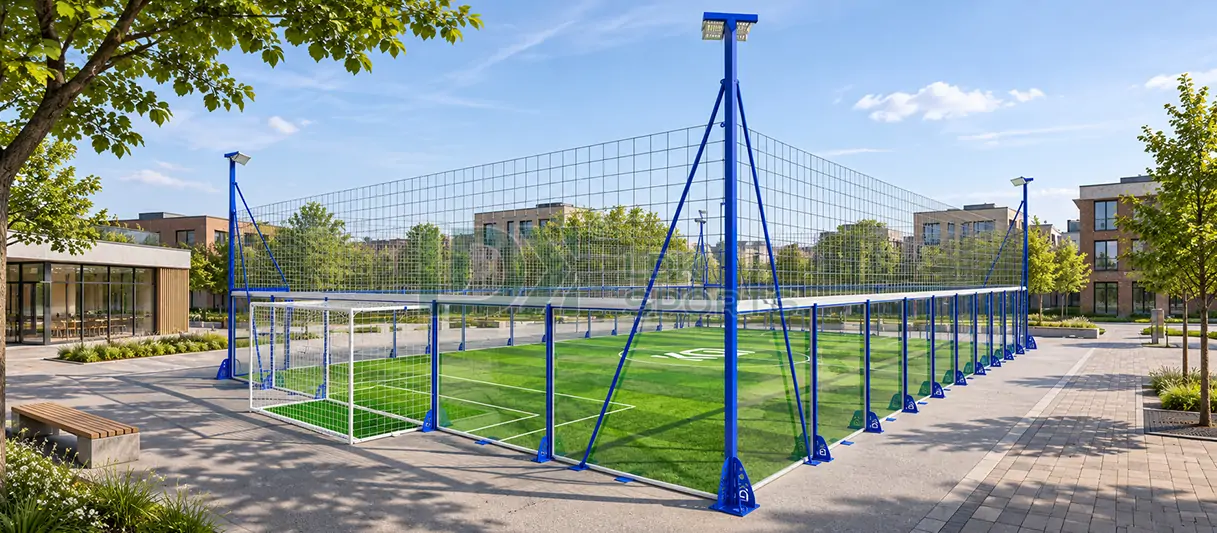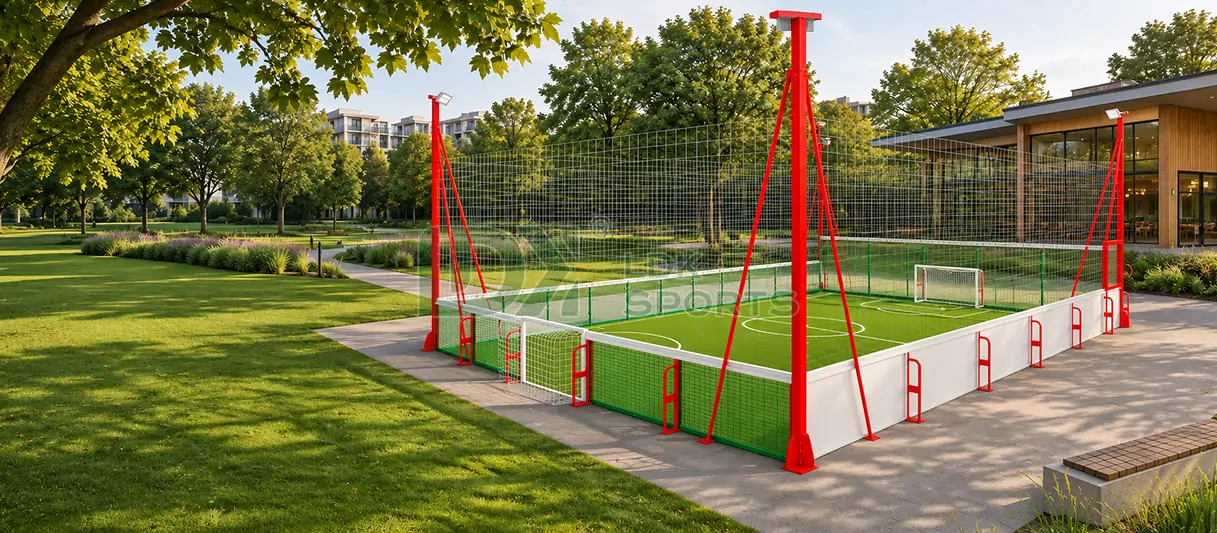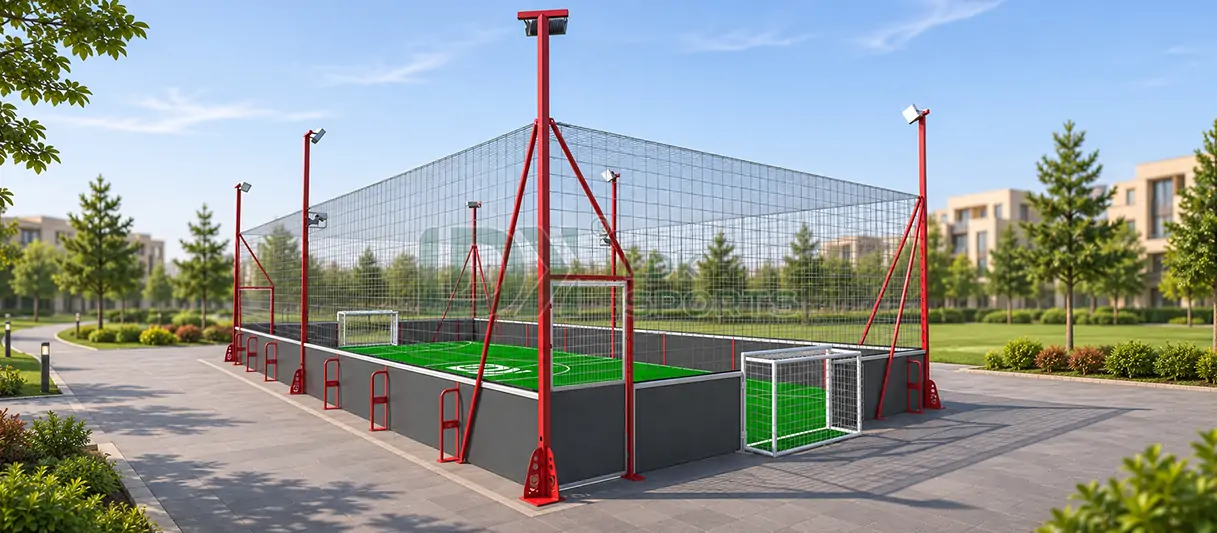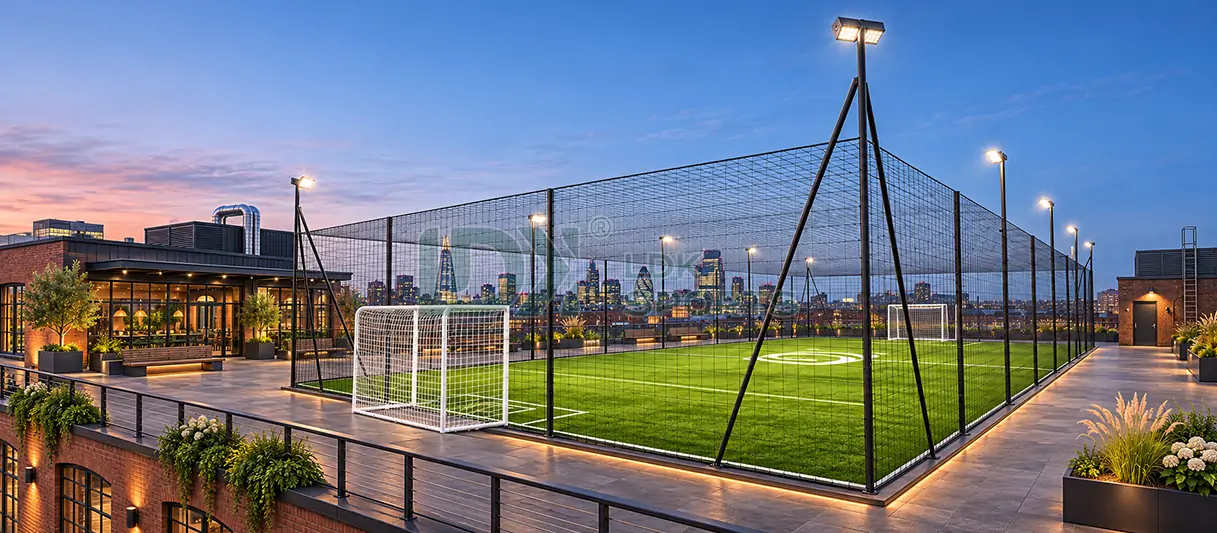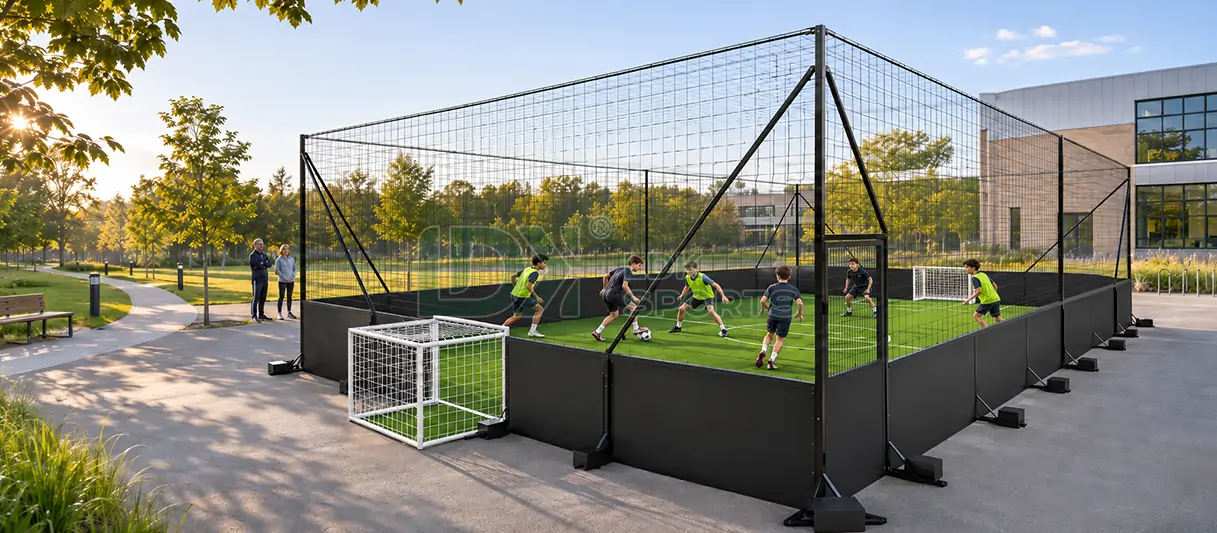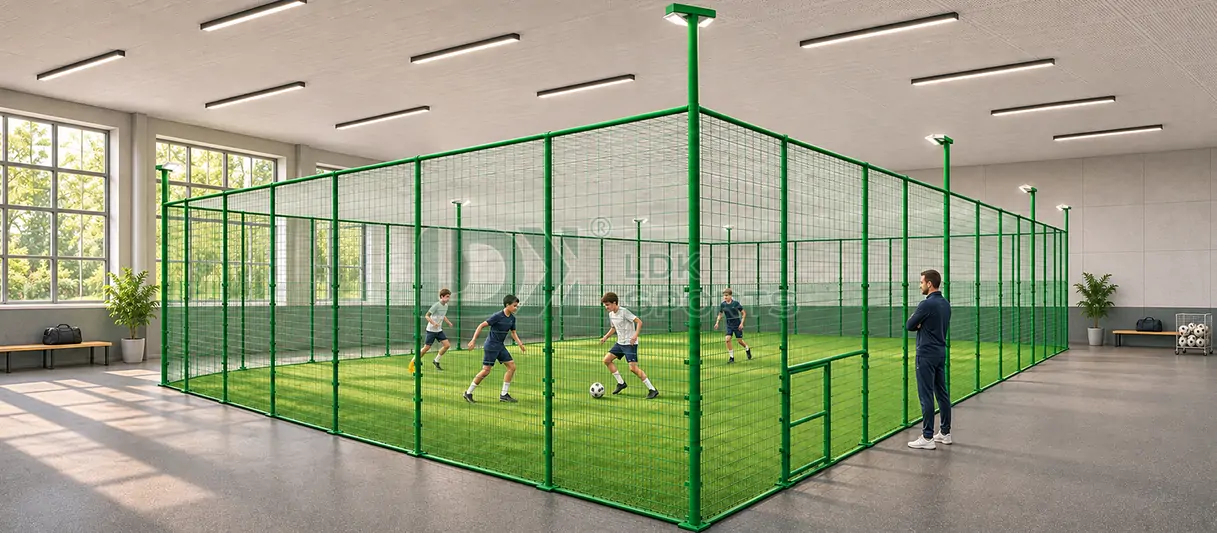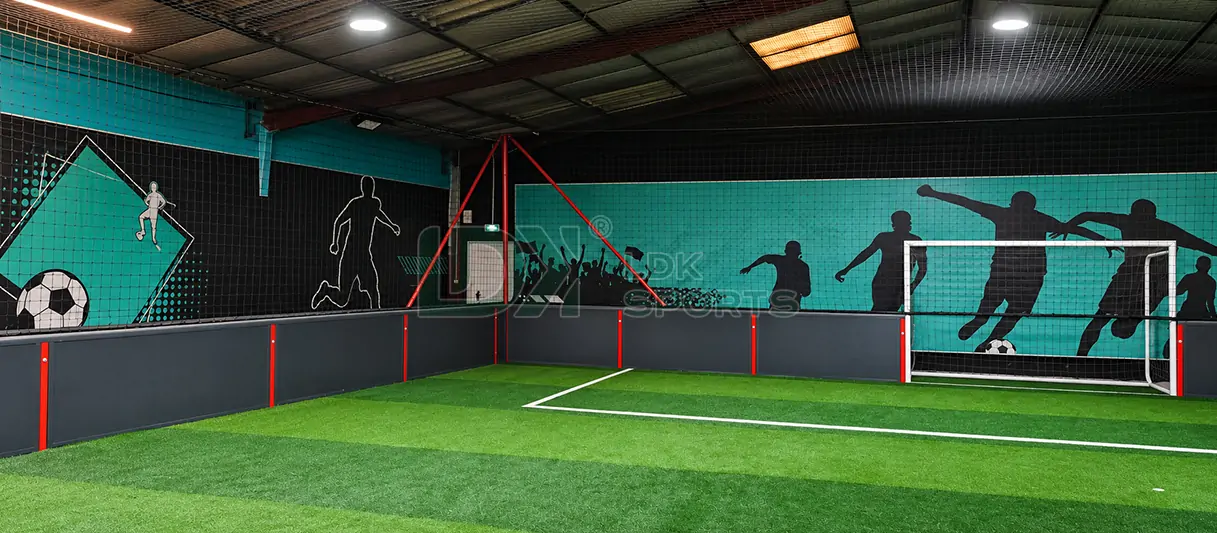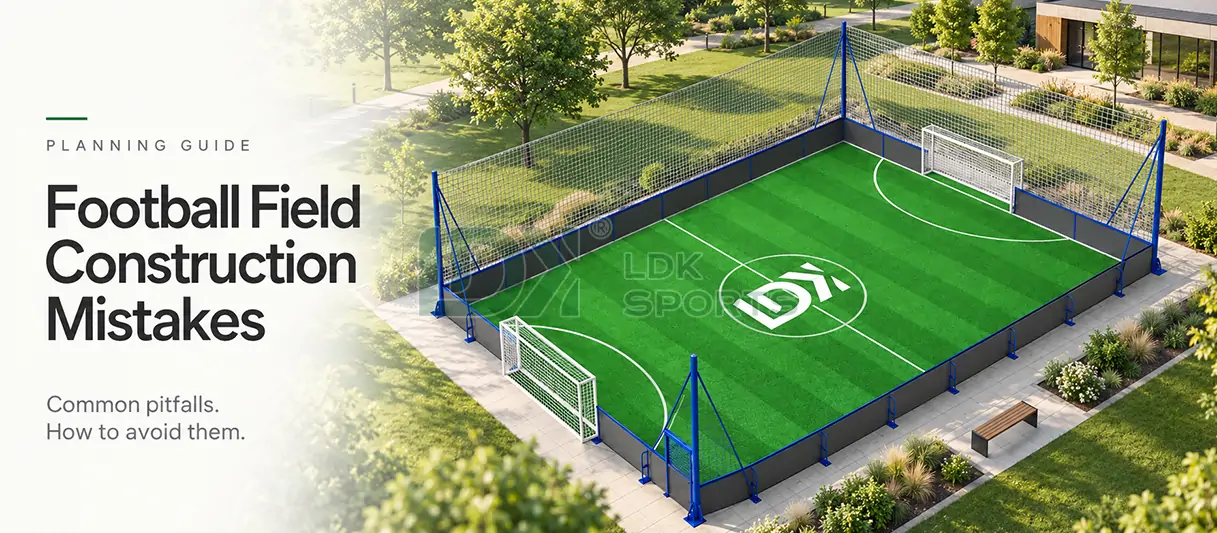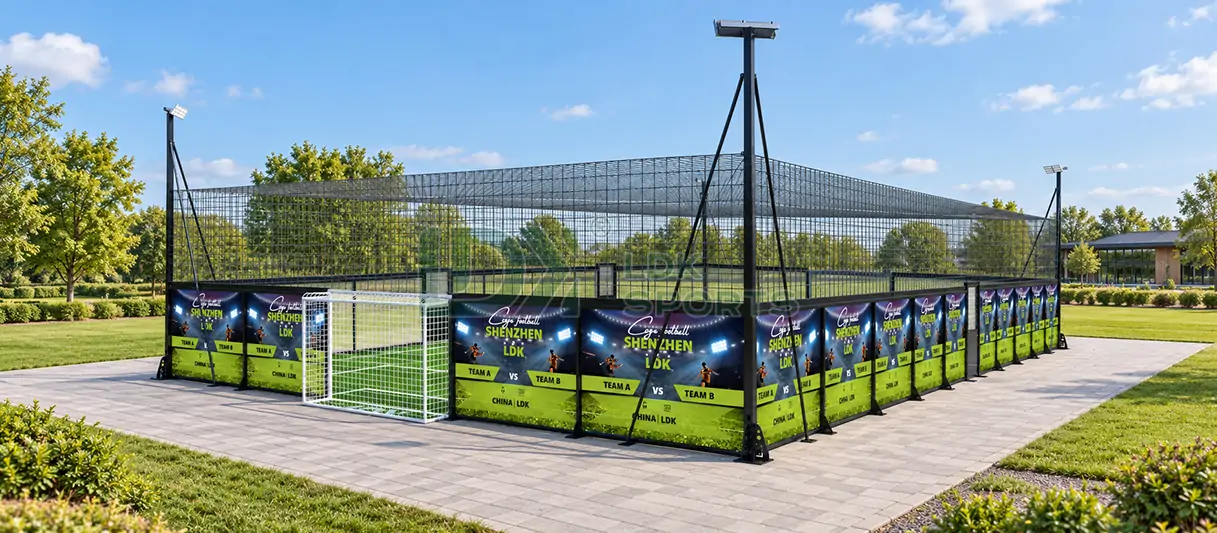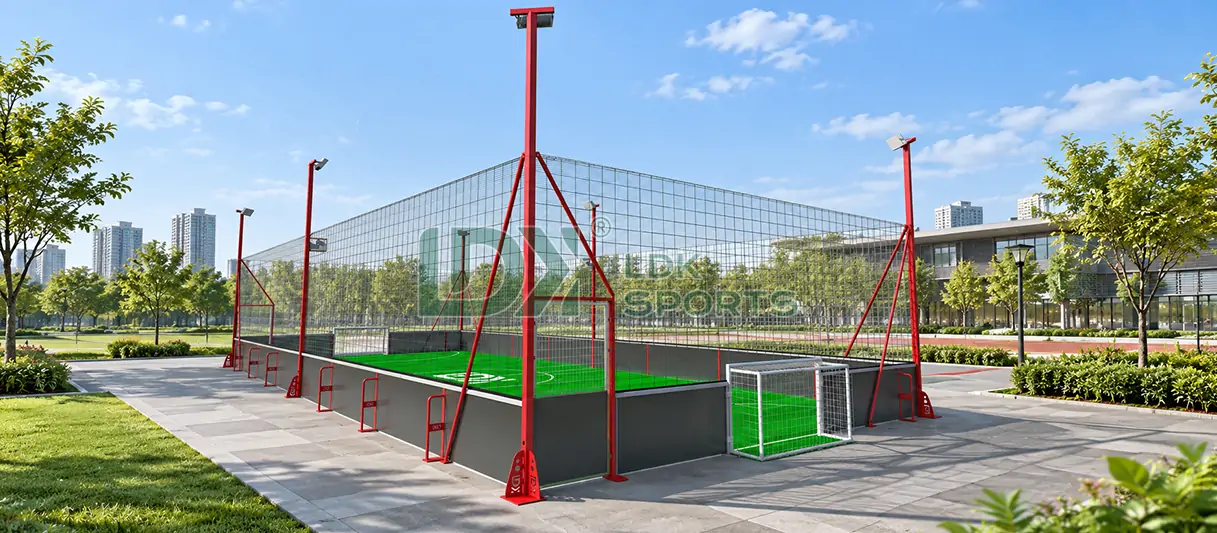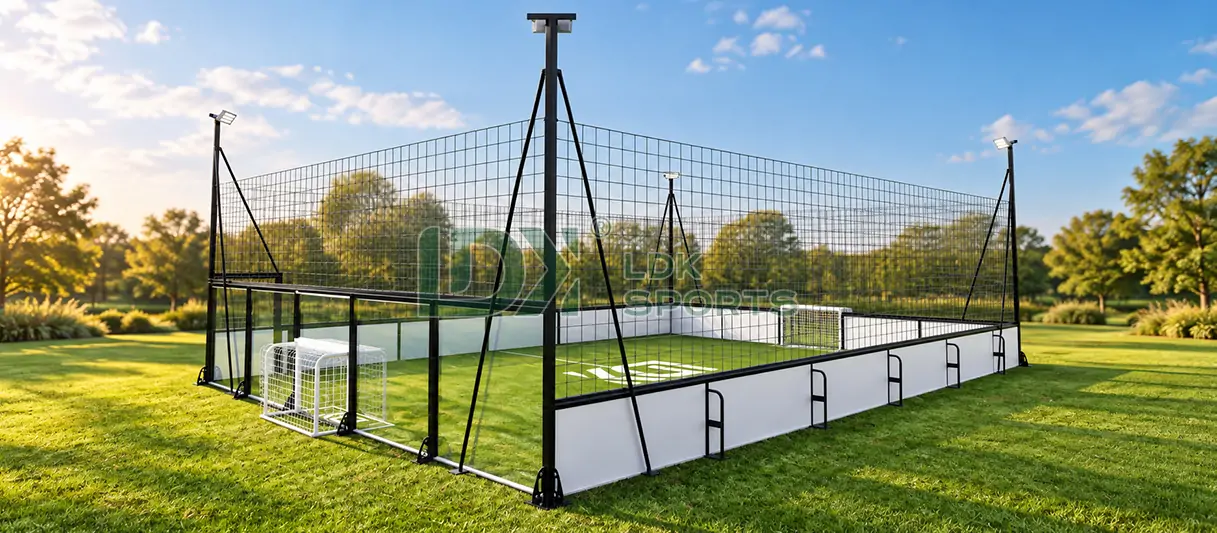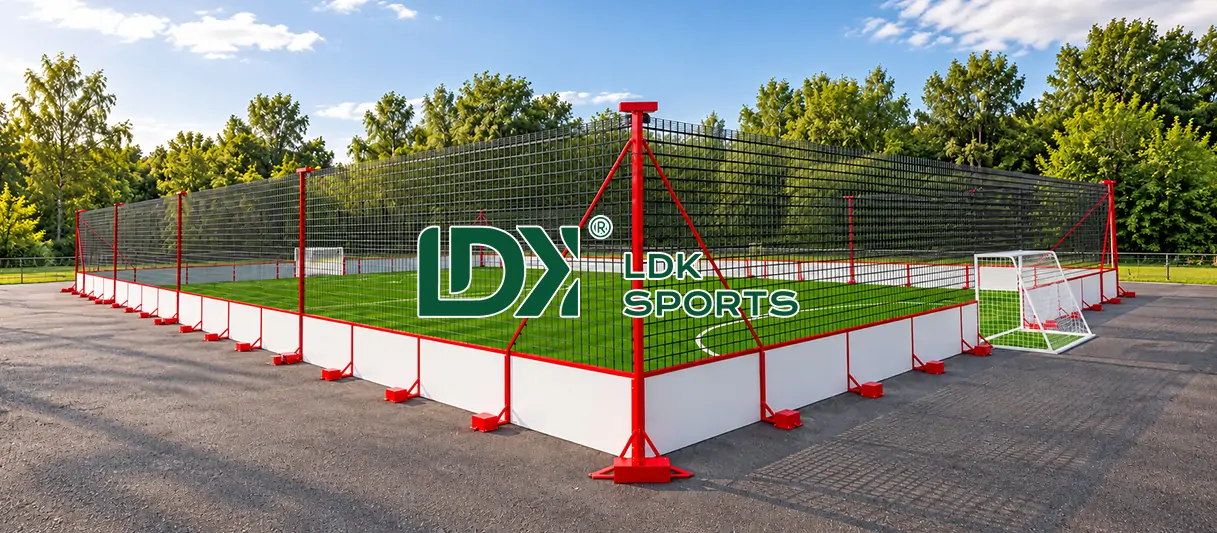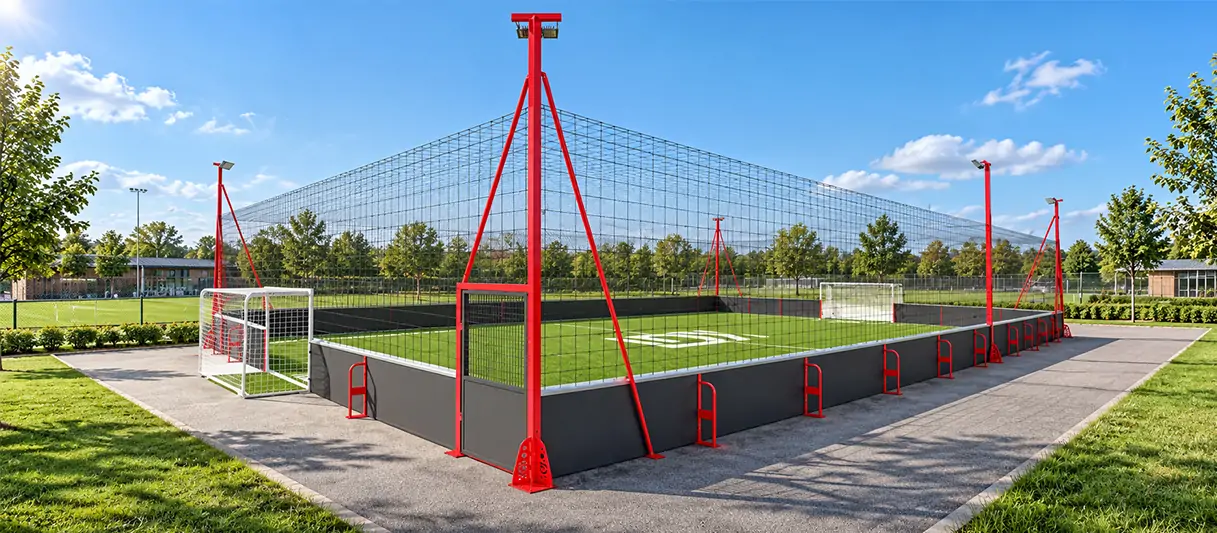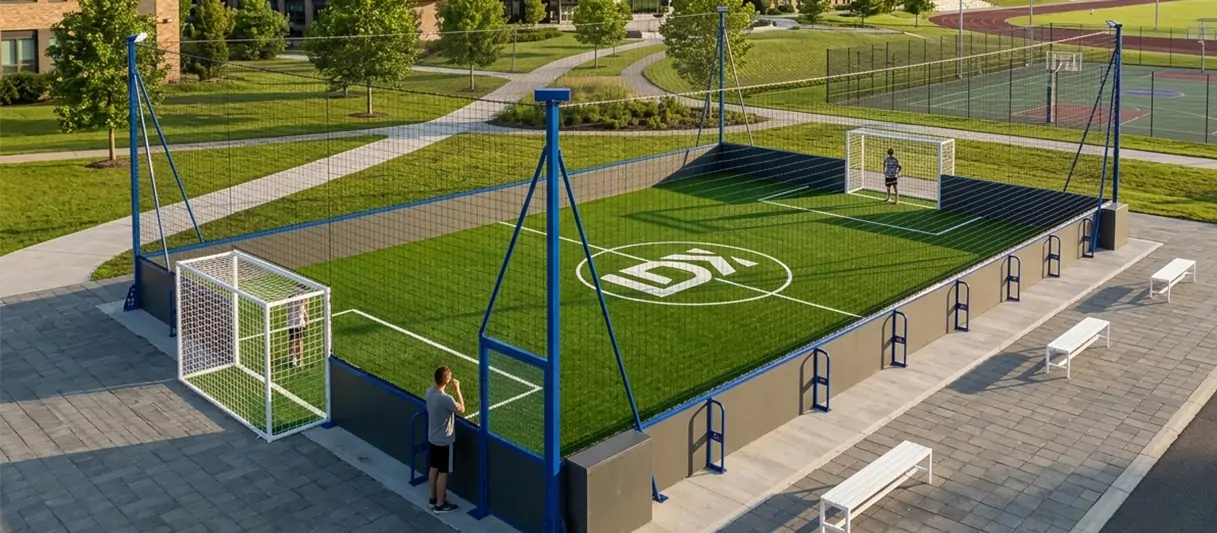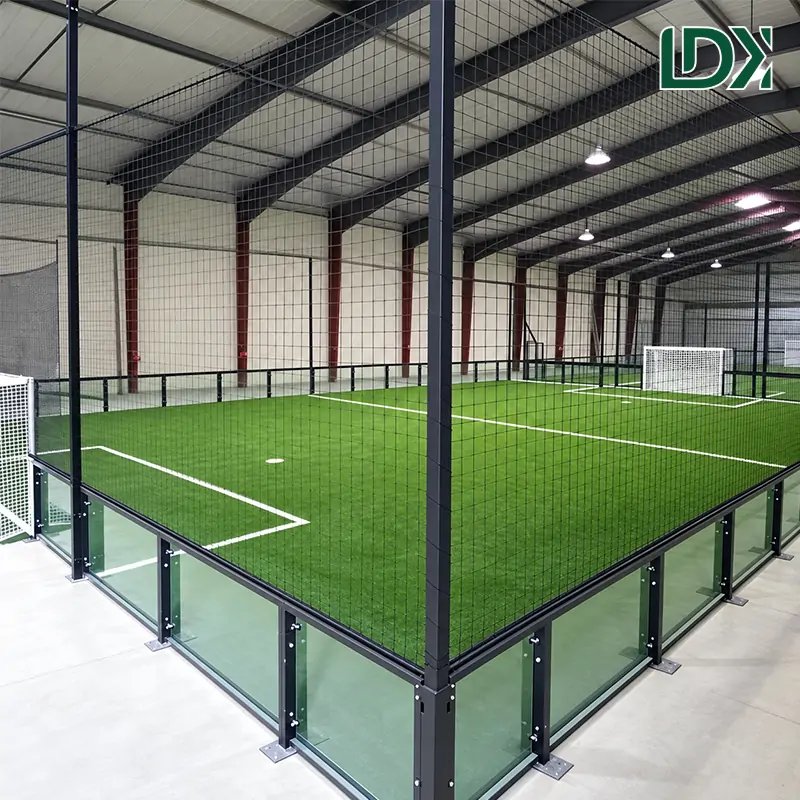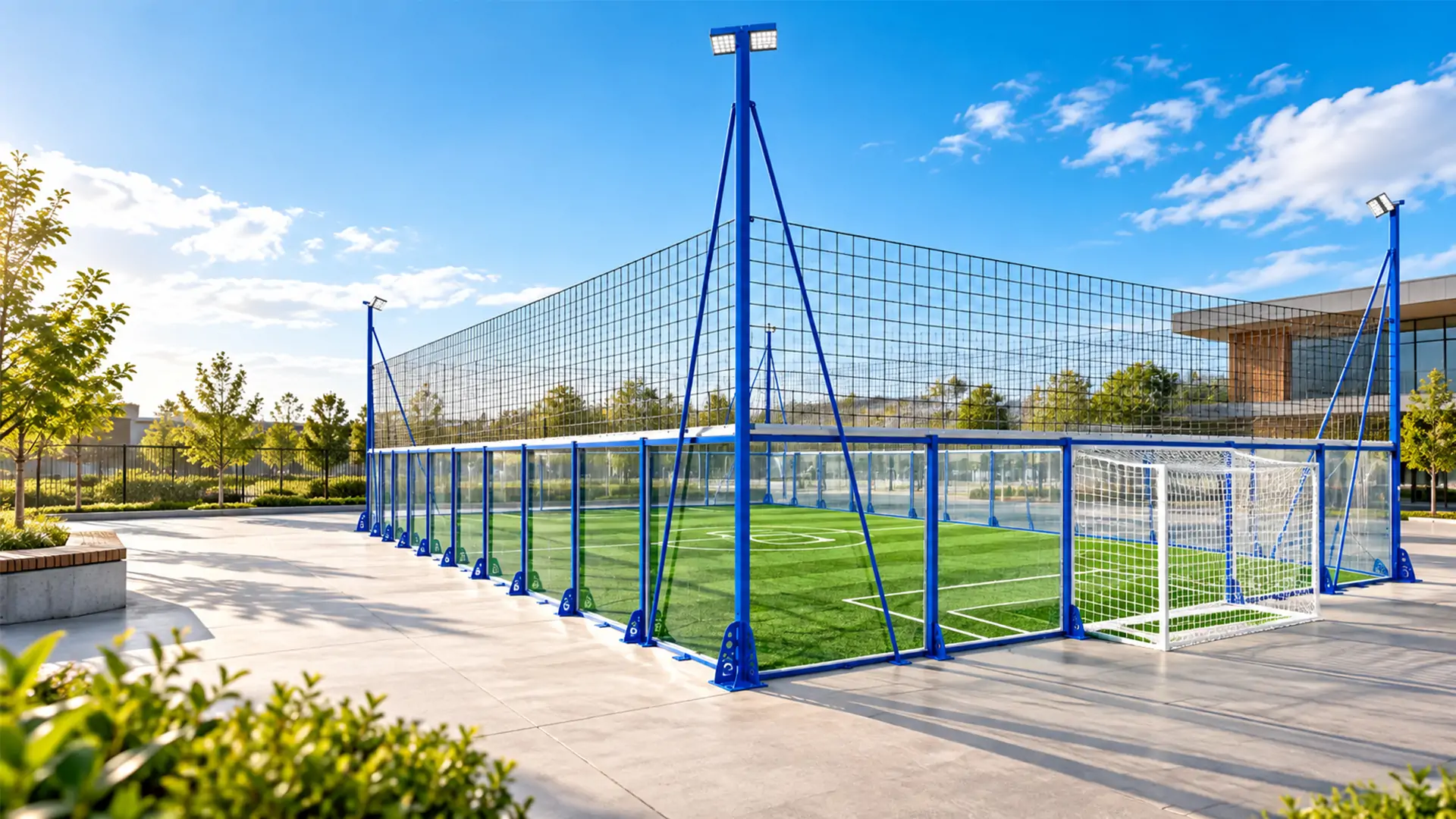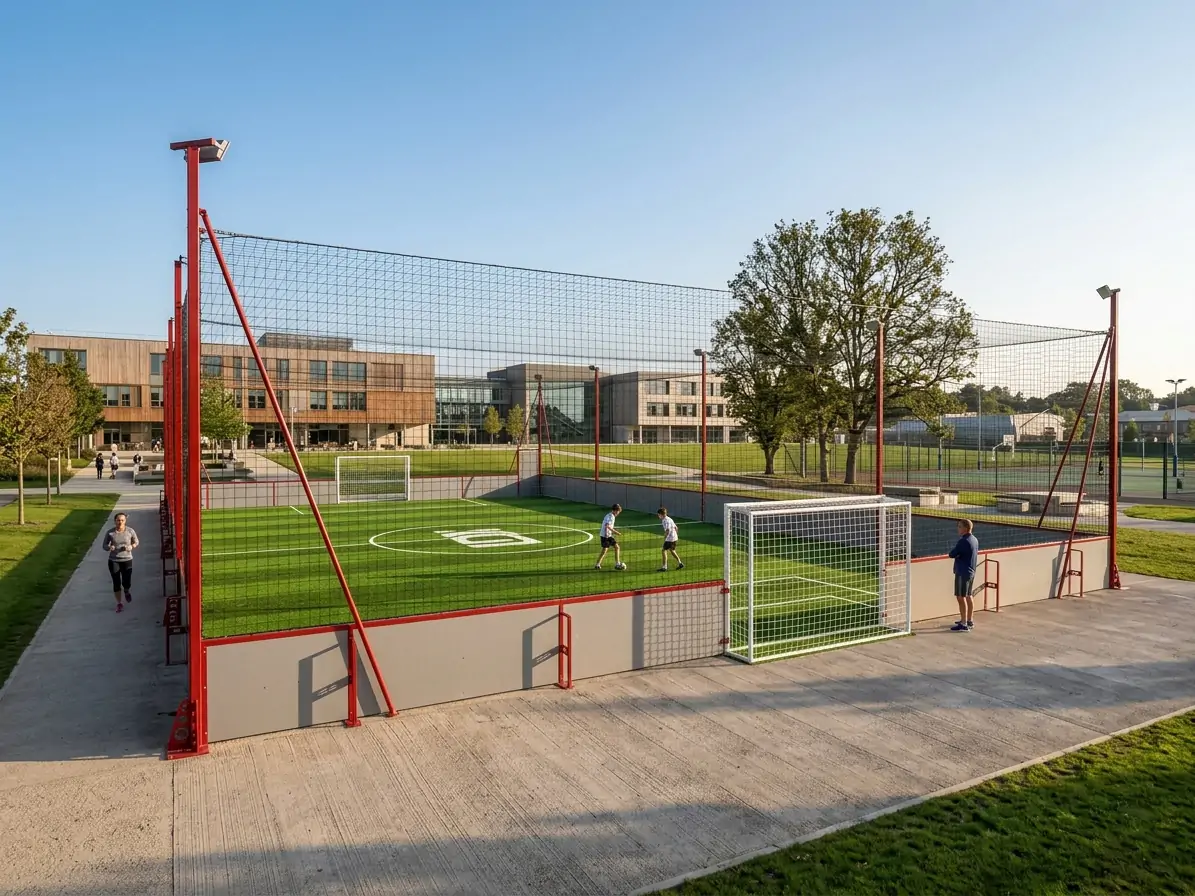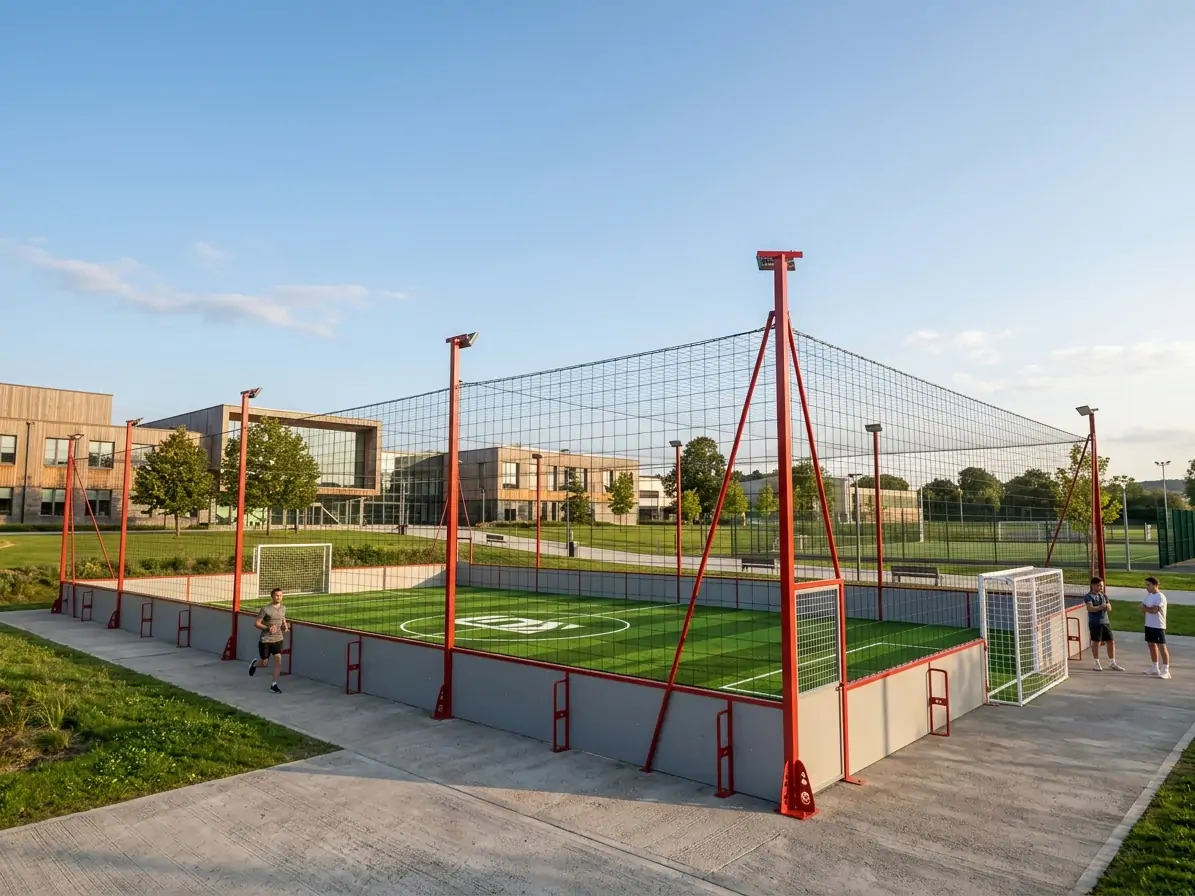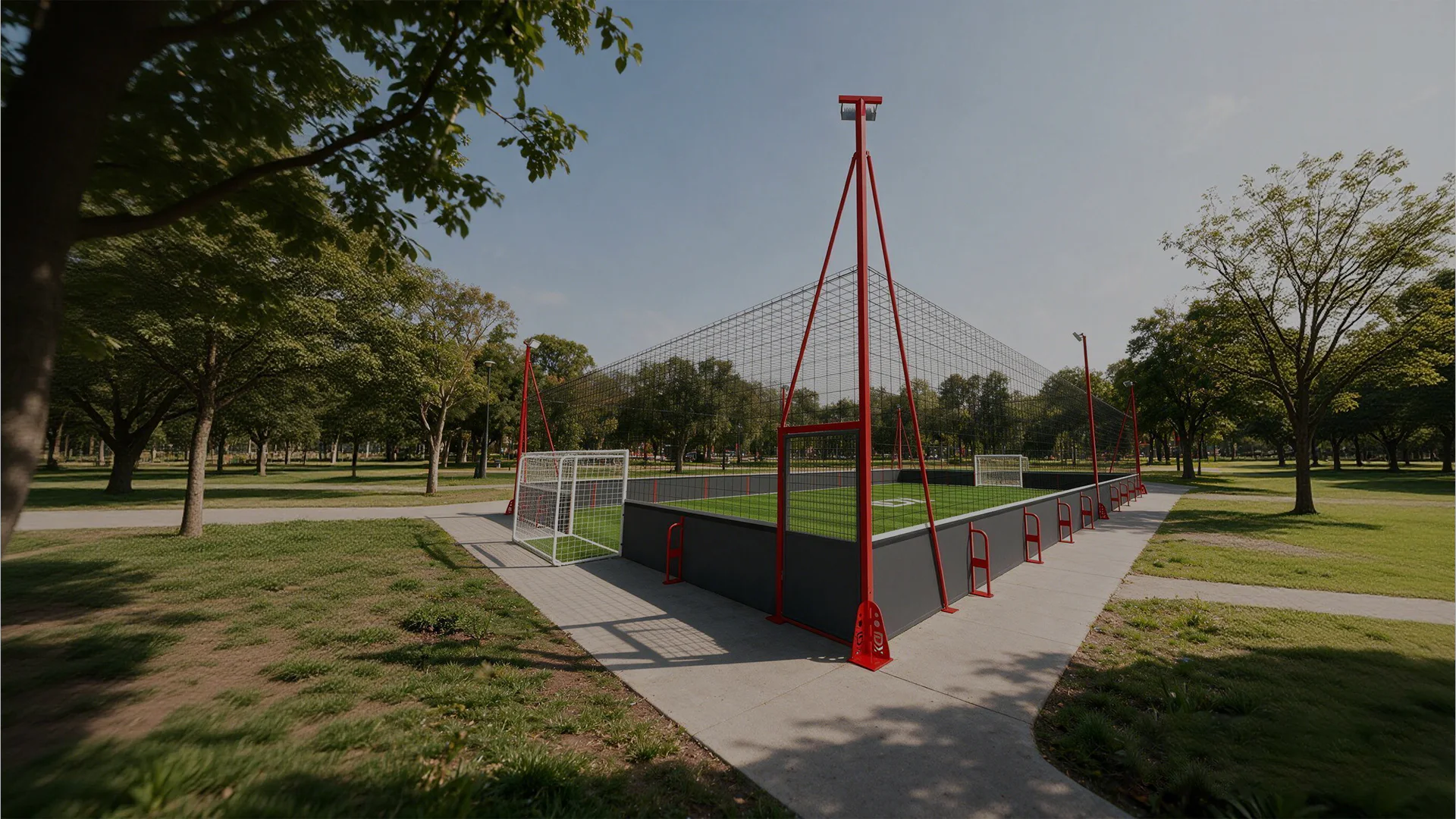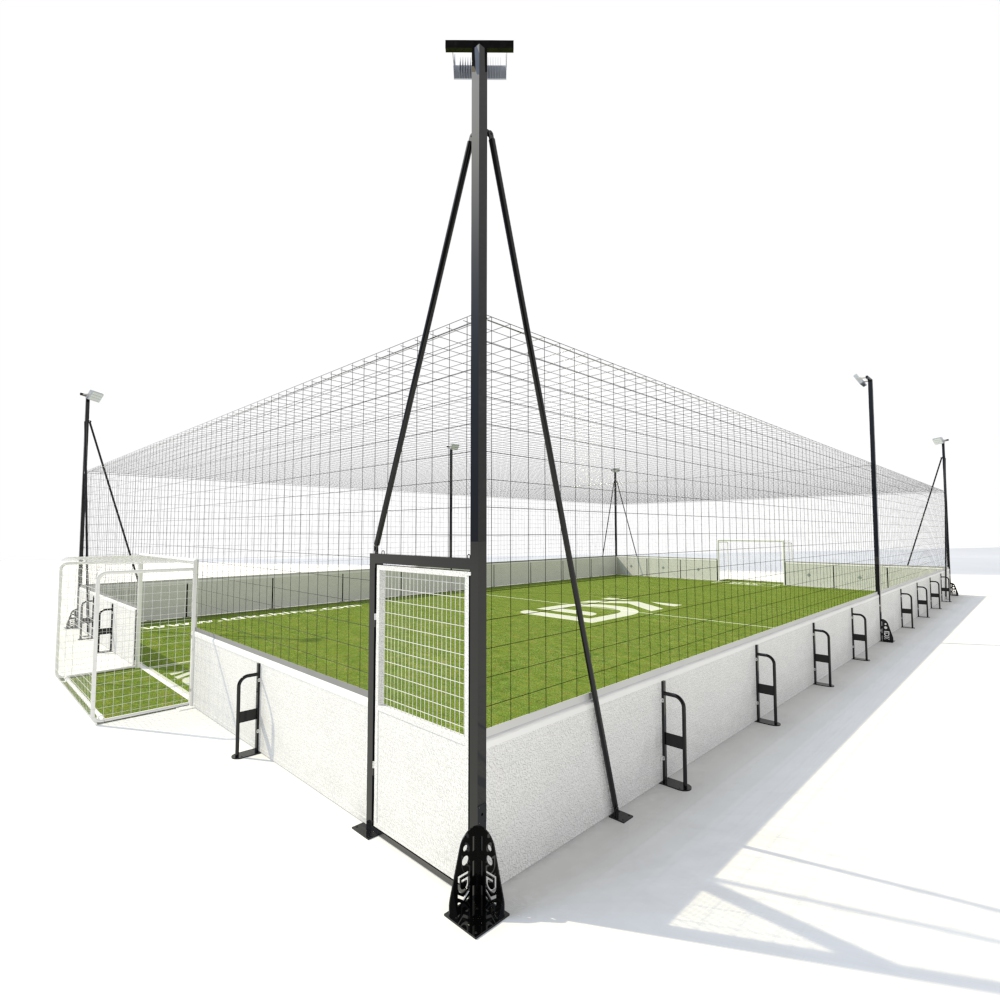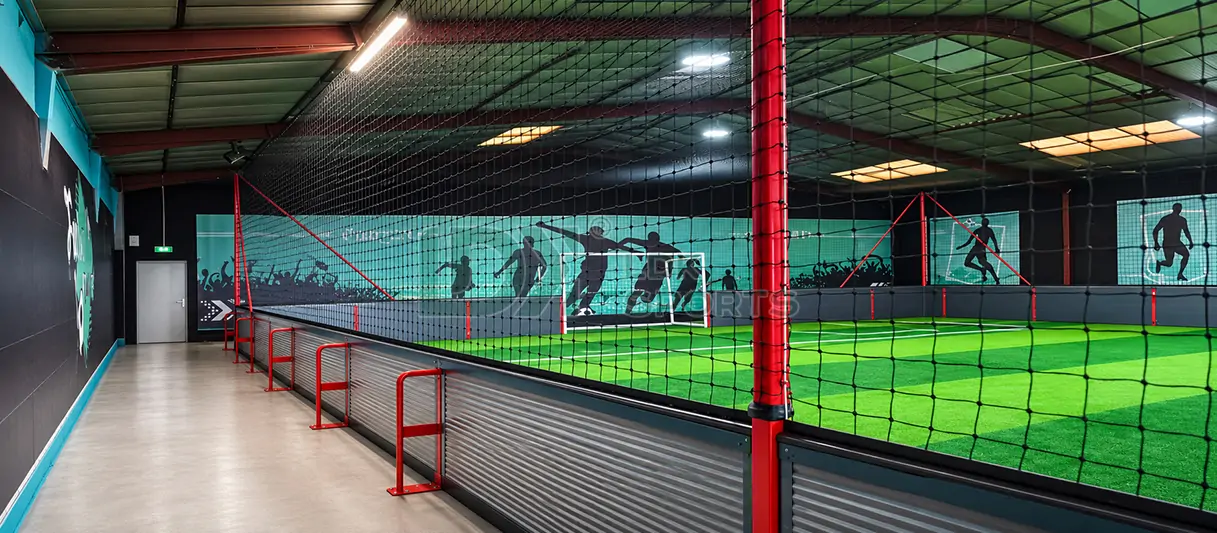
A commercial indoor sports facility in France is using a composite board soccer cage configuration to create a dedicated area for small-sided football.
The project combines a reinforced lower perimeter, upper safety netting, steel support posts, goals and access points in one enclosed playing system. Designed for an indoor commercial setting, the layout helps operators make productive use of limited space while keeping football activity contained and clearly separated from surrounding areas.
Contents
- A New Approach to Indoor Football Space
- Why the Lower Perimeter Matters
- Designed for Commercial Indoor Operation
- Flexible Layout for Existing Buildings
- FAQ
- Plan Your Soccer Cage Project
A New Approach to Indoor Football Space
Small-sided football facilities need more than a marked playing area. In an indoor venue, the football zone must work alongside walkways, neighbouring activities, lighting, ventilation and daily venue operations.
The France project uses a composite board soccer cage to establish a clearly defined football environment within a controlled indoor footprint. Instead of treating the enclosure as simple fencing, the system coordinates the playing boundary, ball containment, goals and access as part of the facility layout.
This approach is suitable for commercial rental venues, youth coaching centres, football academies and multi-sport facilities that need to support repeated sessions throughout the day.
Why the Lower Perimeter Matters
The main difference between this configuration and a conventional full-mesh cage is its lower boundary.
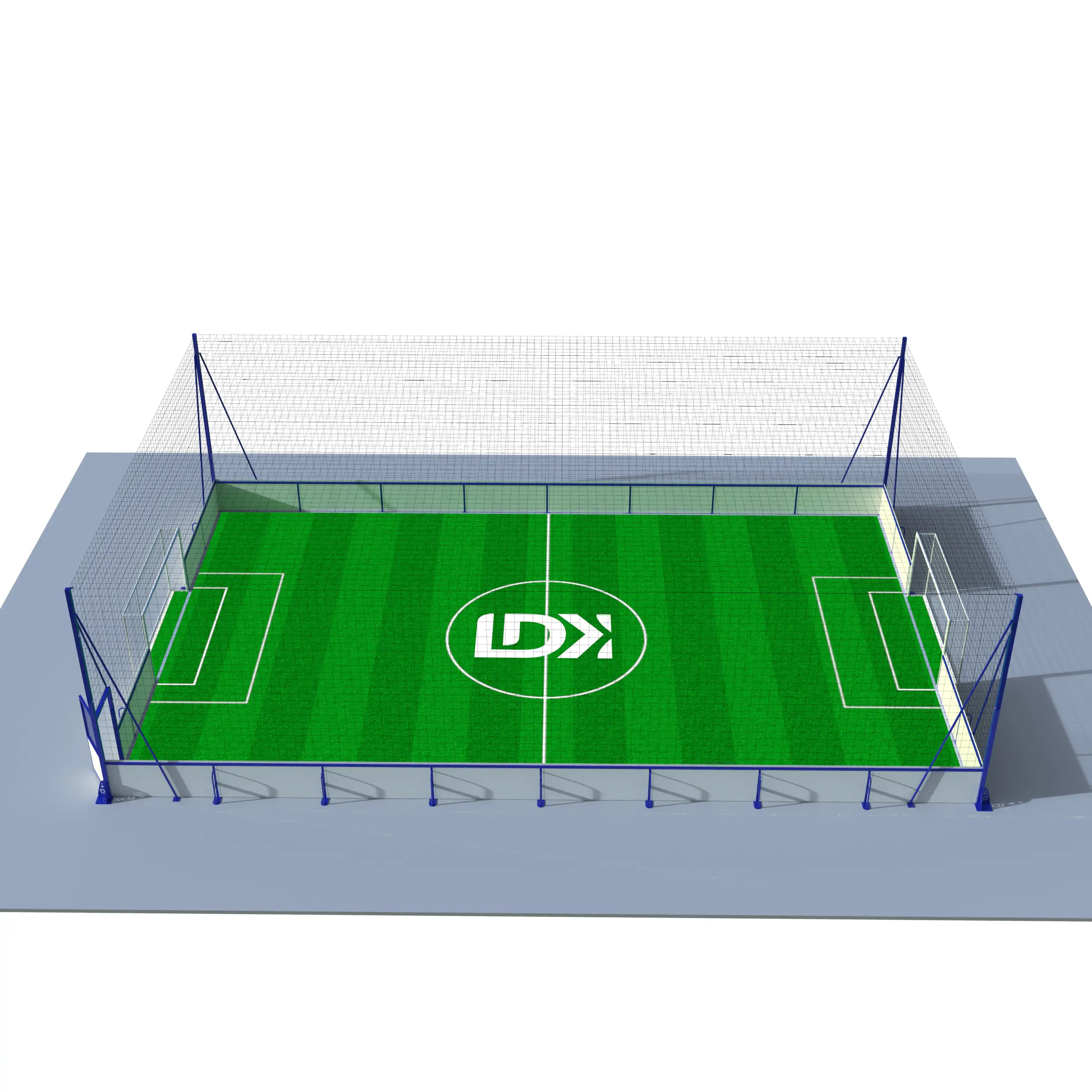
The French project uses a solid composite board around the base of the pitch. The board is approximately one metre high and incorporates a high-strength foam core of about 50 mm, protected by an outer metal sheet and reinforced support. Soft sports netting continues above the board, bringing the total enclosure height to approximately four metres.
This material combination responds to how small-sided football is played. The lower perimeter receives frequent passes, shots and close-range contact, while the upper netting helps contain higher balls without making the venue feel visually closed in.
A firmer lower boundary can also return the ball toward the playing area more consistently than flexible mesh at ground level. That can help reduce interruptions during coaching sessions, games and hourly bookings.
Designed for Commercial Indoor Operation
For an indoor sports operator, ball containment is not only a playing issue. It also affects circulation, safety and the way different activities can share one building.
The composite board soccer cage creates a distinct football zone while helping prevent stray balls from entering walkways or neighbouring sports areas. The open upper netting maintains visibility across the venue, while the solid lower section gives the pitch a more defined commercial appearance.
Indoor planning should also consider ceiling clearance, lighting, ventilation, fire systems, access routes and the relationship between the football cage and nearby activity areas. These details should be reviewed before finalising the field position and enclosure layout.
Flexible Layout for Existing Buildings
The configuration referenced for the French project has an approximate field length of 18.9 metres. Available width options include approximately 6.874 m, 8.4 m and 8.54 m.
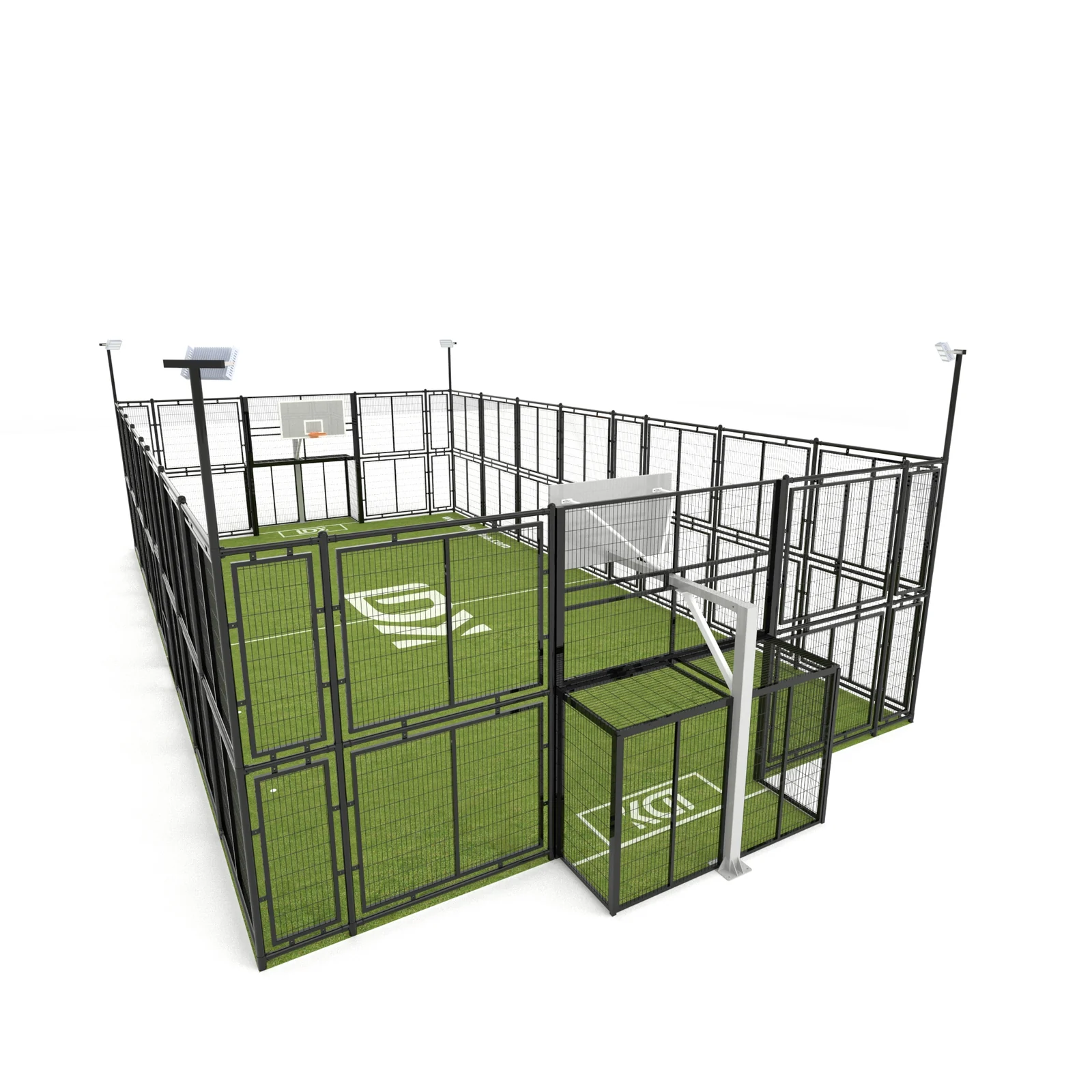
Two-sided and four-sided enclosure layouts can be selected according to the available space. The system can also incorporate approximately 3 × 2 m football goals, while access points should be planned around venue operation and safety requirements.
This flexibility can be valuable for existing warehouses, indoor sports centres, schools and commercial leisure venues where the building dimensions are already fixed.
The France project shows how a compact football space can be designed as a complete playing system. Steel posts, composite panels, upper netting, goals, doors and field dimensions are coordinated around the available footprint rather than treated as separate products.
FAQ
What is a composite board soccer cage?
It is an enclosed small-sided football pitch with solid composite panels around the lower perimeter and safety netting above.
Why use composite boards instead of full mesh?
The lower board is designed for the part of the enclosure that receives the most frequent ball impact and player contact. It can also provide more predictable ball rebound than flexible mesh at ground level.
Can a soccer cage be installed indoors?
Yes. Indoor projects should be planned around ceiling height, lighting, ventilation, access, fire systems and nearby activity areas.
Can goals and doors be included?
Yes. Applicable layouts can include approximately 3 × 2 m football goals and access doors planned around operational and safety needs.
Plan Your Soccer Cage Project
If you are planning an indoor football venue, academy, school facility or commercial sports centre, start with the available installation dimensions and intended use of the field.
Share your project location, indoor or outdoor application, available space and required number of pitches to develop a suitable soccer cage layout with the right enclosure configuration, goals and access arrangement.