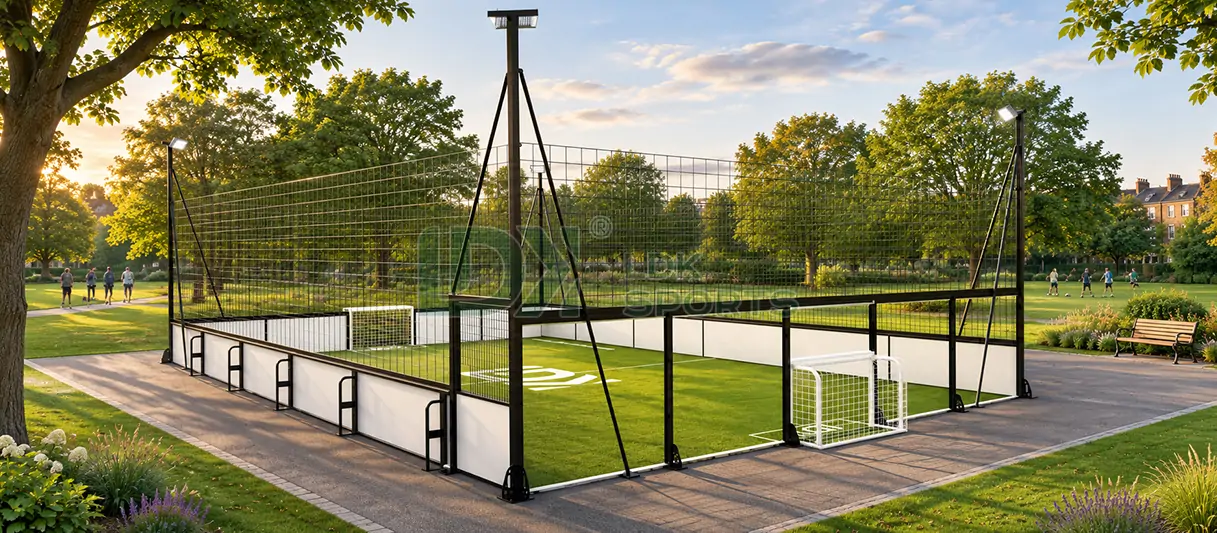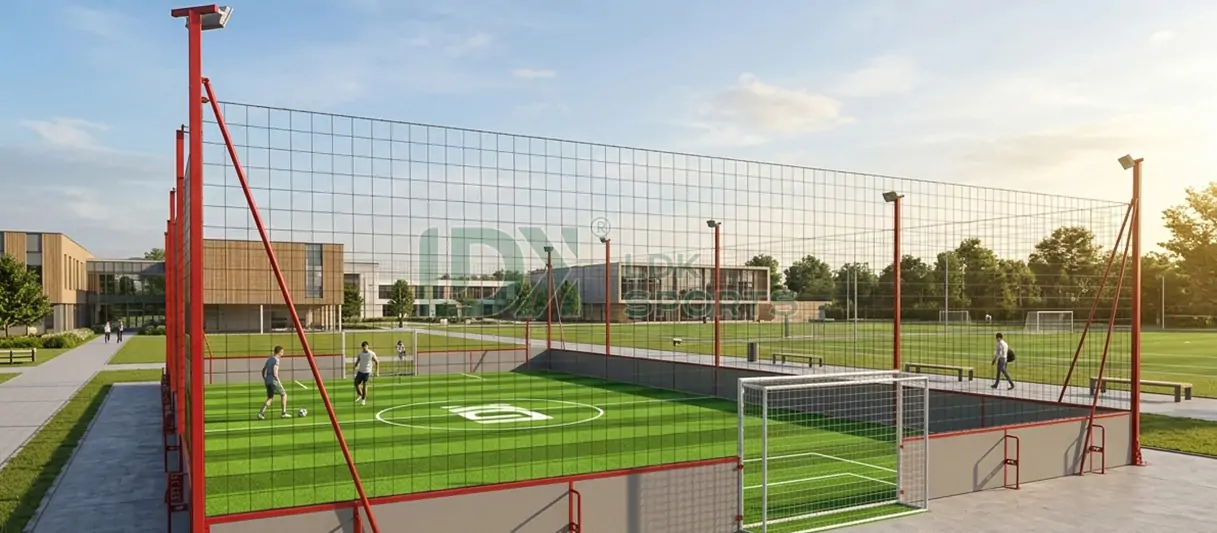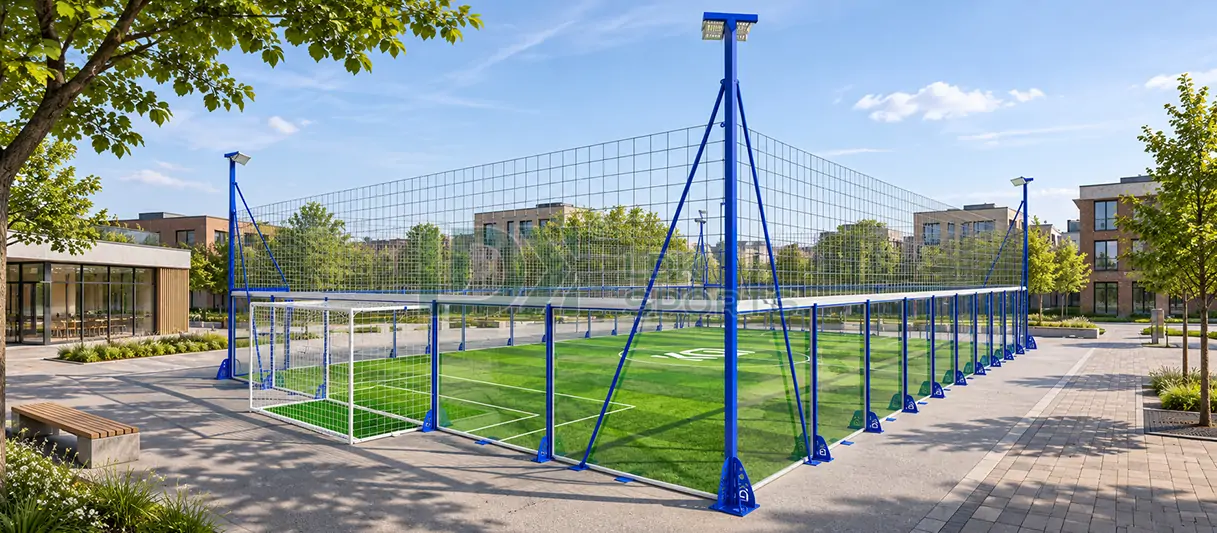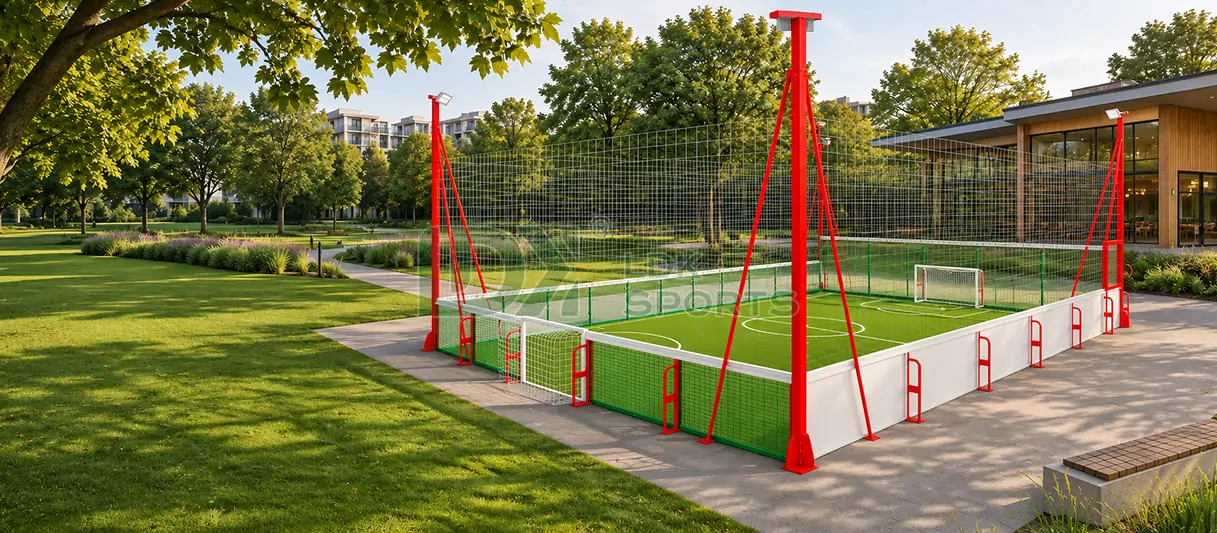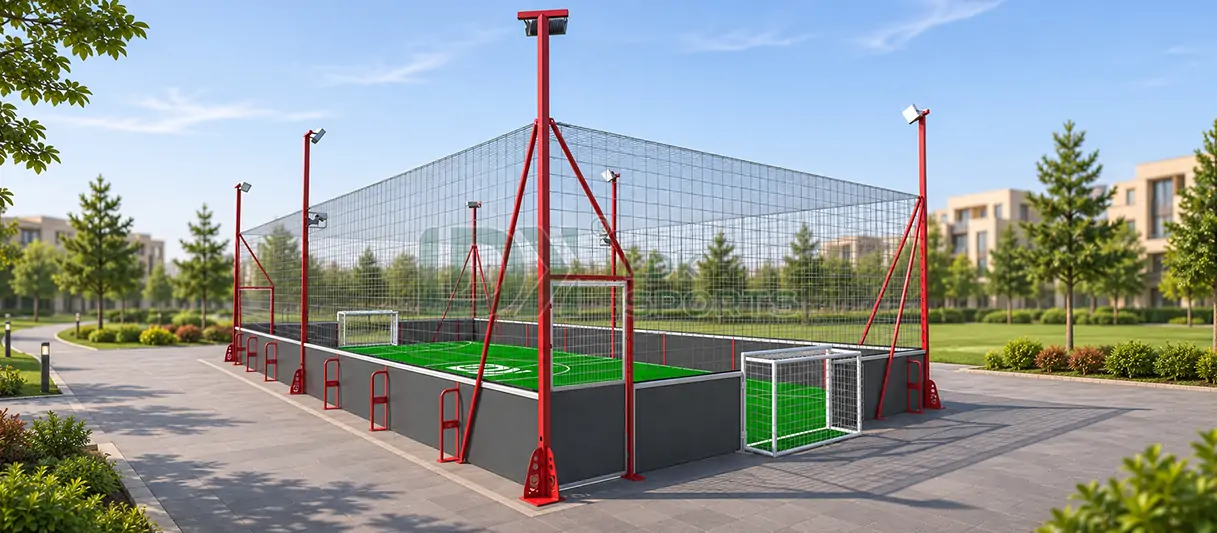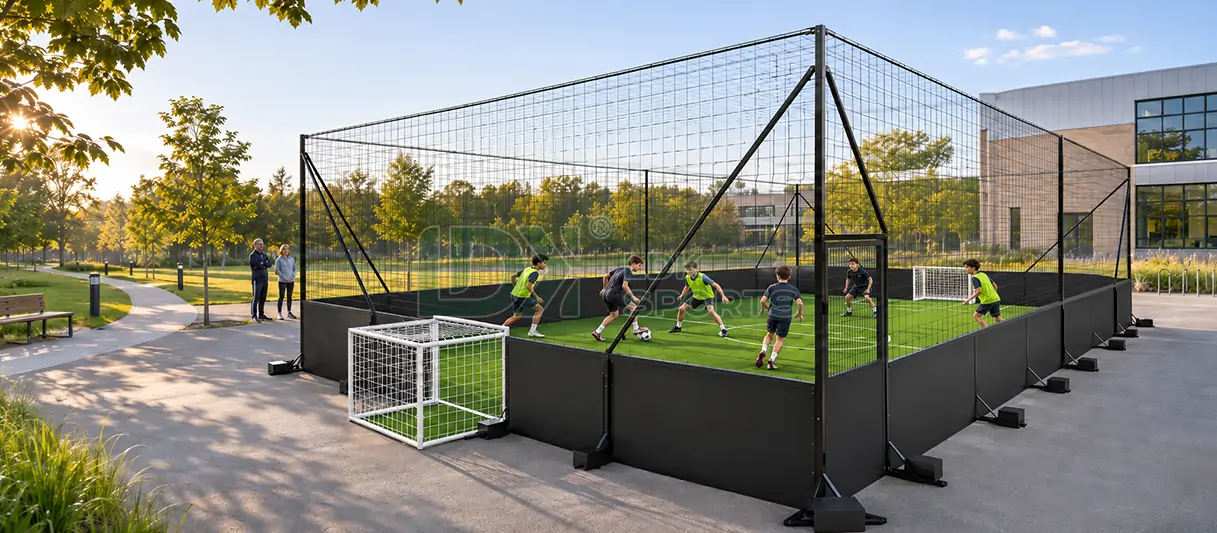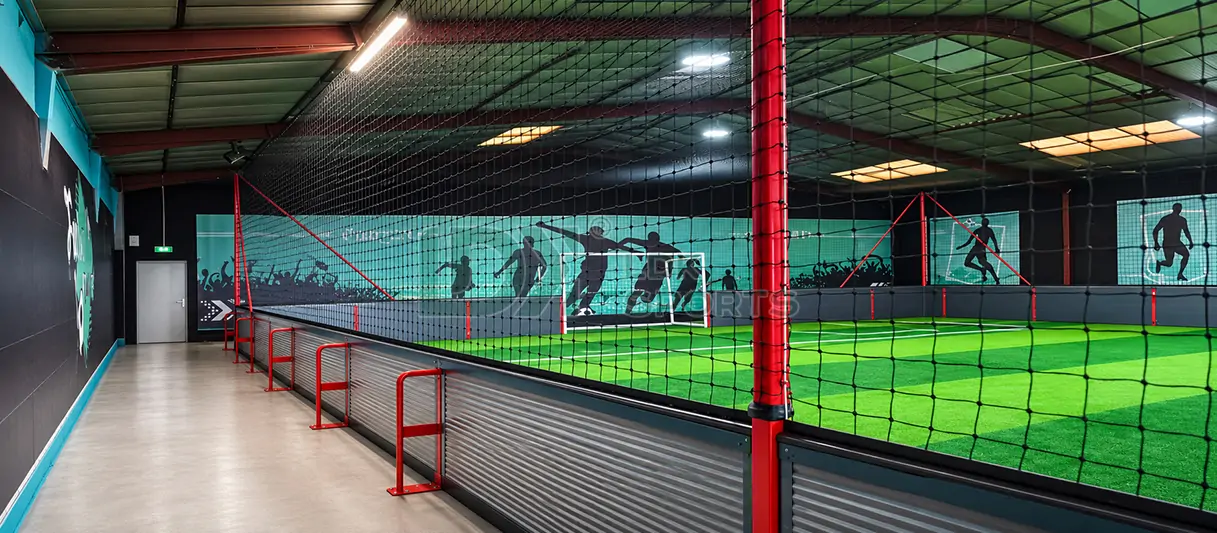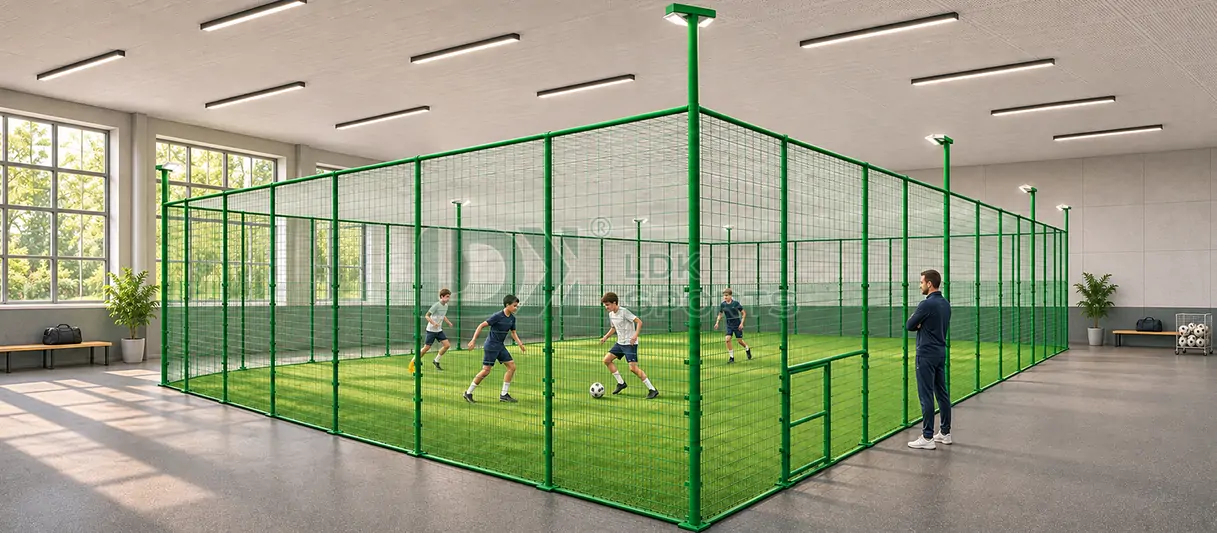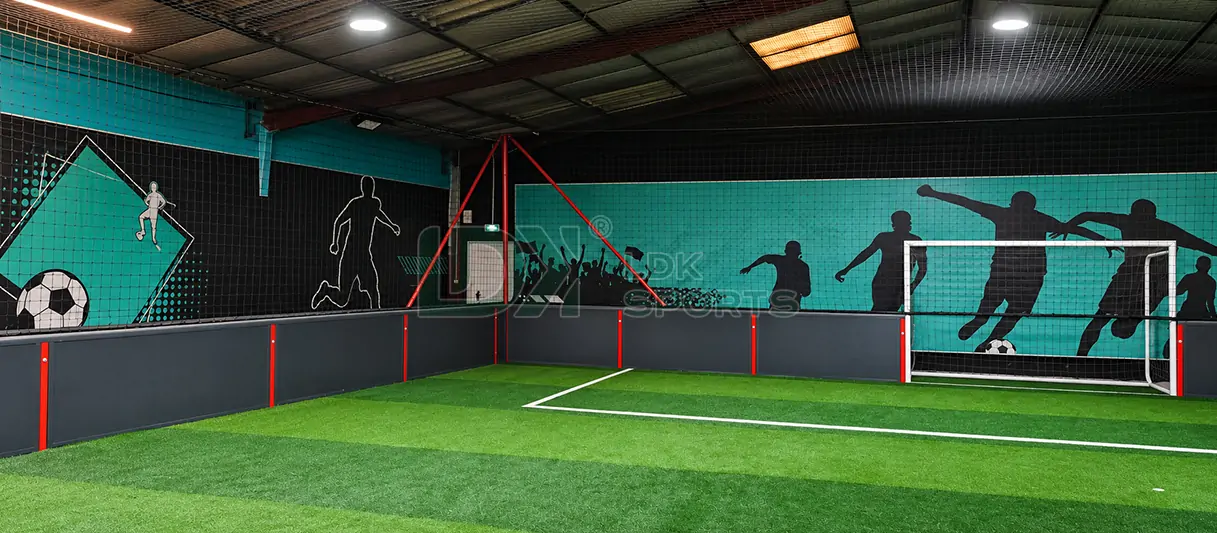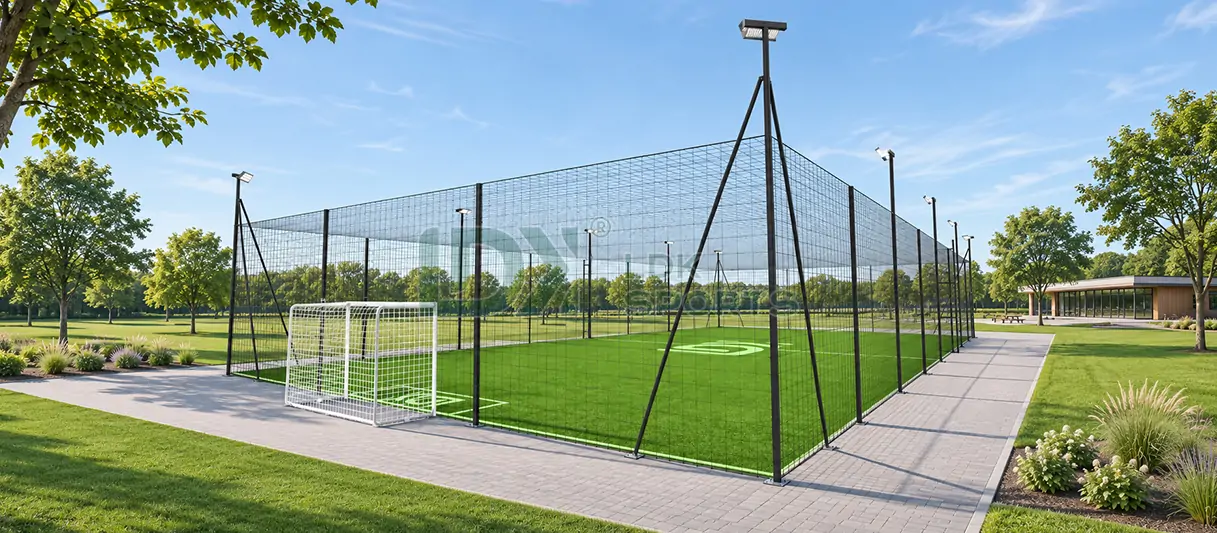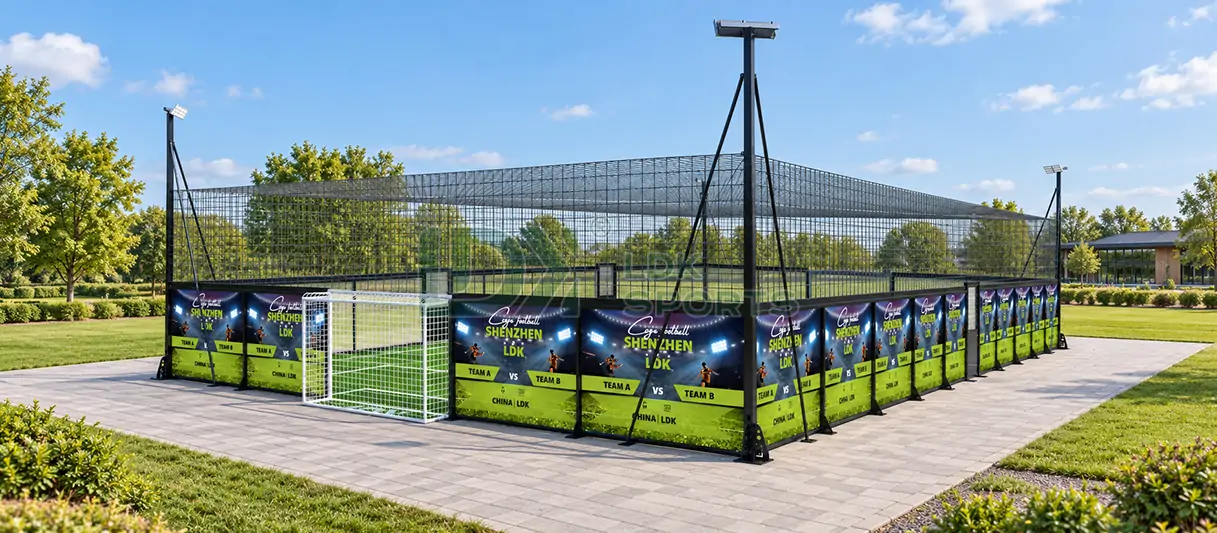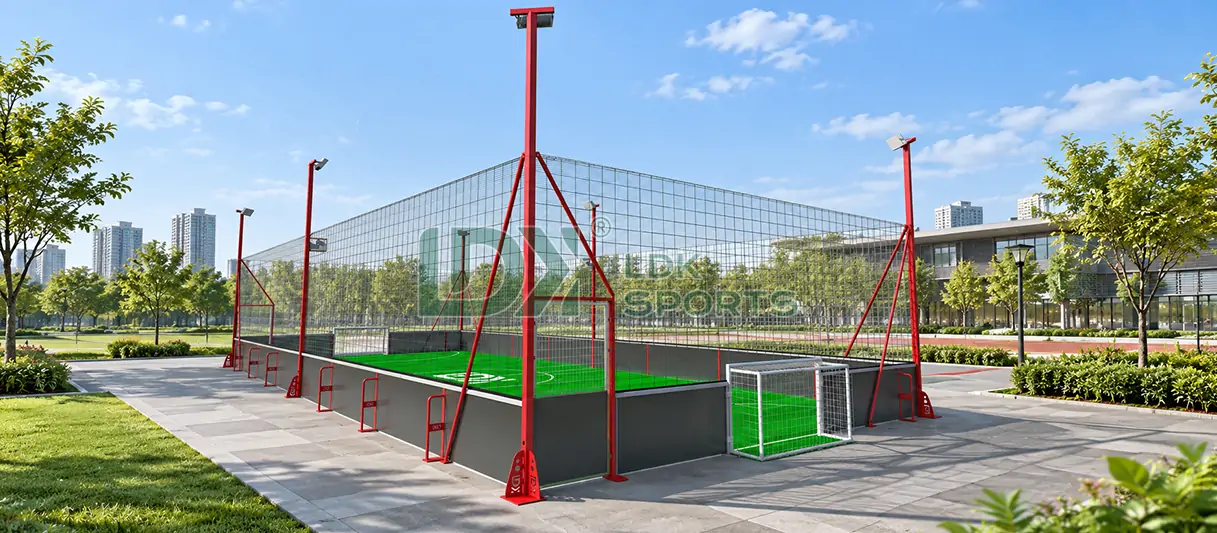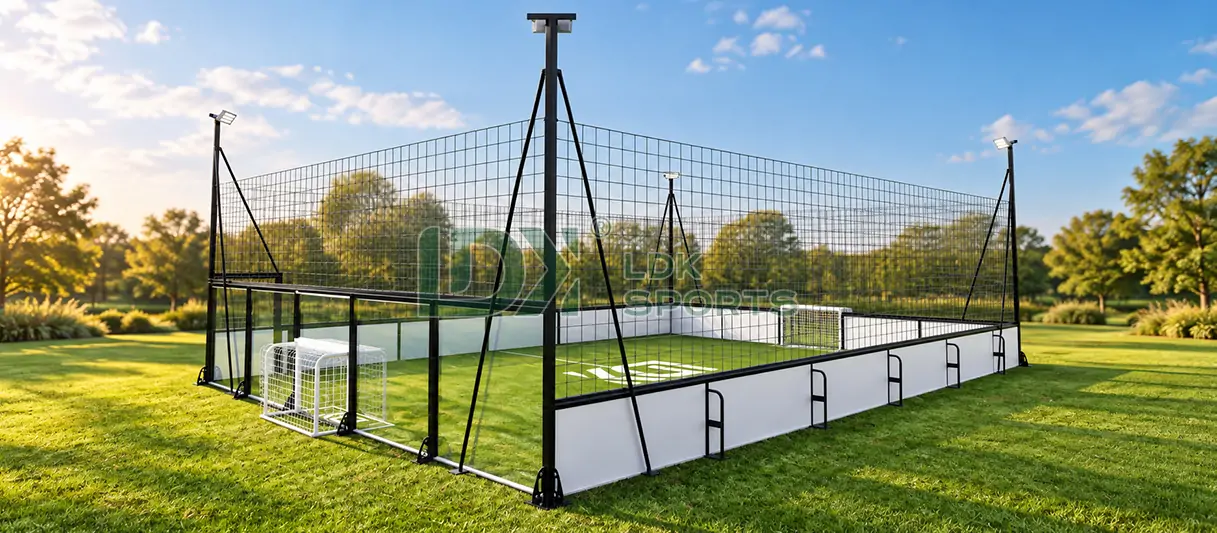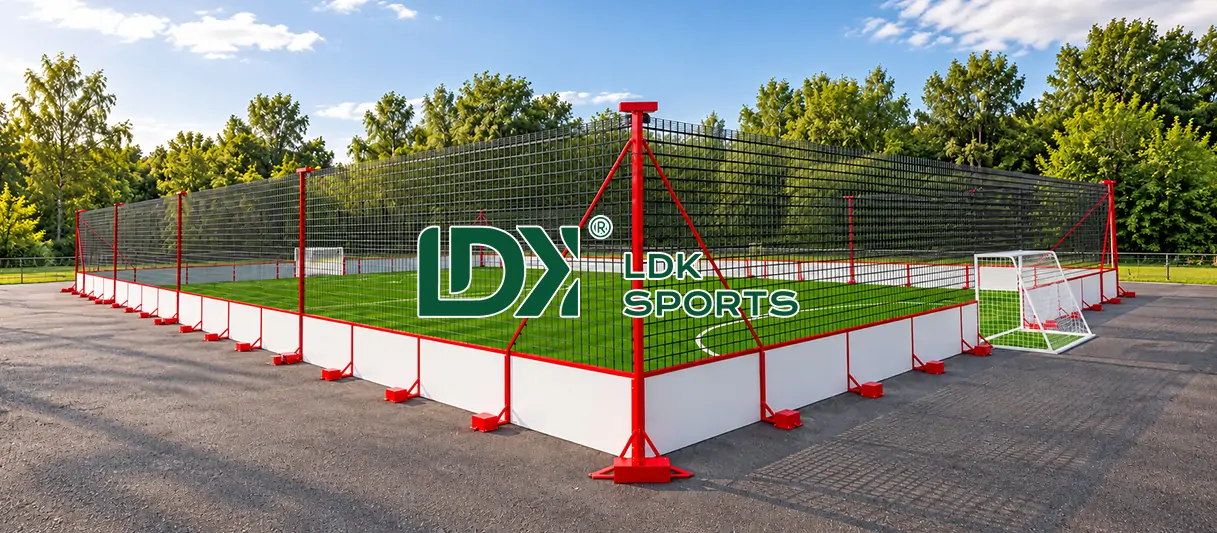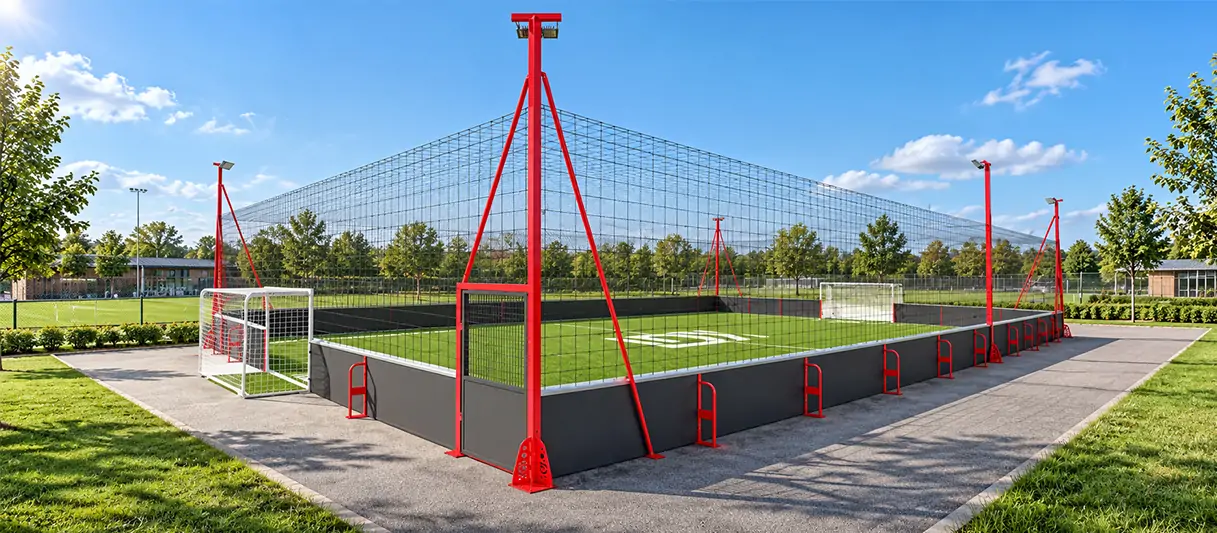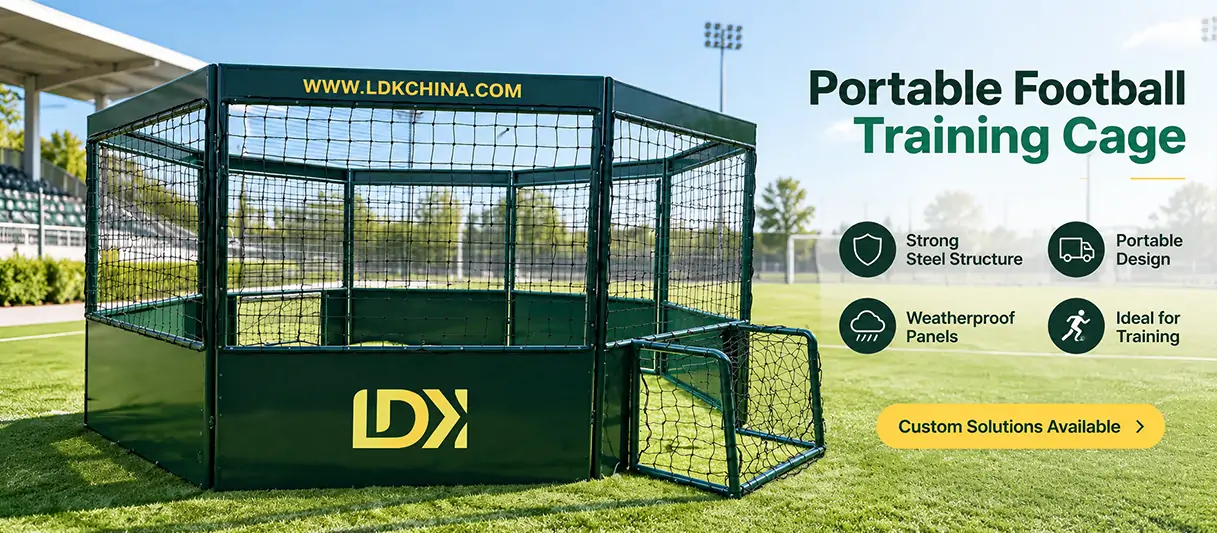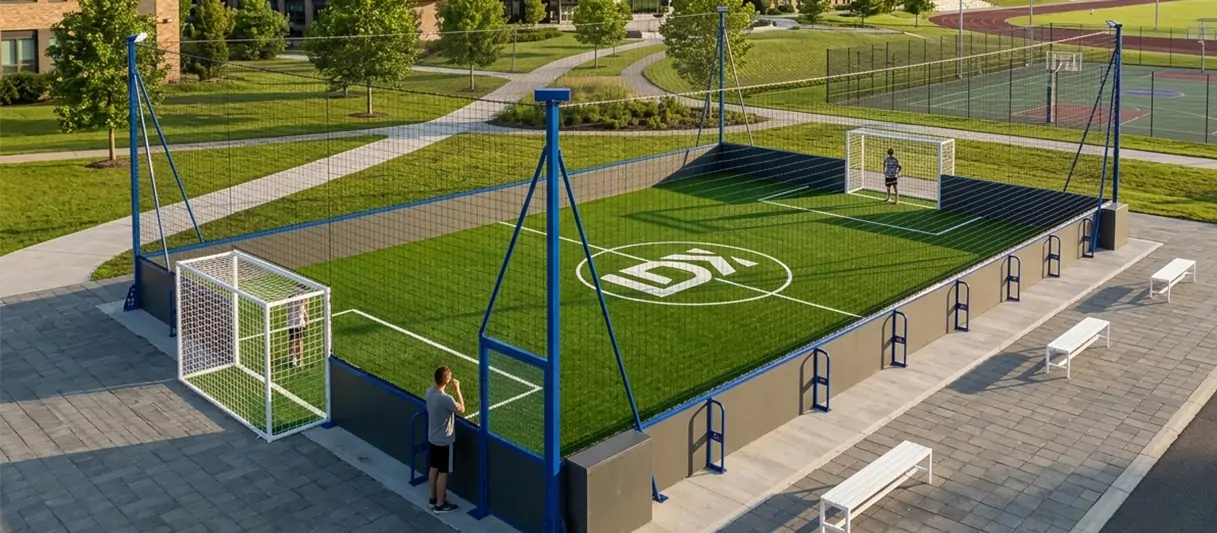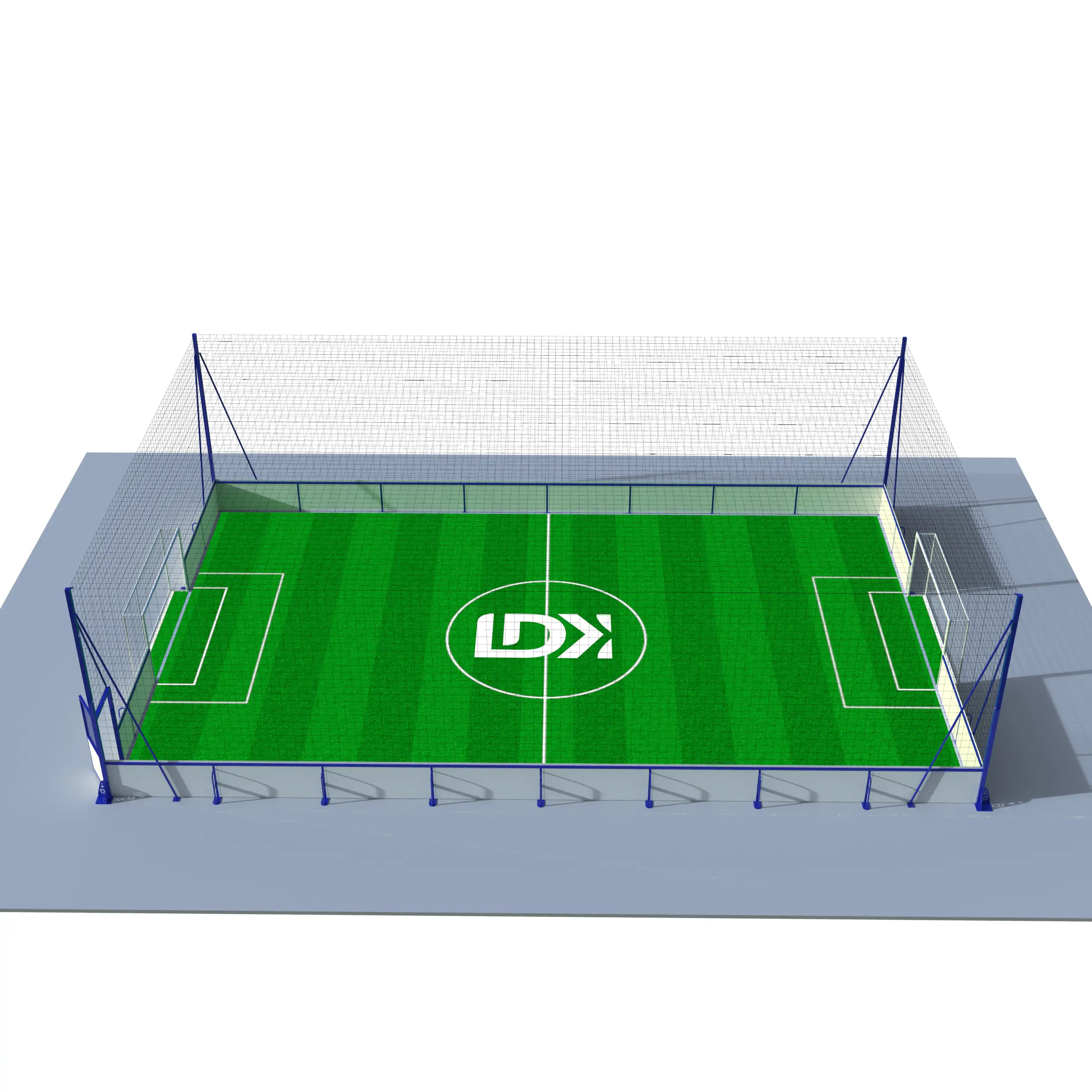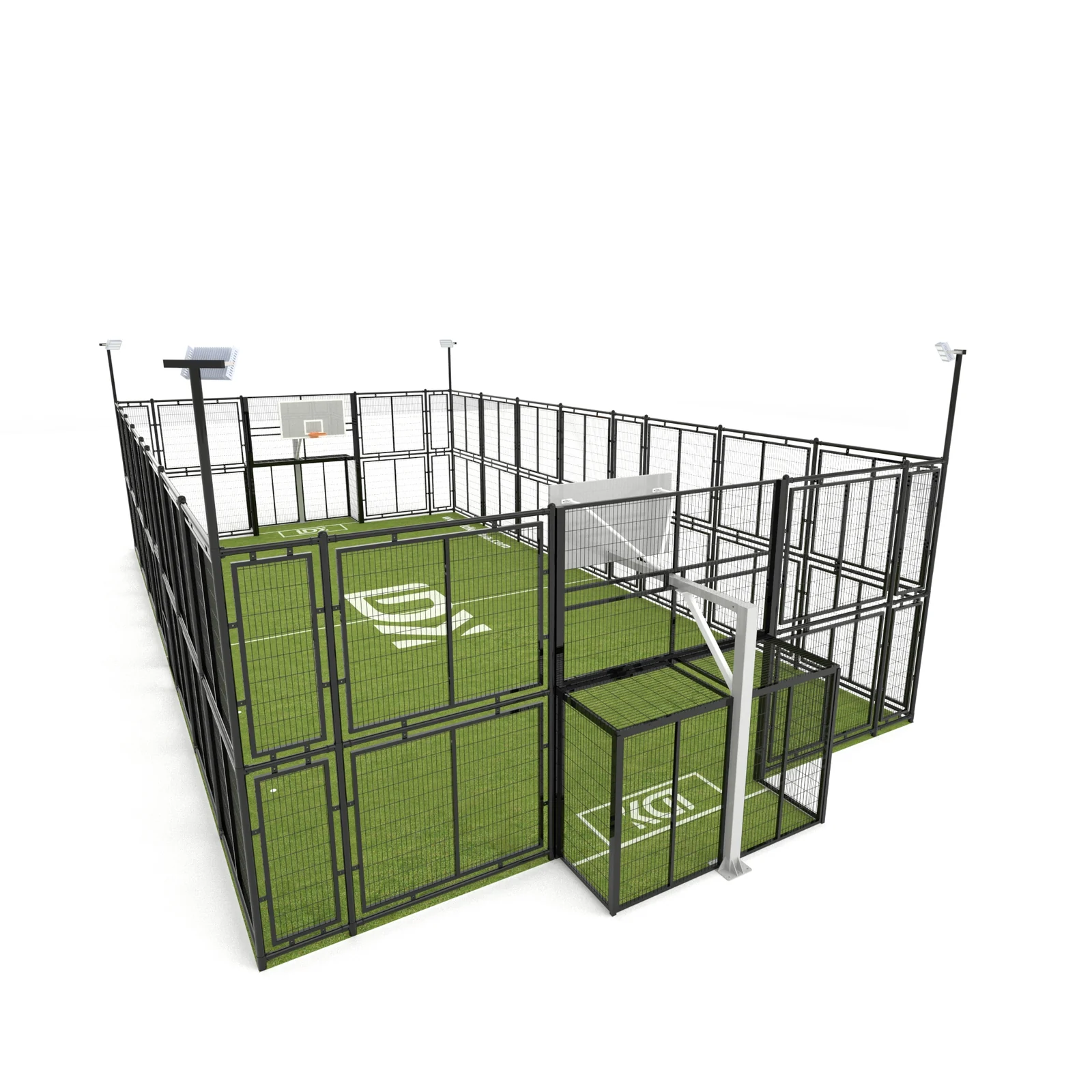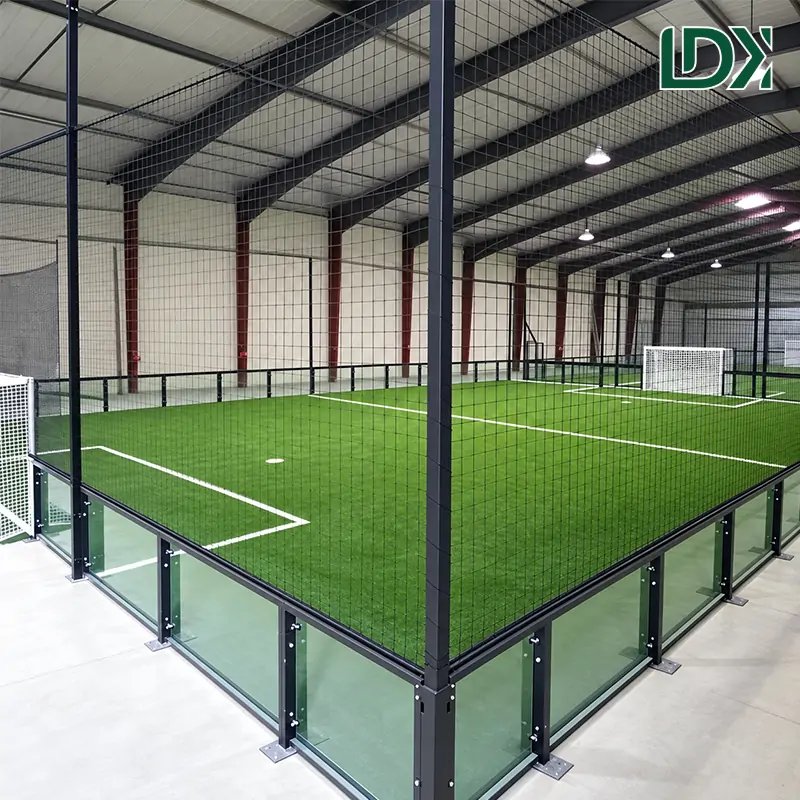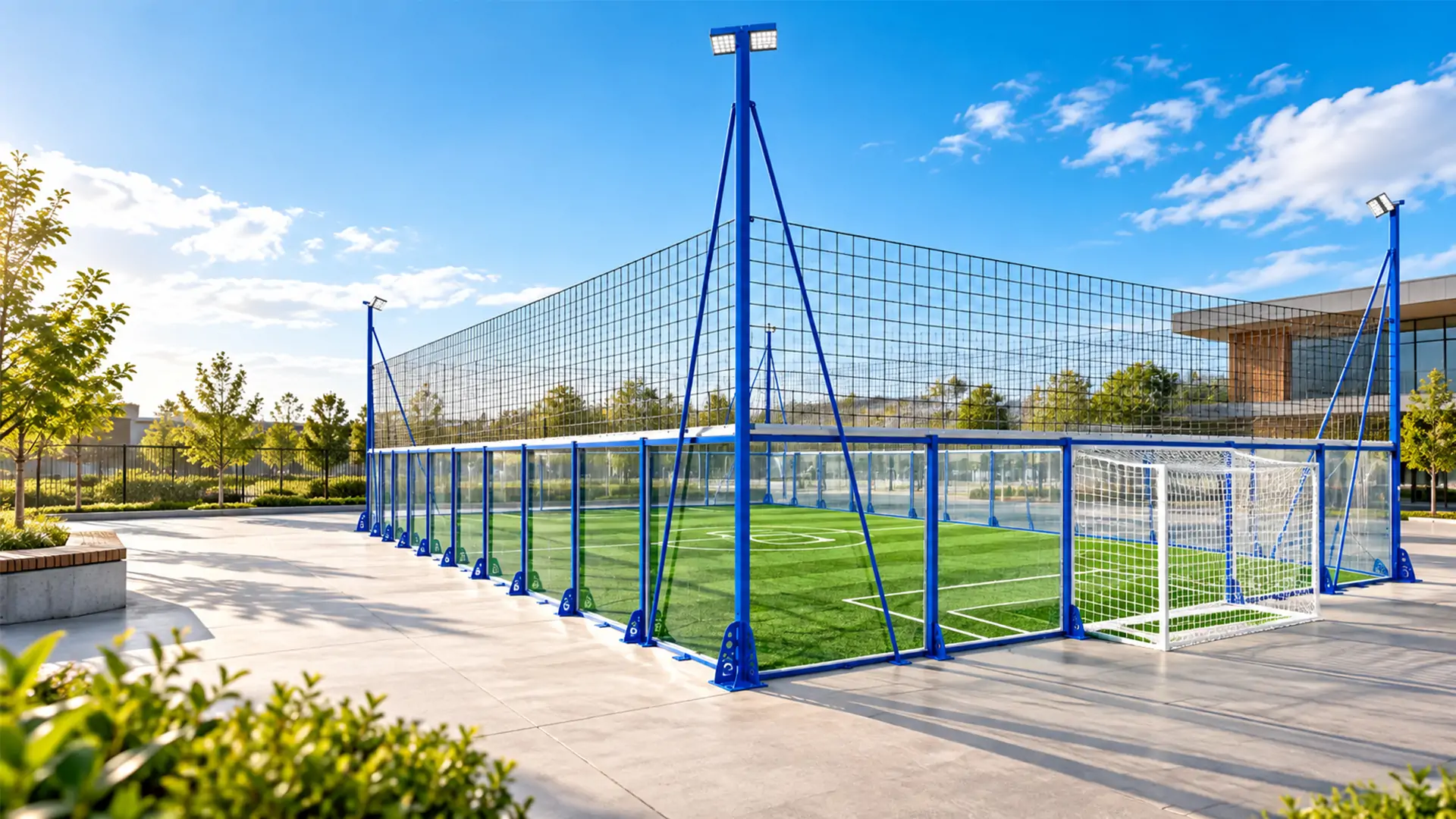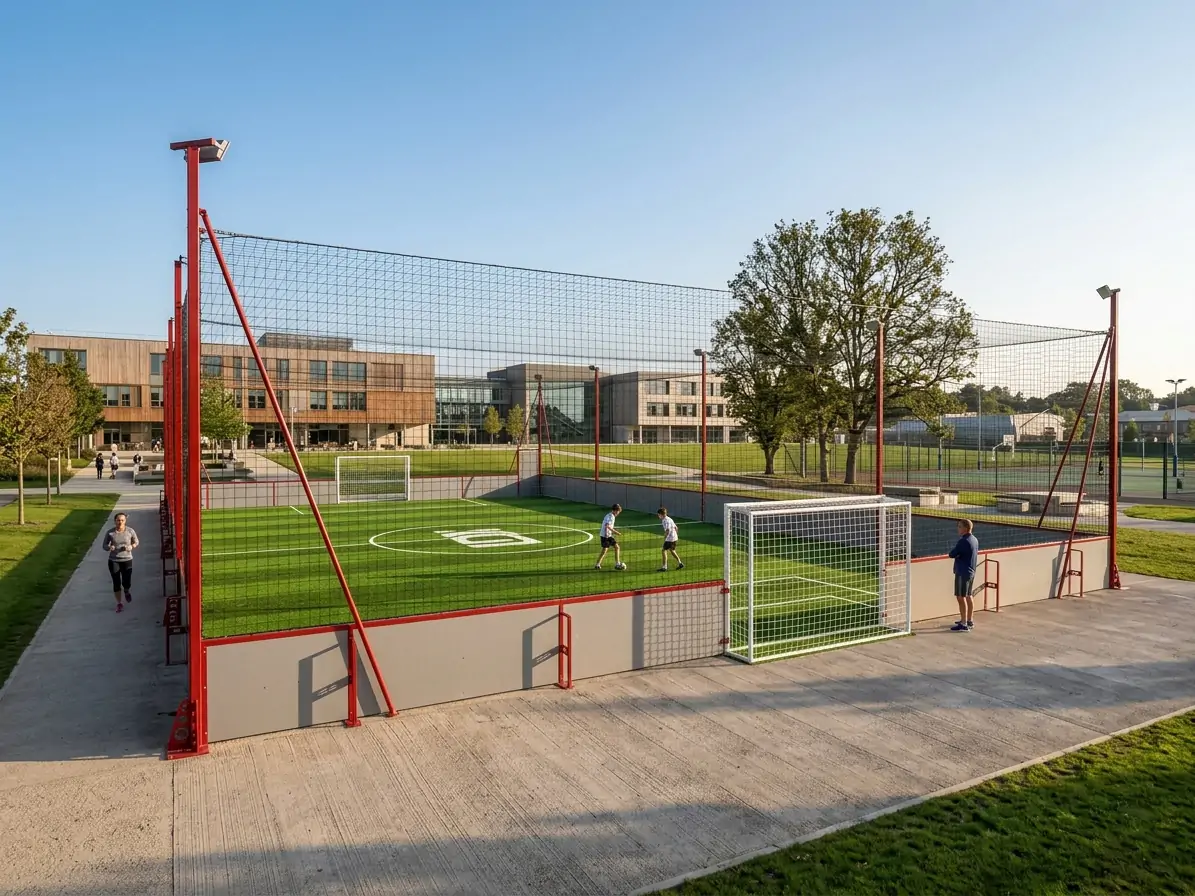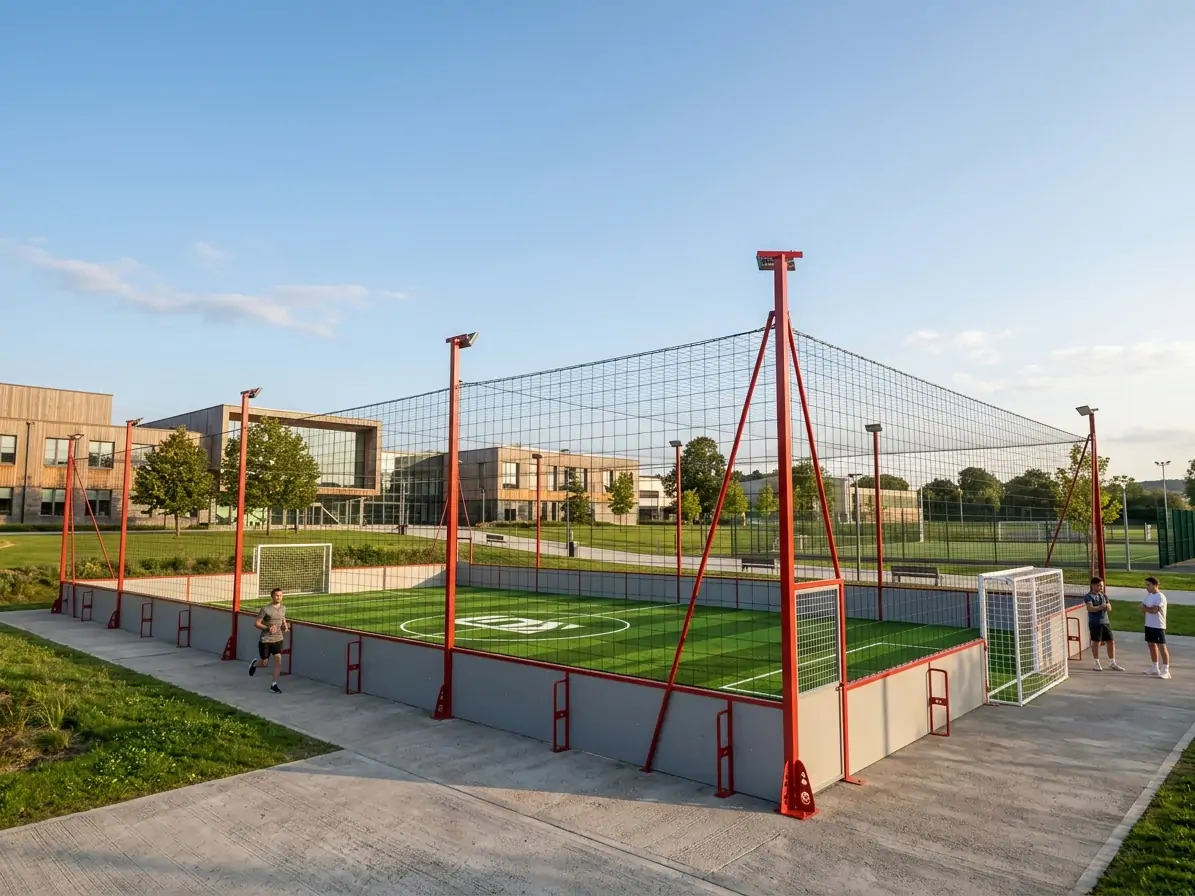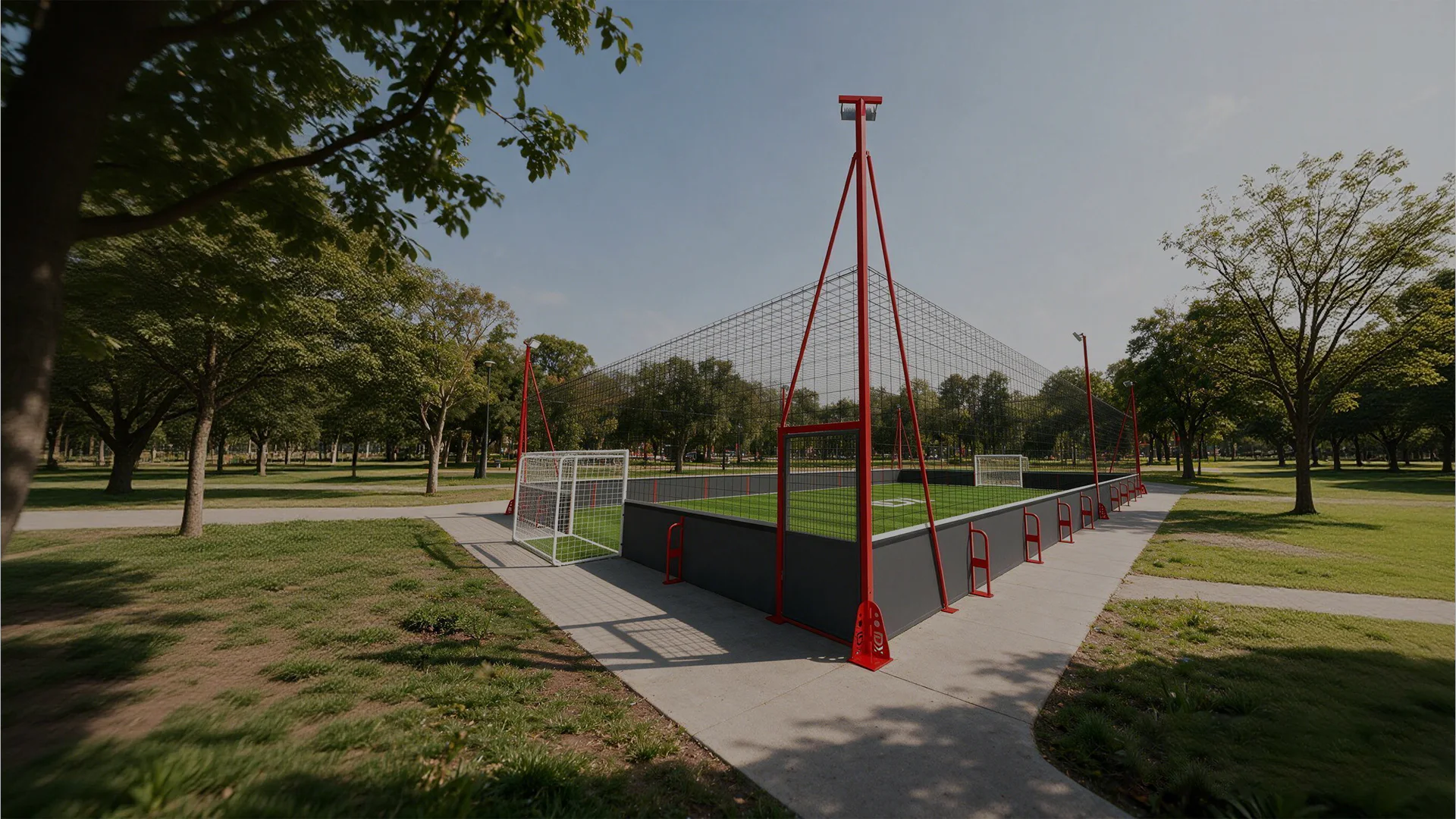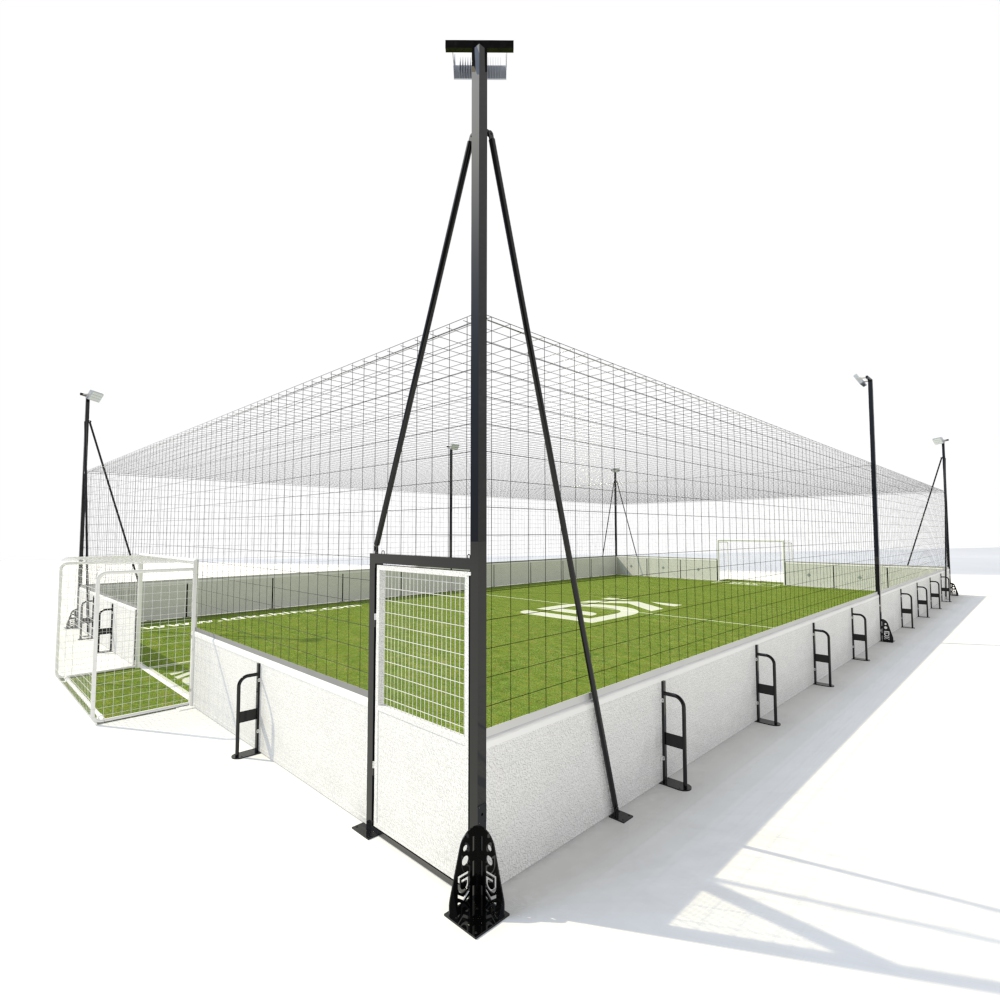
A football cage gets plenty of action in a small space. Players crowd around the goals, balls hit the netting, and the same patches of artificial turf see repeated use. A quick check before play and regular surface care can help spot problems early.
The routine below is for facility owners, schools and clubs. The exact maintenance schedule depends on how often the cage is used and the instructions for its turf and equipment.
Before players enter, check these five things
Walk around the cage and look for damage or hazards:
1. Netting: Look for holes, loose ties and sections pulling away from the frame.
2. Frame and padding: Check for movement, sharp edges or damaged padding around posts and goal entrances.
3. Goal: Make sure it is secure and has no loose or broken parts.
4. Turf: Remove litter, stones, glass and other objects players could trip on or step on.
5. Gate and surrounding area: Check that the gate opens properly and the entrance is clear.
These checks are especially useful after bad weather or heavy use.
Keep artificial turf clean and even
Leaves and litter are easier to remove before they collect. Use tools approved for the turf system, and avoid dragging heavy or sharp equipment across the surface.
Brushing helps lift flattened fibres and spread infill more evenly. On a football cage with rubber granules, check high-use areas such as the goalmouths and entrances for patches where the infill has moved or become compacted.
Look closely at the busy spots
The same areas often take the most wear: in front of the goals, near the gate and along the edges where players turn or stop. Check these spots for flattened turf, uneven infill or seams beginning to lift.
Small problems are easier to address when noticed early. If a seam opens, netting tears or a post moves, close off the affected area if needed and ask a qualified installer or the supplier how to repair it. Avoid improvised fixes that could create a new snag or trip hazard.
Set a schedule that matches usage
A school cage used for several lessons each day will need more frequent attention than one used occasionally. A simple plan can include:
• Before play: Quick visual safety check and litter removal.
• Regularly: Brush the turf and inspect netting, goals, seams and high-use areas.
• Periodically: Check infill levels and drainage, and arrange a deeper inspection when wear or surface changes appear.
These are planning prompts, not a universal timetable. Follow the facility’s maintenance manual and warranty requirements.
Keep a short maintenance record
After each inspection, note the date, any damage found and what was done. A few photos can help track whether a small tear, loose fitting or worn patch is getting worse. Records also make it easier to plan repairs and explain the cage’s condition to the supplier.
A football cage does not need a complicated routine to stay presentable and ready for play. Regular checks, appropriate turf care and prompt repairs help facility teams catch issues before they grow.