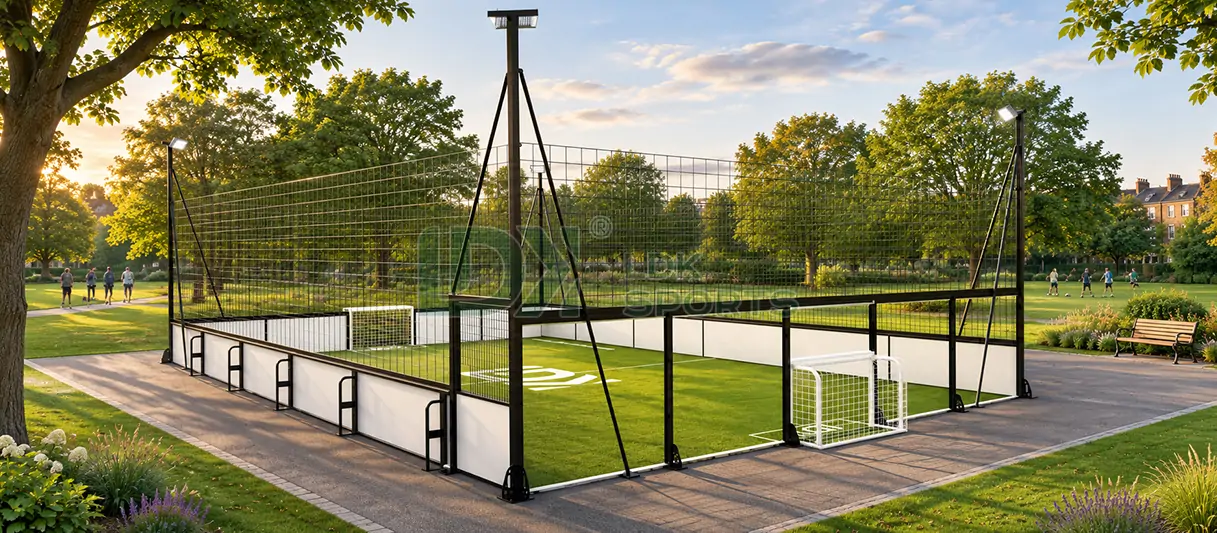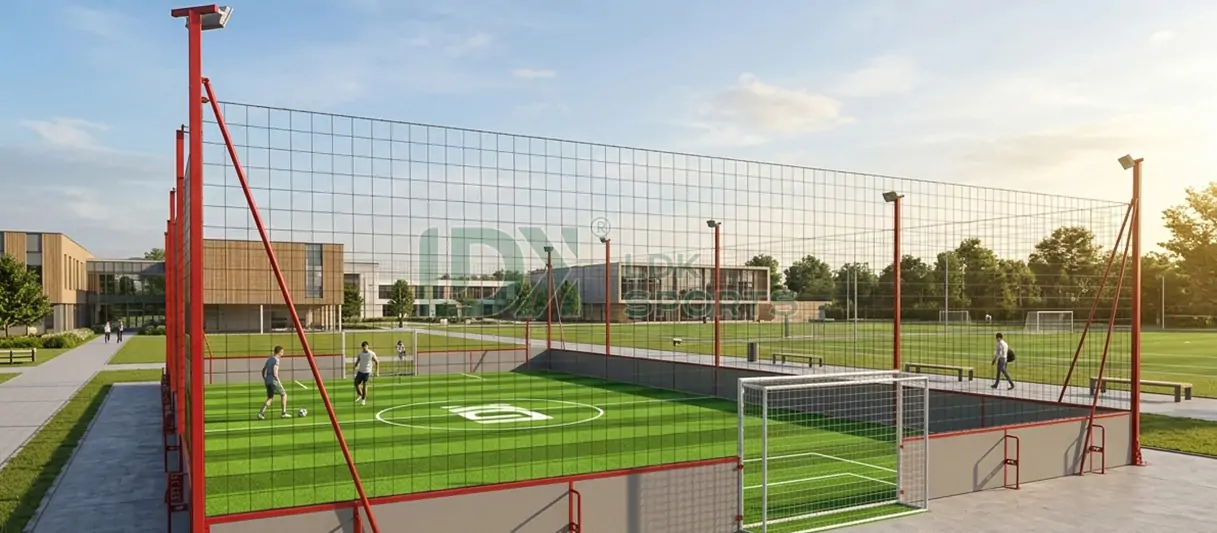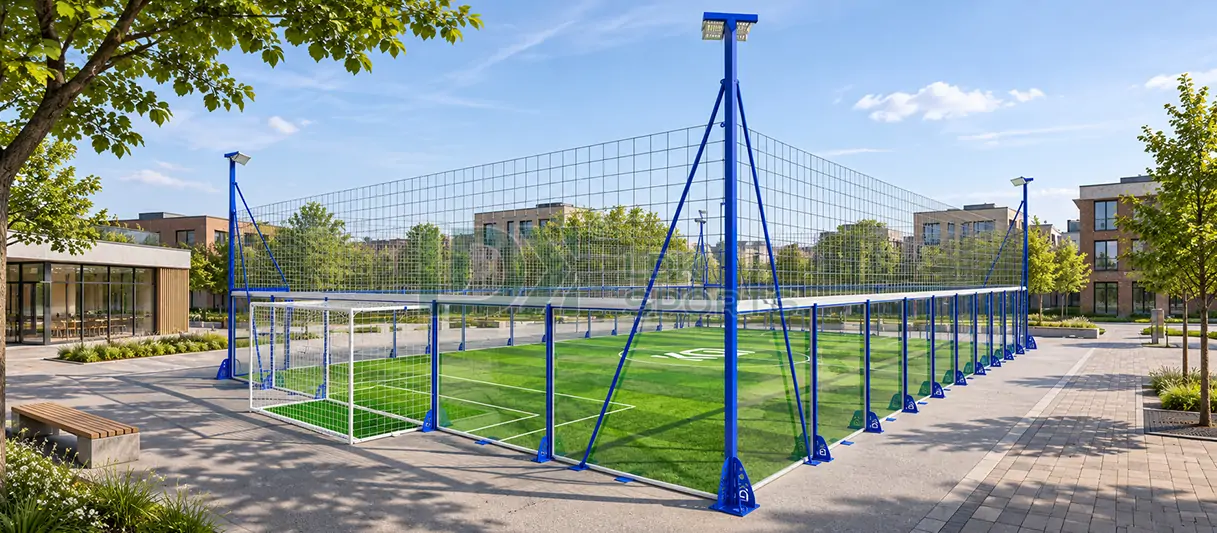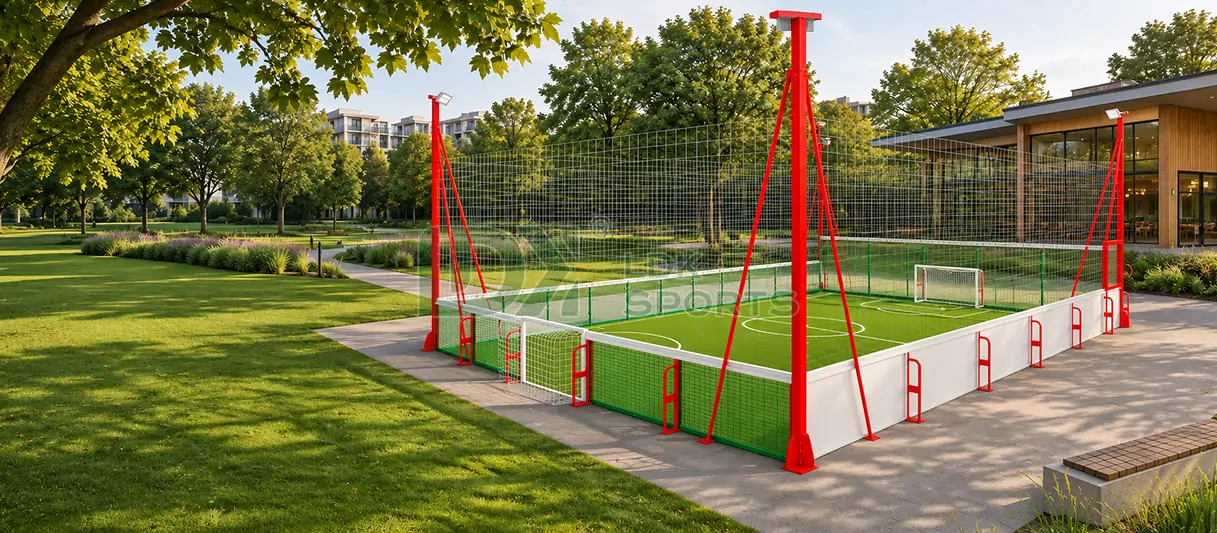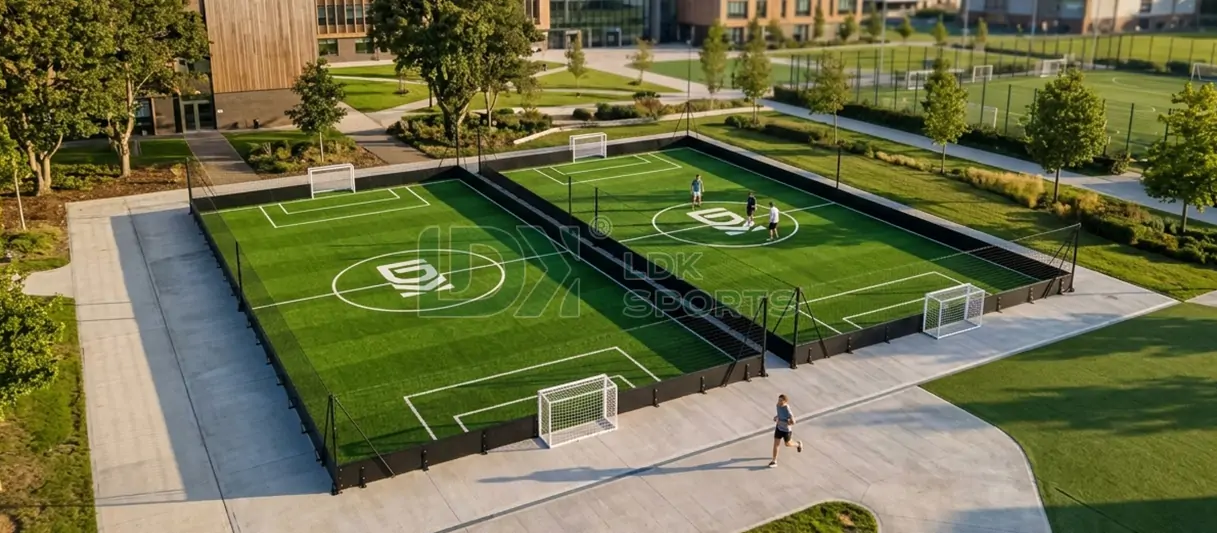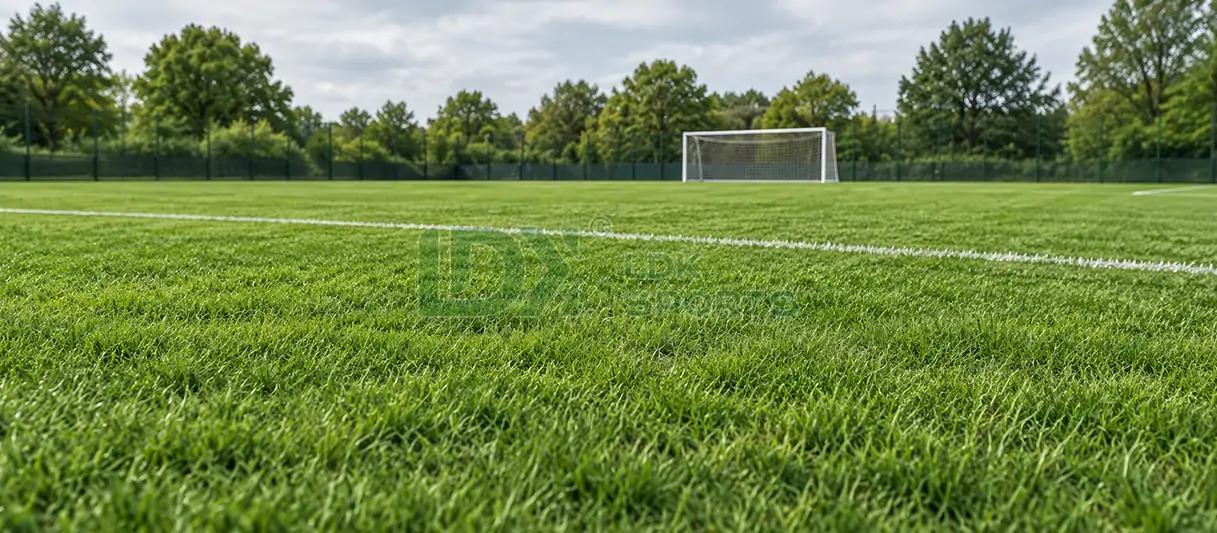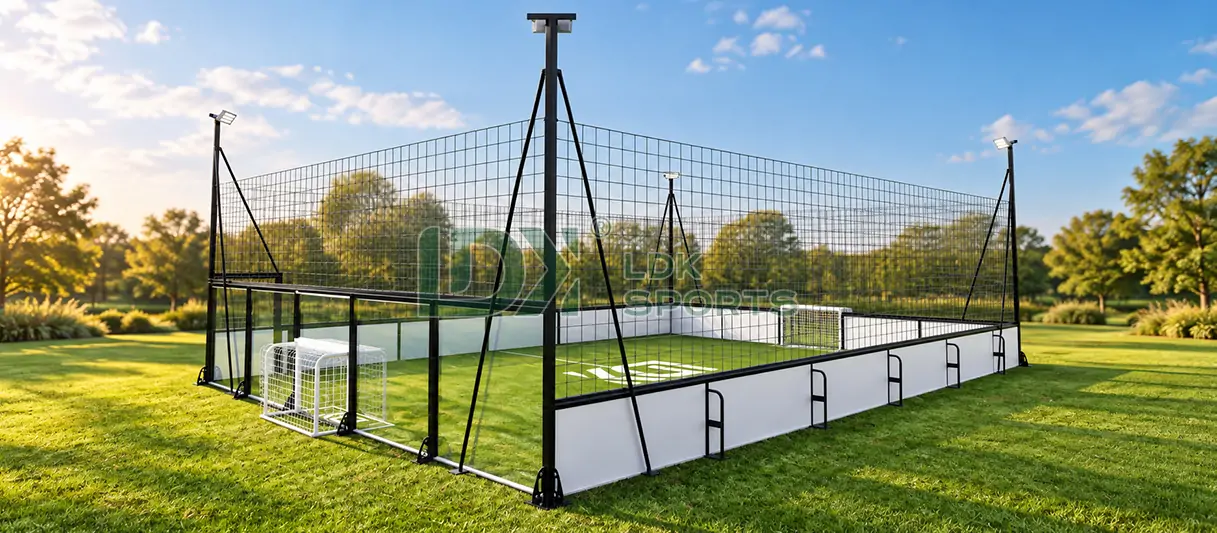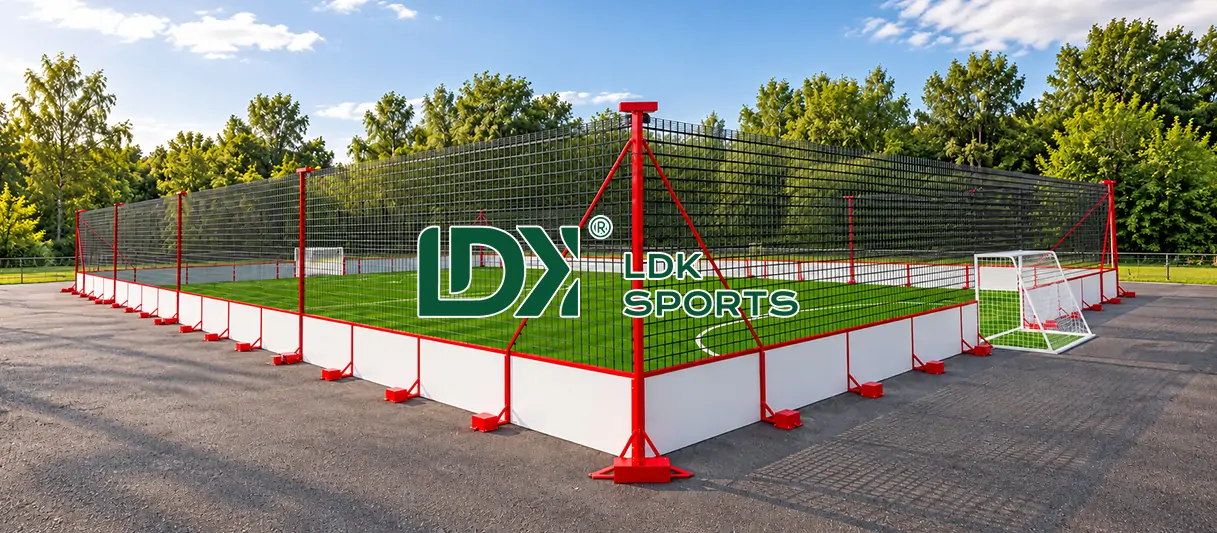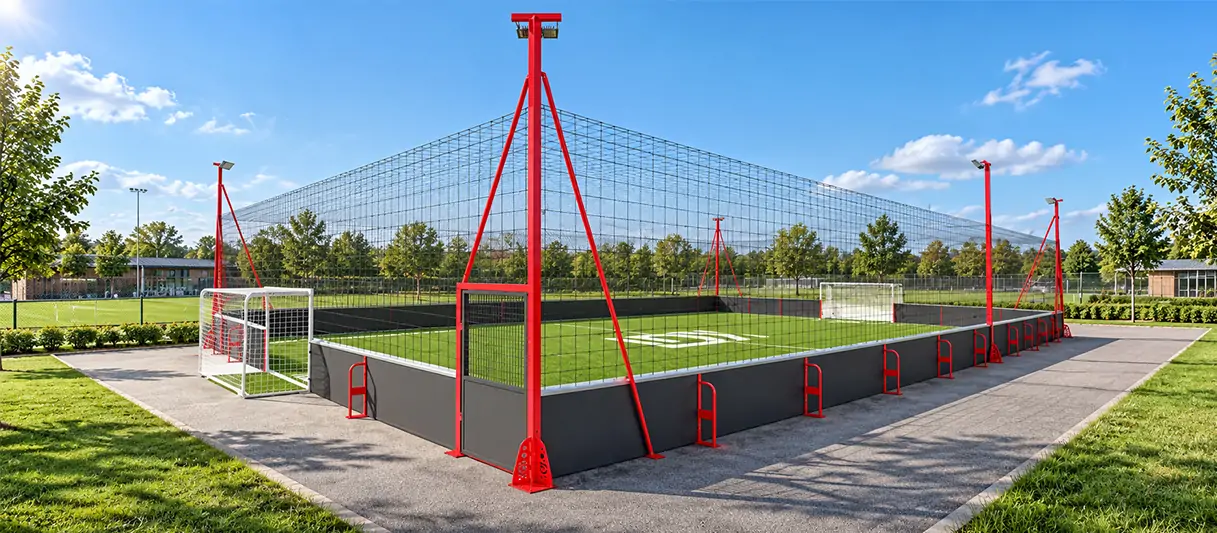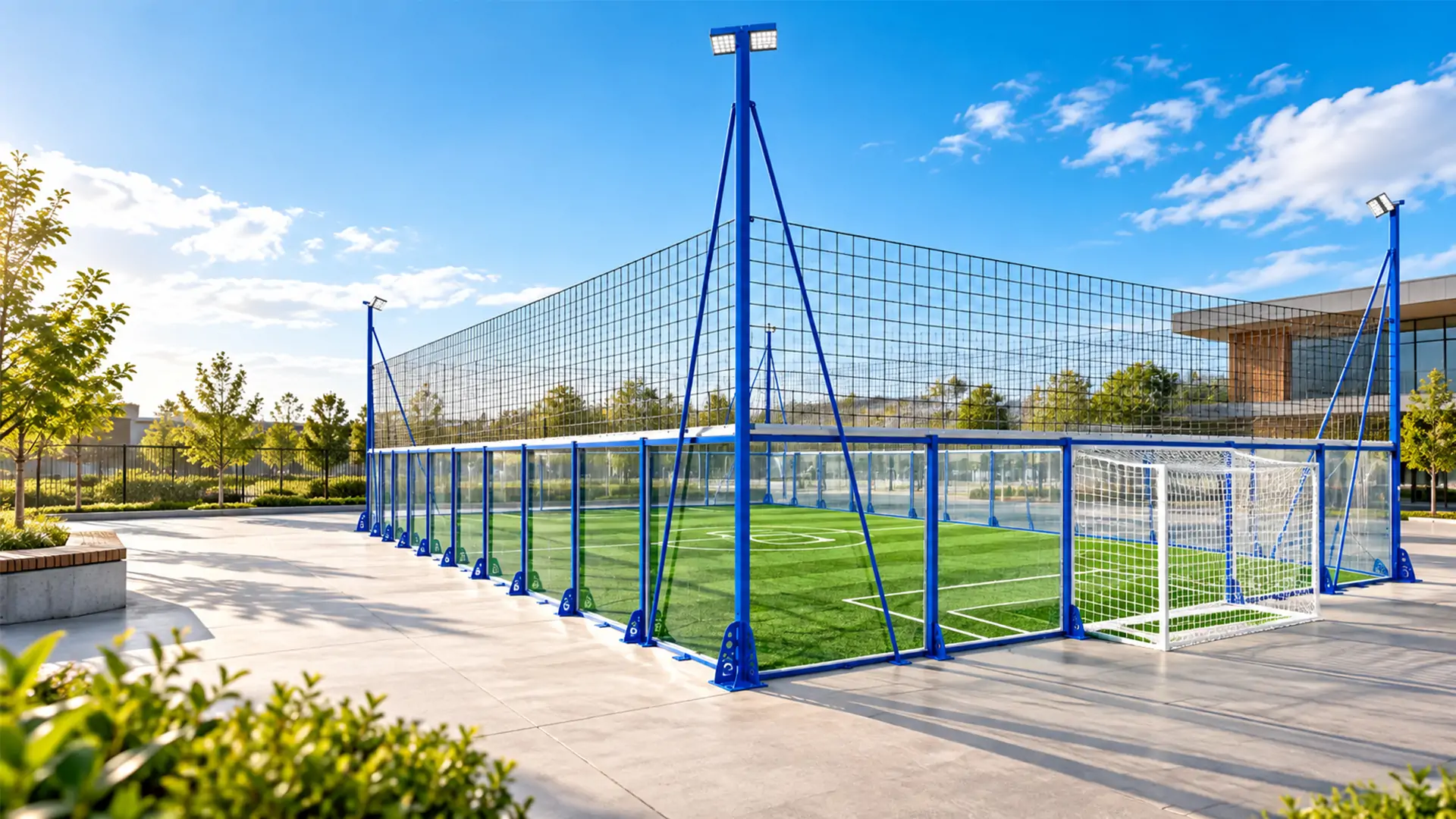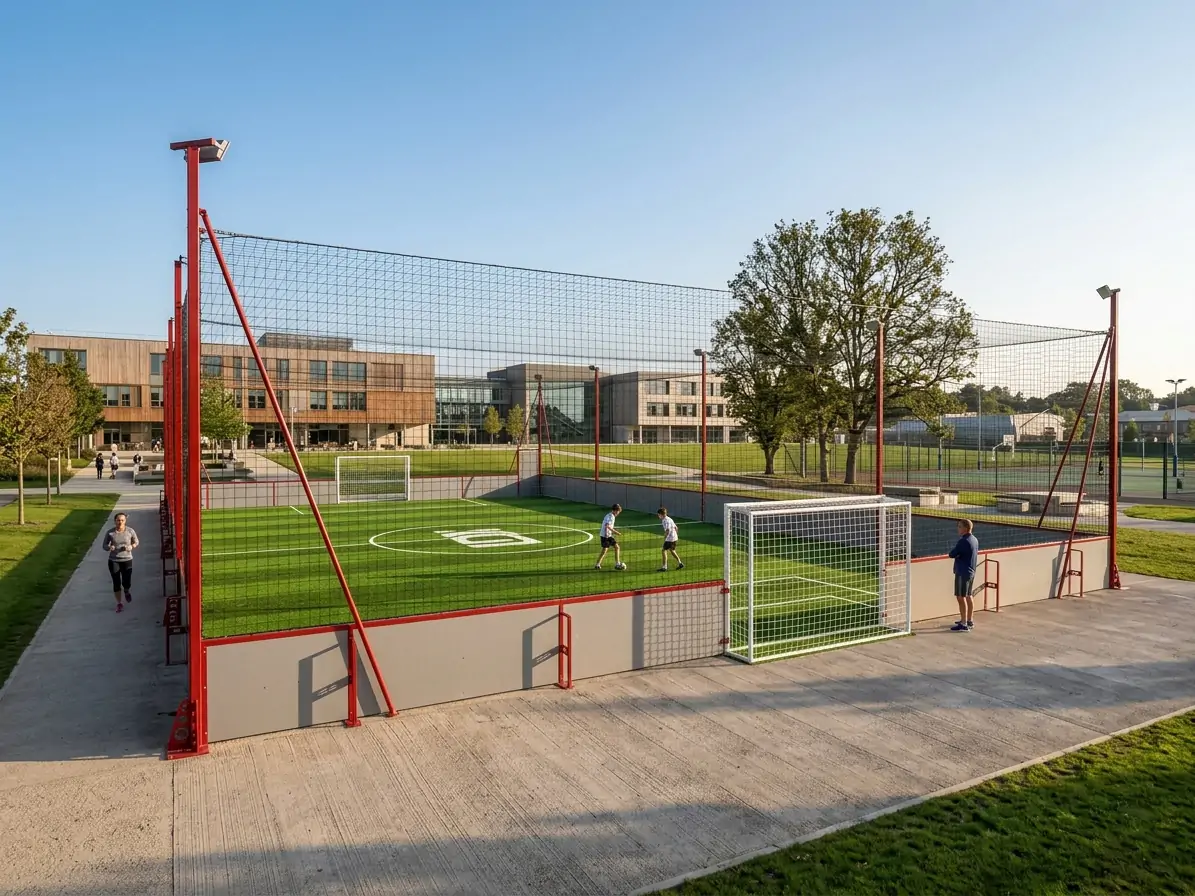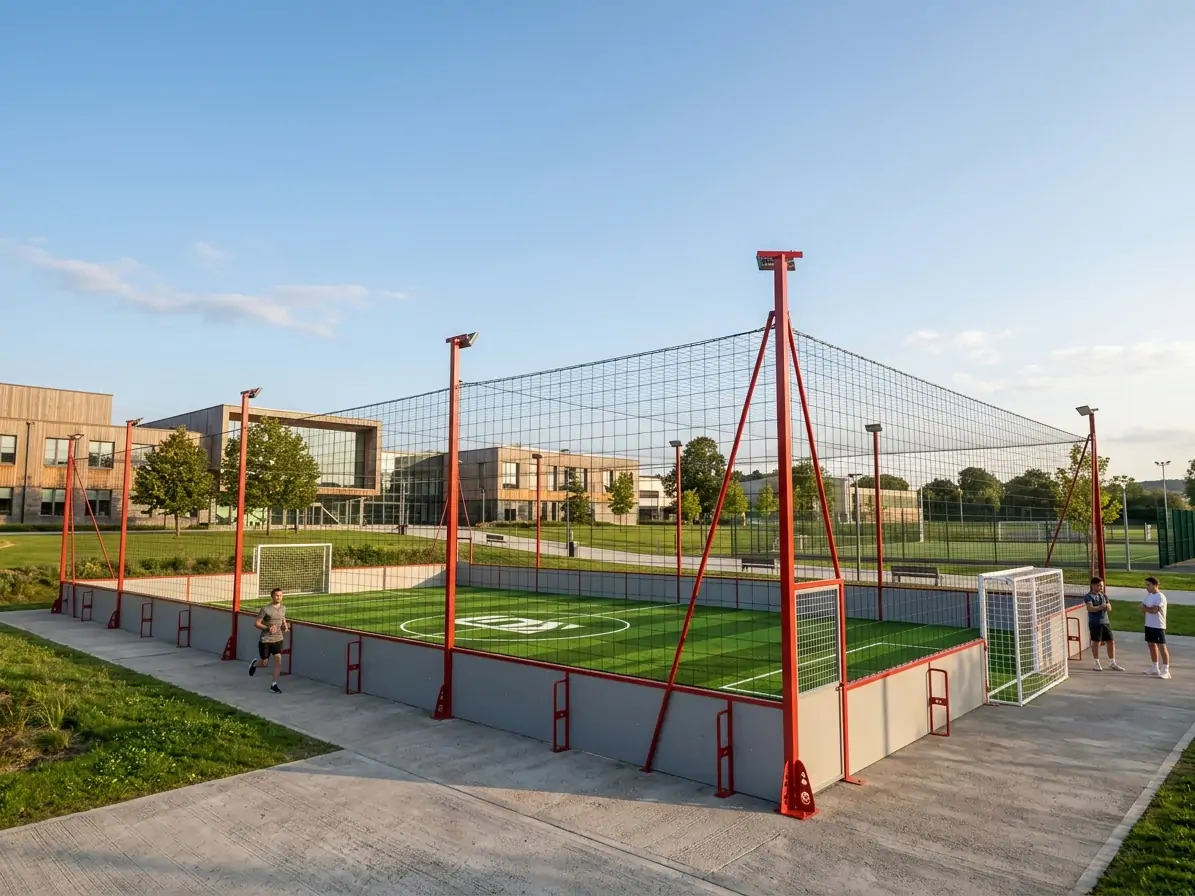
A football field can look complete while still having problems beneath the surface. Inadequate drainage, an unsuitable base, poorly secured equipment, or missing maintenance arrangements can affect how the facility performs after opening.
For developers, schools, community organizations, and commercial operators, avoiding these problems starts during planning and procurement.
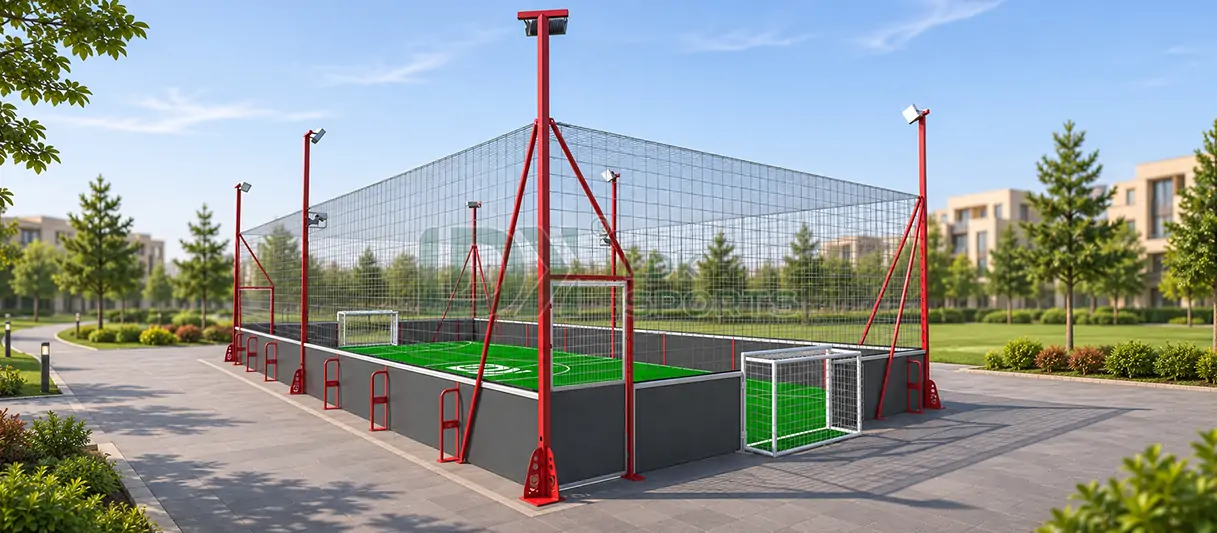
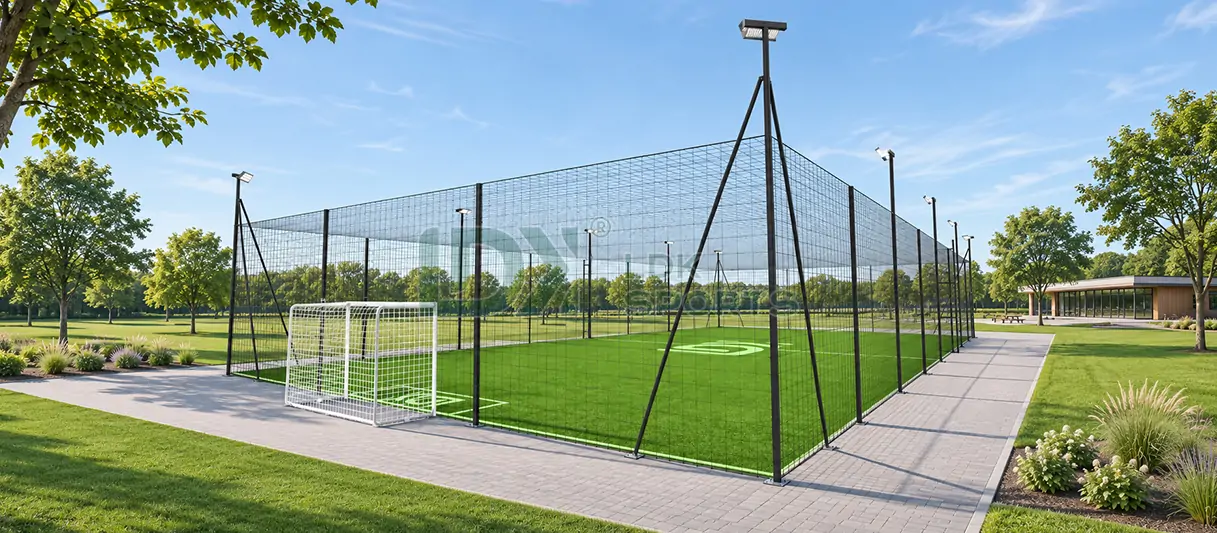
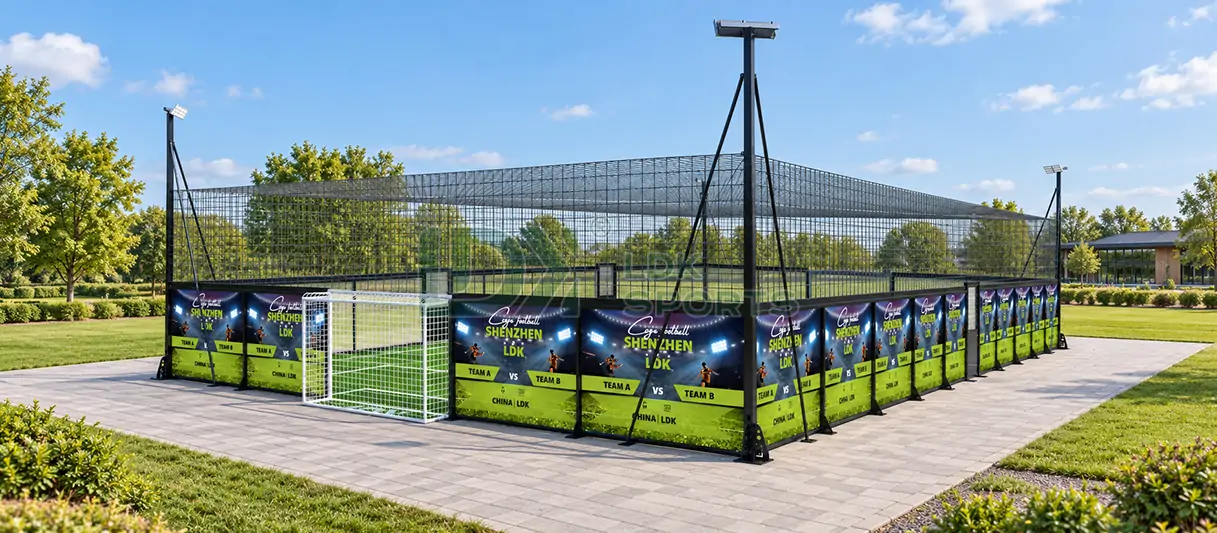
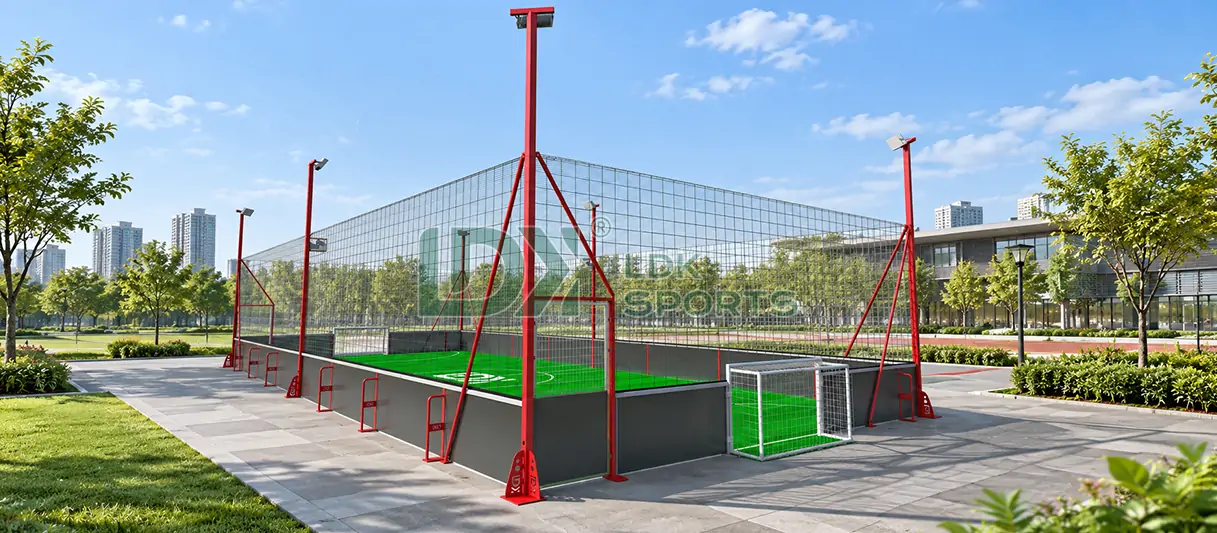
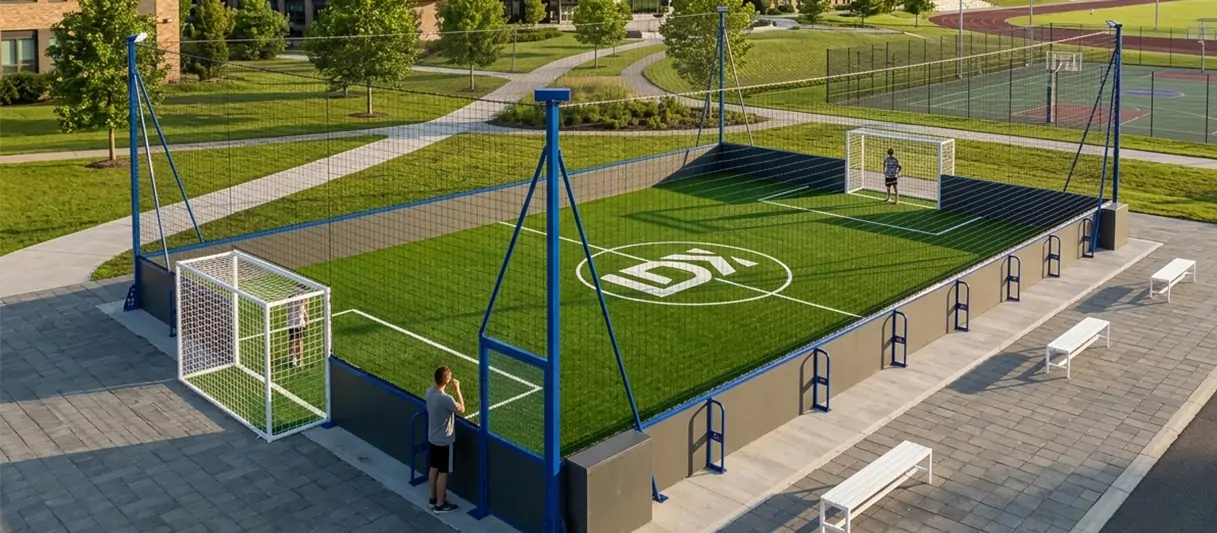
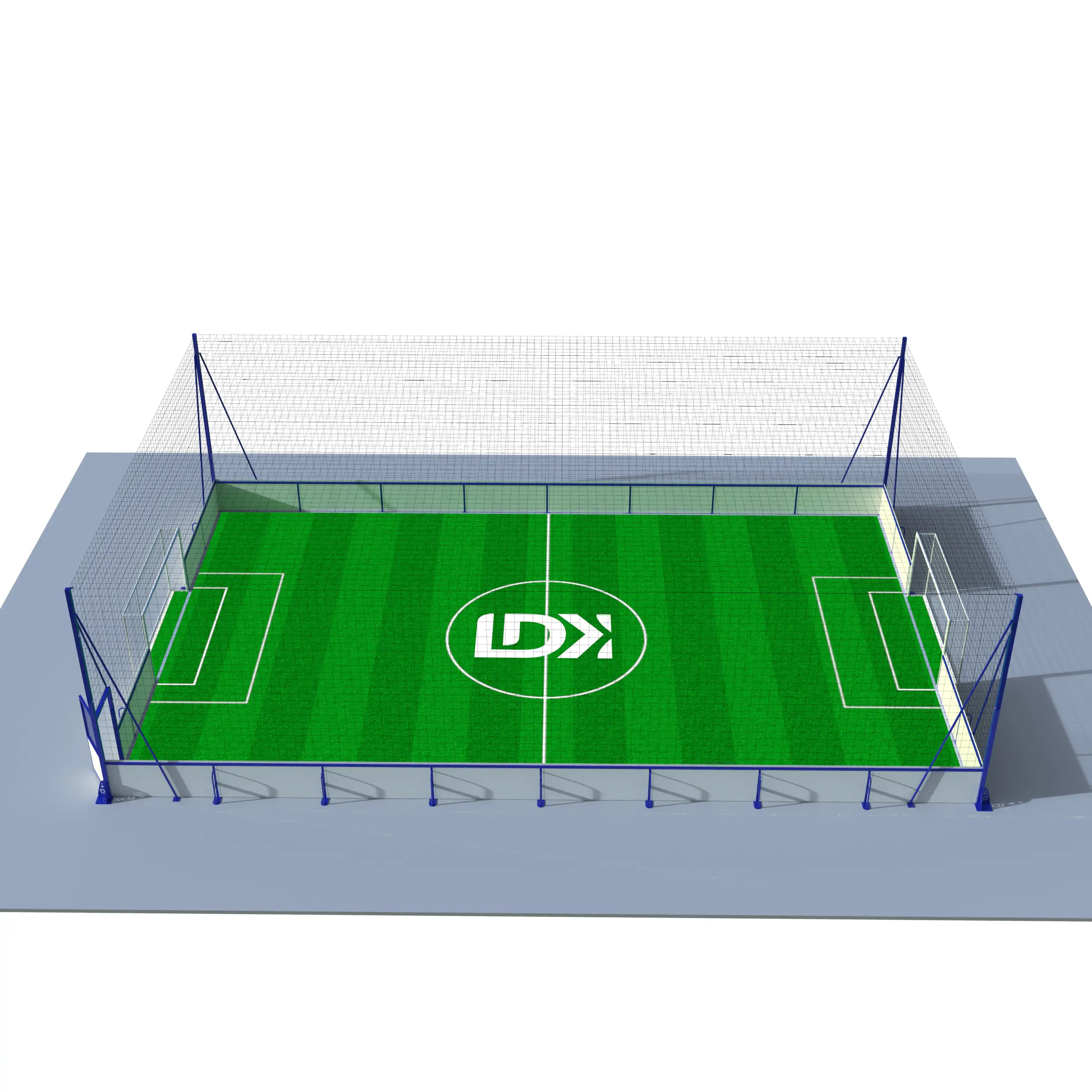
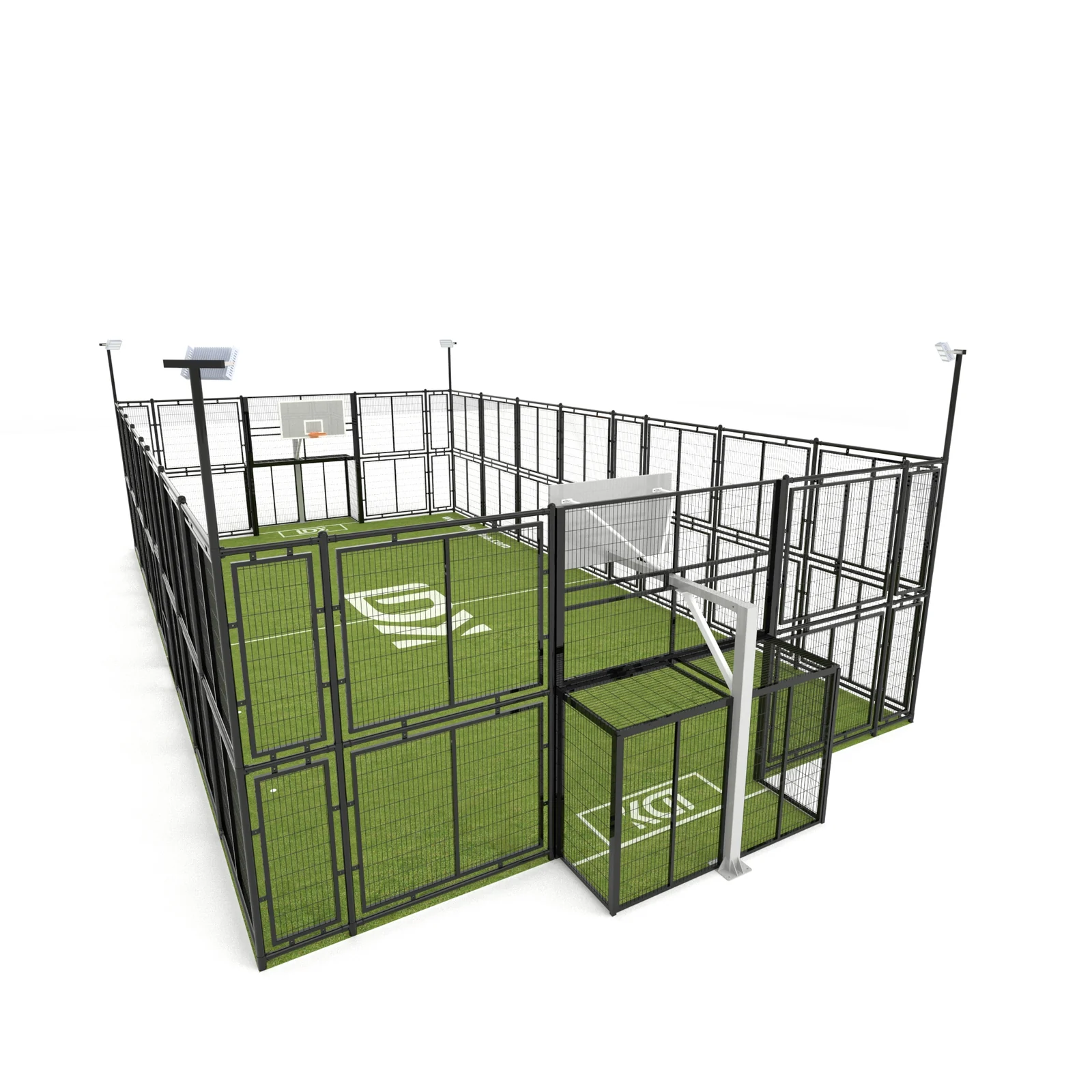
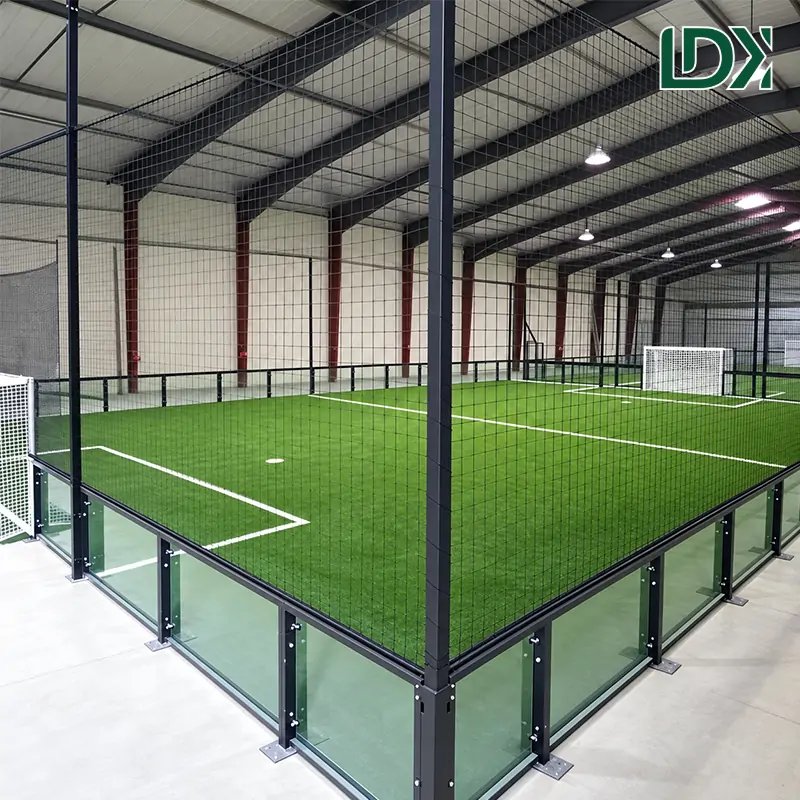
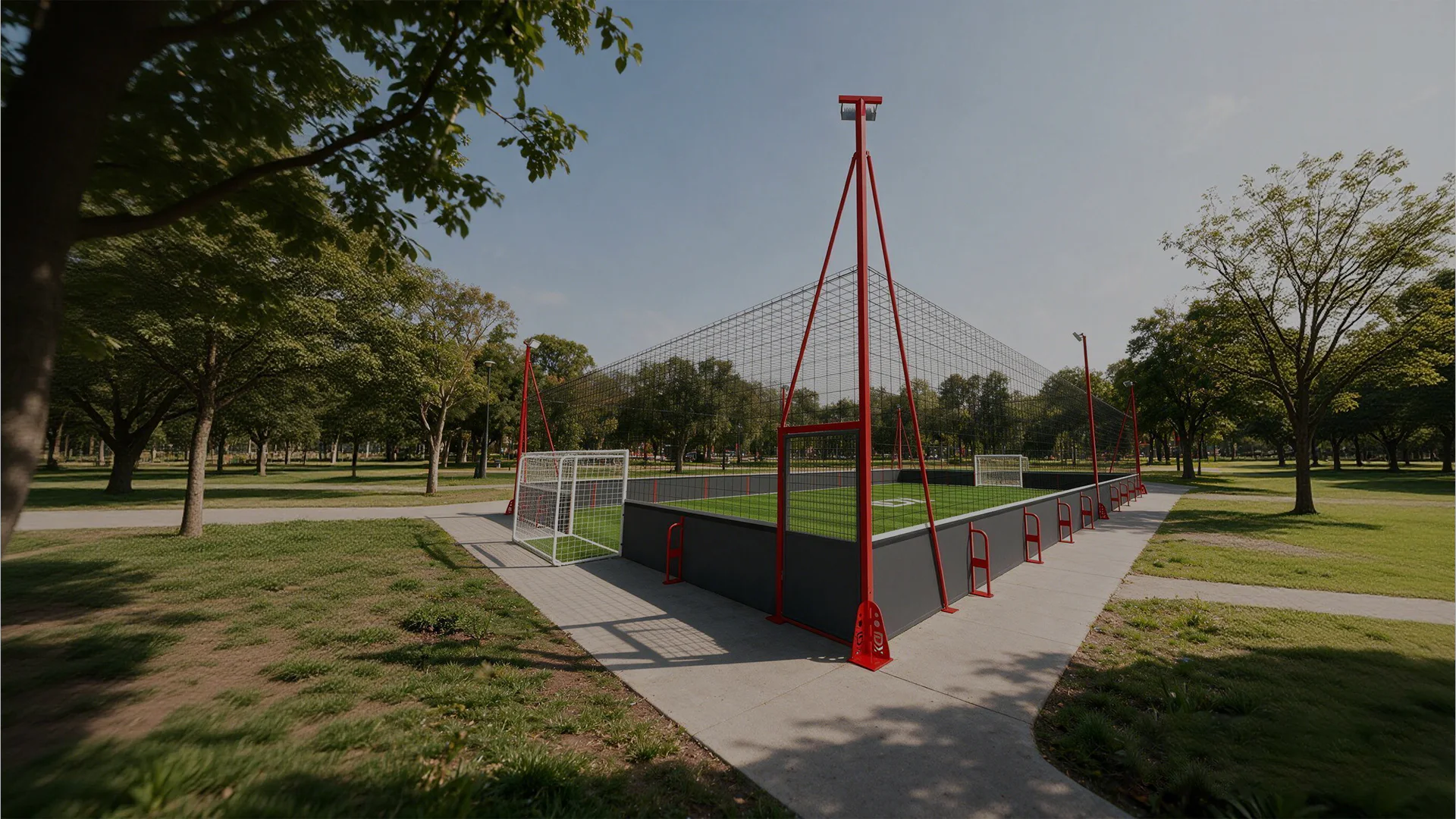
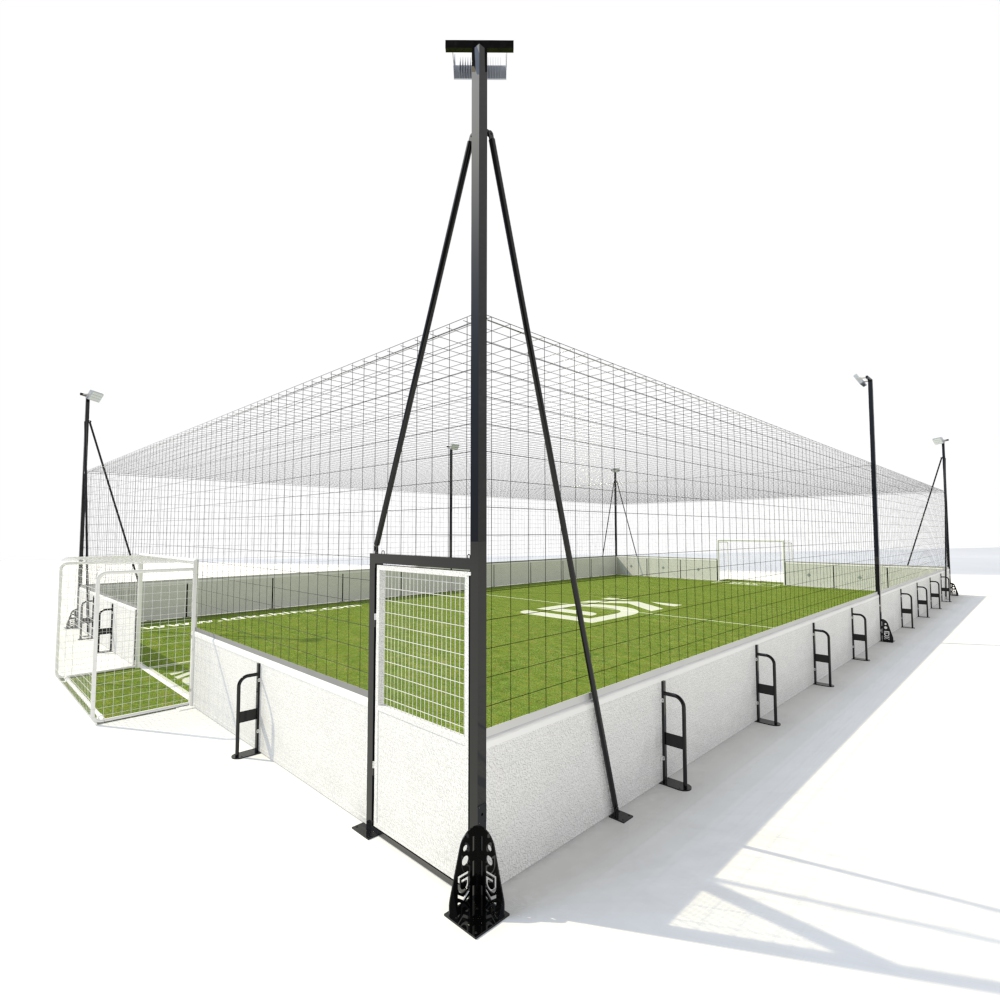
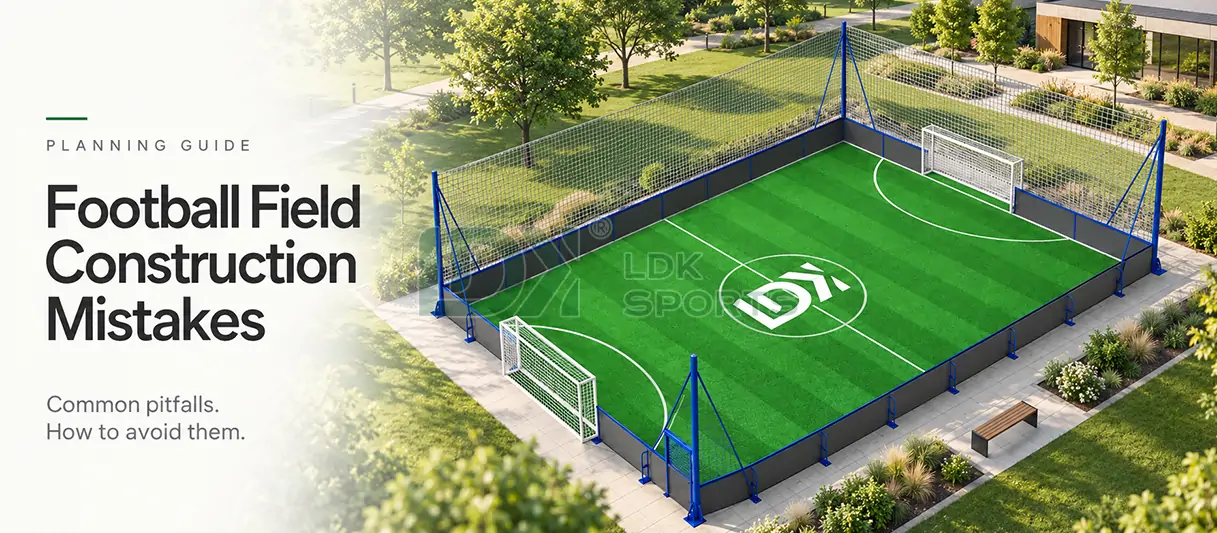
This guide focuses on outdoor artificial turf football fields, including facilities with perimeter fencing, and explains construction mistakes to watch for at each stage.
Table of Contents
- Skipping Site Investigations
- Underestimating Drainage and Base Construction
- Choosing Artificial Turf by Appearance or Price Alone
- Treating Fencing and Goal Safety as Finishing Details
- Planning Lighting and Access Too Late
- Comparing Quotations Without Comparing Scope
- Skipping Construction Inspections
- Opening Without a Maintenance Plan
- Frequently Asked Questions
- Plan Your Football Field Project
1. Skipping Site Investigations
A site that appears flat and accessible may still have weak ground, buried services, groundwater issues, or unsuitable drainage connections. Designing before understanding these conditions can lead to changes during construction.
How to avoid it: Arrange appropriate surveys and ground investigations before finalizing the design. Review levels, soil conditions, existing services, drainage outlets, and construction access.
Use the findings to establish the earthworks, foundation, and drainage requirements.
2. Underestimating Drainage and Base Construction
Spending heavily on turf while reducing the specification of the underlying construction can compromise the finished field. A permeable carpet cannot compensate for a base or drainage system that does not work.
How to avoid it: Design drainage around the site’s ground conditions, expected water flows, and suitable discharge arrangements. Specify the base materials, levels, compaction, and acceptance criteria before construction begins.
Inspect these layers before they are covered. FIFA emphasizes that quality earthworks, drainage, and sub-base construction are necessary for maintaining an even and durable artificial pitch.
3. Choosing Artificial Turf by Appearance or Price Alone
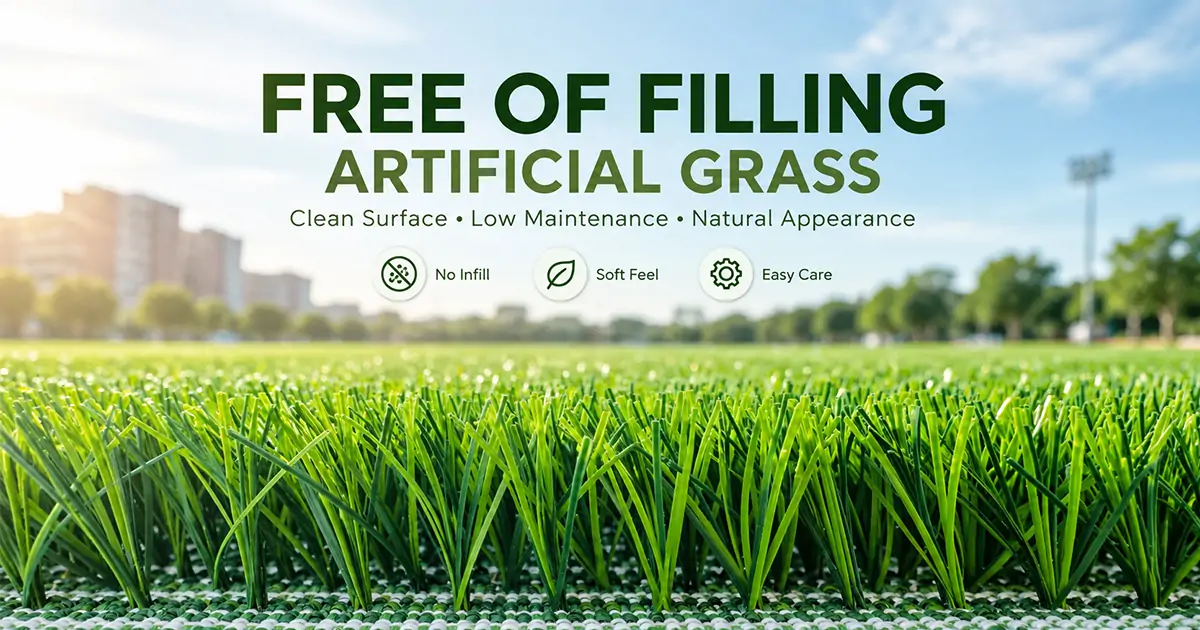
Color and pile height do not provide enough information to select a football surface. The carpet, shock pad, infill, and supporting construction must work together as the specified system.
How to avoid it: Start with intended usage and required playing performance. Ask suppliers to explain the complete surface specification, supporting test information, maintenance requirements, and warranty conditions.
Where pitch certification is a project requirement, include it in procurement and acceptance arrangements. FIFA certification depends on the completed field passing the required field testing; selecting a turf product alone does not establish certification.
3. Choosing Artificial Turf by Appearance or Price Alone
Color and pile height do not provide enough information to select a football surface. The carpet, shock pad, infill, and supporting construction must work together as the specified system.
How to avoid it: Start with intended usage and required playing performance. Ask suppliers to explain the complete surface specification, supporting test information, maintenance requirements, and warranty conditions.
Where pitch certification is a project requirement, include it in procurement and acceptance arrangements.
4. Treating Fencing and Goal Safety as Finishing Details
Ordering fencing and goals late can create conflicts with foundations, access routes, and completed surfacing. Equipment safety also requires more than checking that everything looks secure.
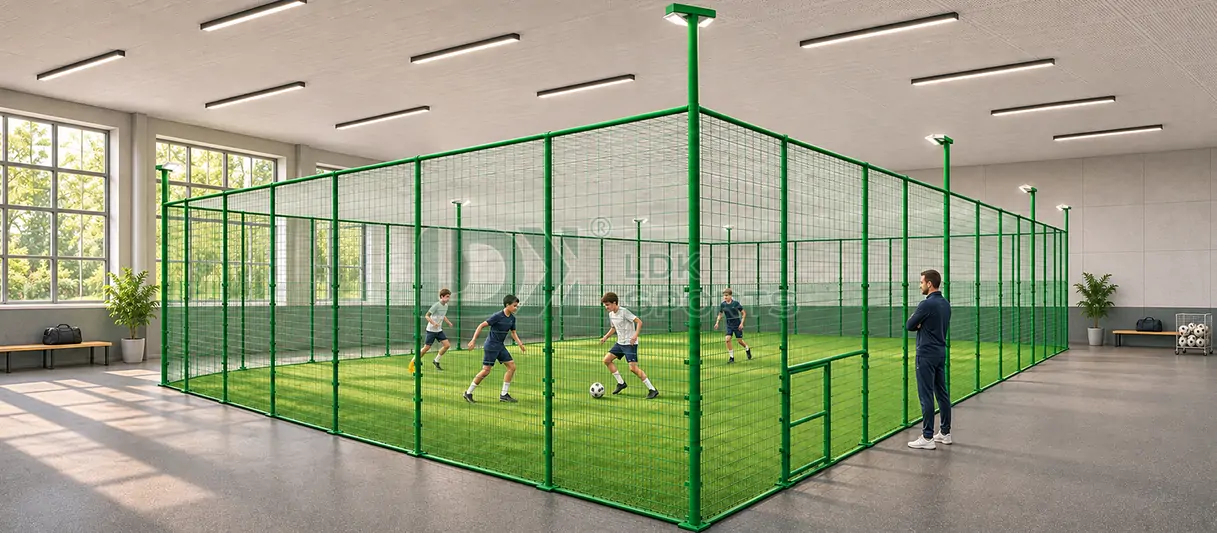
How to avoid it: Include enclosure foundations, gates, goal sockets, and equipment fixing arrangements in the coordinated design. Follow the manufacturers’ installation instructions and inspect completed connections.
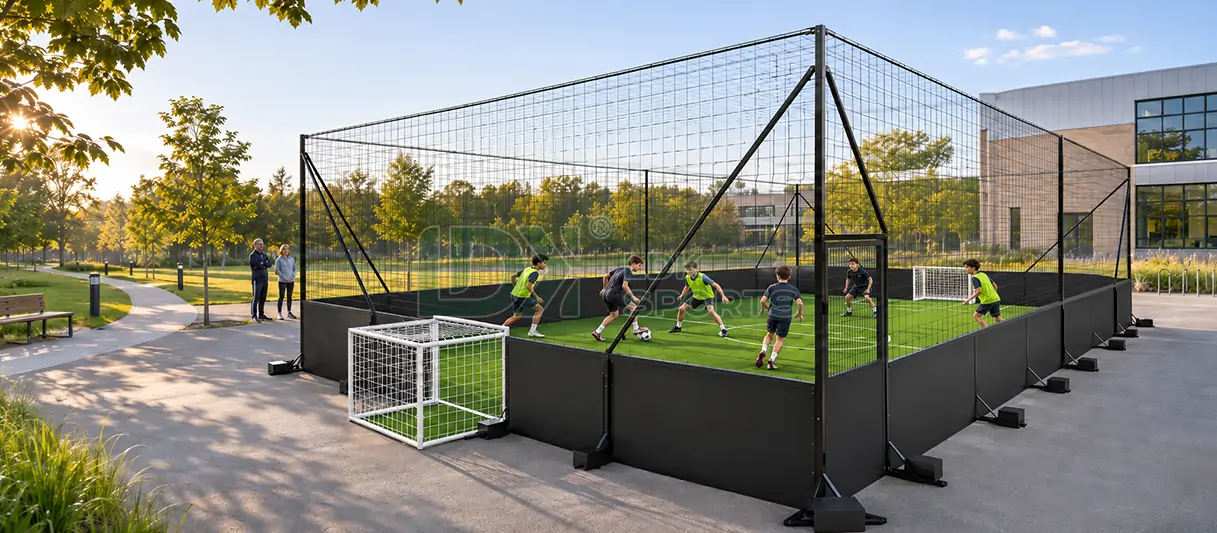
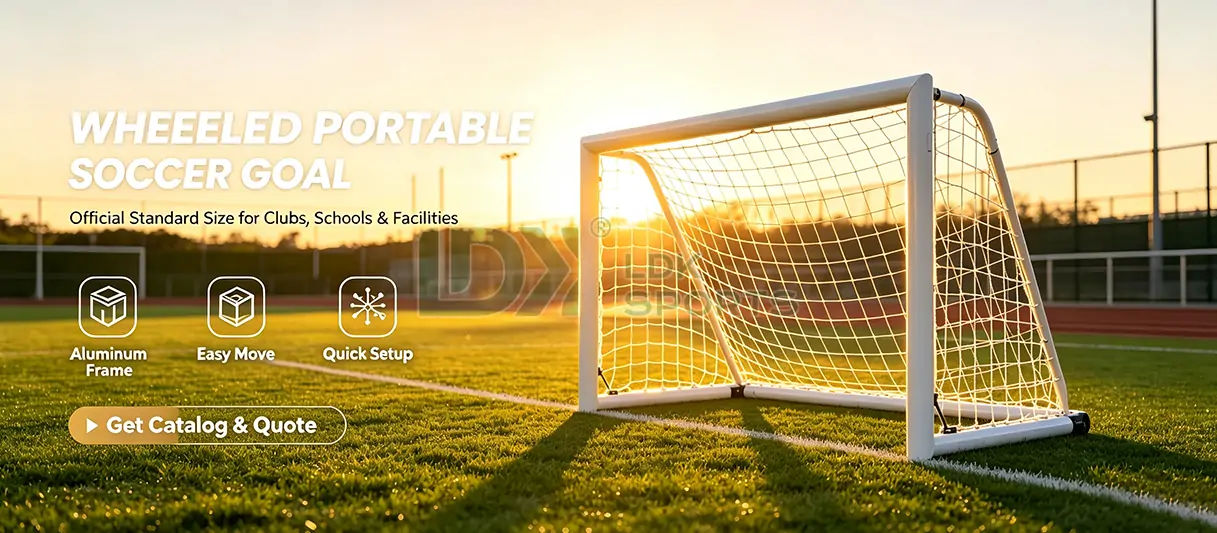
Portable goals also need appropriate securing arrangements. The FA advises that goals must be secured through suitable anchoring or a weighted back bar in accordance with the manufacturer’s instructions.
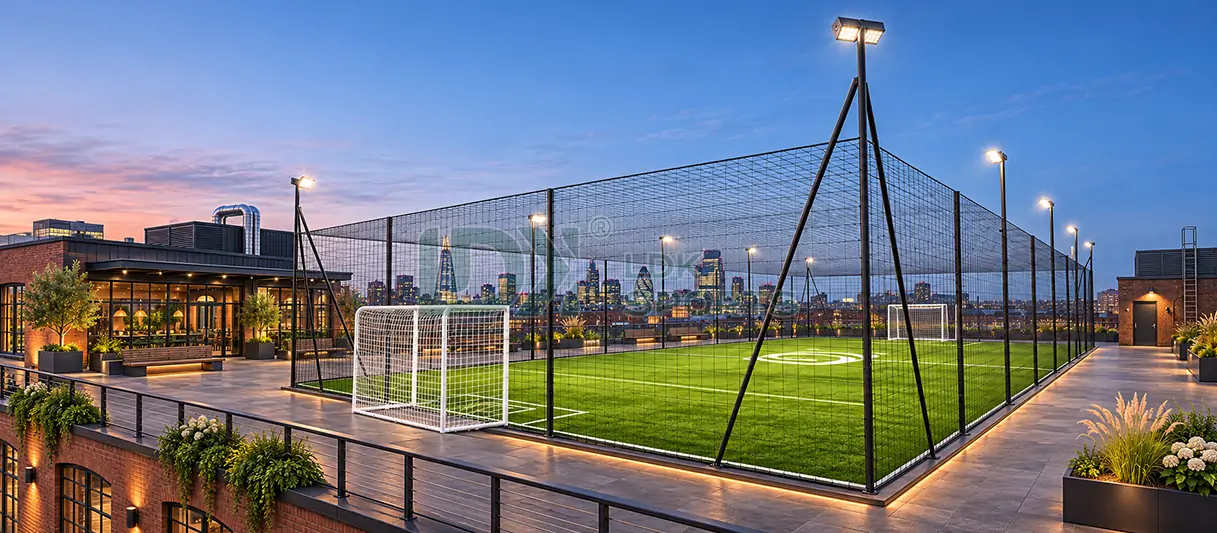
5. Planning Lighting and Access Too Late
Adding lighting after the layout is fixed may require changes to cable routes, foundations, or equipment positions. Narrow gates and awkward thresholds can also make maintenance and accessible entry more difficult.
How to avoid it: Plan lighting, electrical infrastructure, pedestrian access, and maintenance access alongside the field layout.
Confirm lighting requirements and applicable local conditions before ordering equipment. Check gate locations, clear openings, and thresholds against the facility’s intended use.
6. Comparing Quotations Without Comparing Scope
A lower quotation may exclude work included elsewhere, such as drainage connections, waste disposal, electrical installation, testing, or reinstatement.
How to avoid it: Give each bidder the same project brief and request itemized pricing. Record inclusions, exclusions, assumptions, material specifications, warranty terms, and responsibilities.
Ask contractors to explain significant price differences before making a decision.
7. Skipping Construction Inspections
Waiting until the turf is installed to inspect the project makes concealed work harder to assess. Problems with drainage connections, base levels, or layer thickness may require disruptive investigation later.
How to avoid it: Agree inspection points before construction starts. These should cover the formation, drainage, base layers, surface installation, and completed equipment.
Keep inspection records and resolve defects before the next stage covers the work. Recommends quality control and inspections at key construction stages, with completion testing where required.
8. Opening Without a Maintenance Plan
Artificial turf requires ongoing care. Without assigned responsibilities, debris removal, seam checks, brushing, drainage inspections, and equipment checks can be overlooked.
How to avoid it: Obtain the manufacturers’ maintenance instructions before handover. Assign tasks, train the responsible staff, provide suitable equipment, and keep a maintenance log.
Include routine care and future replacement allowances in the operating budget.
FAQ
What should be checked before football field construction begins?
Confirm the intended use, site conditions, layout, drainage strategy, access requirements, budget, and applicable approvals. Resolve major design questions before ordering materials or starting groundworks.
Does every artificial turf football field need FIFA certification?
Certification requirements depend on the intended competition, governing body rules, and project contract. Establish the applicable requirements during planning. Where FIFA certification is required, the completed pitch must pass the relevant field testing.
How can construction delays be reduced?
Complete investigations and design coordination early, confirm approval requirements, and agree procurement and inspection milestones. Allow for material delivery, weather, foundation curing, and correction of defects.
What documents should be provided at handover?
Request drawings, product information, warranties, maintenance instructions, inspection records, and specified test reports. Include contact details and procedures for reporting defects.
Plan Your Football Field Project
Preparing to build a football field for a school, residential development, community facility, or commercial venue? Share your requirements to discuss surface options, perimeter fencing, and the scope needed for a project quotation.
Please include:
• Project location and approximate field dimensions.
• Intended users and expected playing hours.
• Site photos and details of the existing ground or surface.
• Turf, fencing, and lighting preferences.
• Target budget and completion date.
Contact us to discuss your football field requirements and request a tailored quotation.